
3 Minutes
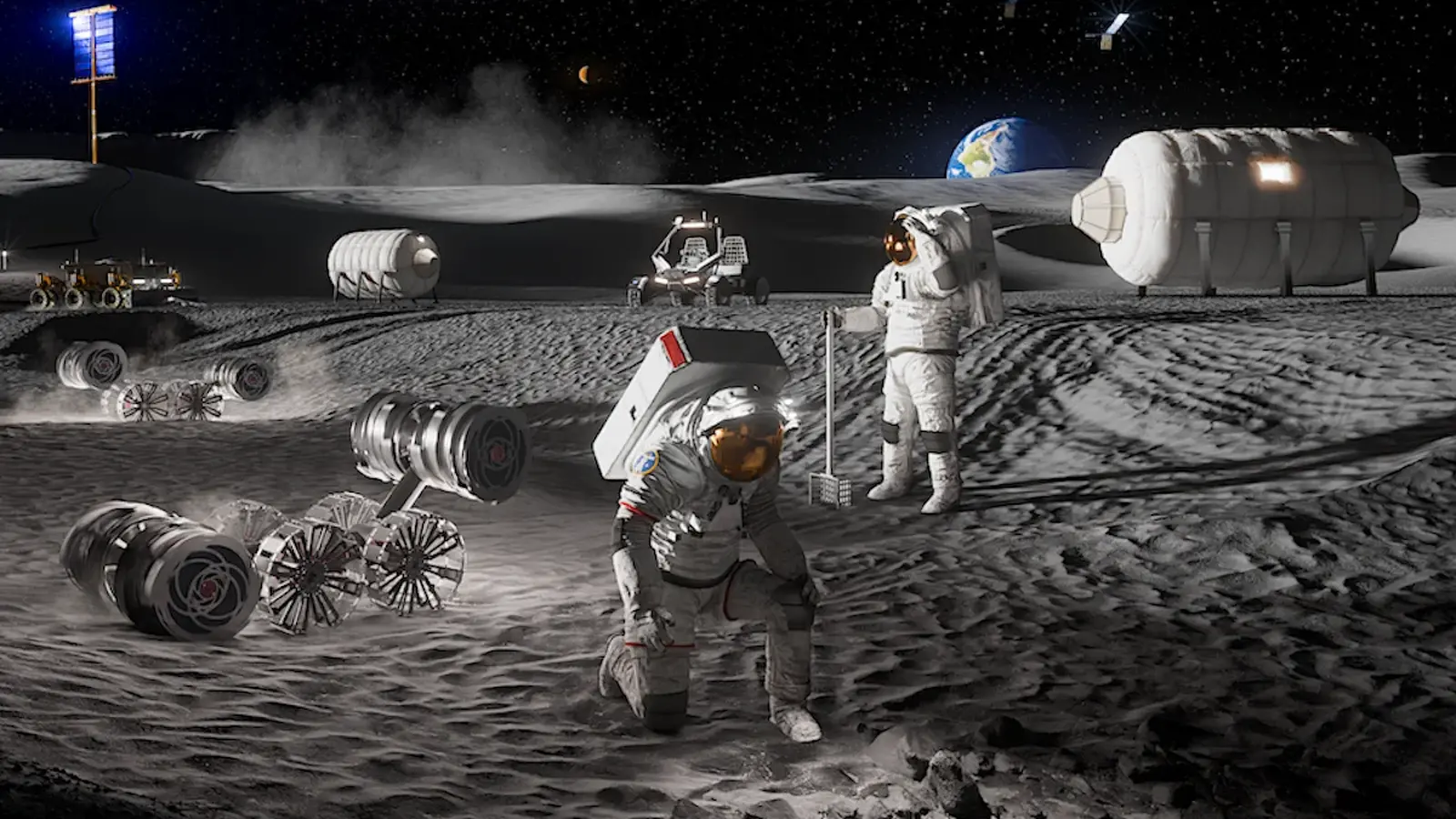
Imagine tractors, drones and rovers unpacking themselves under a cold, slow sun. That image is no longer a prop from a sci-fi film; it's the picture NASA is painting for the near future.
This week the agency moved out of the concept phase and into contracts: hundreds of millions of dollars awarded to four U.S. firms to begin shipping the hardware that will seed a lunar settlement near the Moon's south pole. The roster includes Blue Origin supplying two landers meant to deliver lunar terrain vehicles — the moon buggies — which will be built by Astrolab and Lunar Outpost. Firefly Aerospace, fresh off a successful lunar touchdown, will send the first reconnaissance drones.
Why the south pole? Simply put: sunlight angles, permanently shadowed craters that may hide water ice, and terrain useful for long-term science and operations. NASA's logic is practical. The timing is strategic. Ideally, these uncrewed machines arrive ahead of the first crews slated to set foot again on the Moon.
Those crews will arrive under the Artemis banner. Earlier this year, Artemis II looped four astronauts around the Moon, pushing farther into deep space than the Apollo missions did. Next on the calendar: Artemis III — a rehearsal for orbital maneuvers and docking between NASA's Orion capsule and the crewed landers being developed by the likes of Blue Origin and SpaceX. NASA is aiming for Artemis III in mid-2027, with a two-person landing as early as 2028.

Phase one, announced now, is the practical preamble: landers, rovers and drones that map, mark and carry out the initial chores. Phase two — projected from 2029 into the early 2030s — shifts to raw infrastructure: power systems, communications, and the beginnings of a distributed grid to keep things running after sundown. Phase three, arriving later in the 2030s, focuses on habitats designed for extended stays, the moment when the Moon stops being a series of short missions and becomes a place people live and work for months at a time.
Then we'll be able to say, 'Hey, we're permanently here and we're not giving it up.'
The quote comes from Carlos Garcia-Galan, NASA's moon base program executive, and the sentiment is deliberately bold. He envisions a sprawling complex covering hundreds of square miles, with perimeter drones — dubbed MoonFall — acting as territorial sentries at the corners. Those markers are meant to be unambiguous yet respectful, a way of signaling presence without trampling on other nations' equipment or claims. Reciprocity, NASA officials hope, will be the order of the day.
What is NASA hoping to get out of all this beyond headlines and milestones? The list is long but practical. Scientific discovery remains front and center: geology, volatile inventories, and experiments that benefit from the Moon's low gravity and stable surface. But there's also an economic argument — a pitch to industry to build a lunar economy — and a strategic one: laying technological and logistical foundations for human missions to Mars.
Does this timeline leave room for delay? Of course. Space is famously unforgiving of schedules. Still, ordering landers, rovers and drones now is a concrete step that reduces future risk. Machines in place ahead of people means better mapping, safer routes, and infrastructure already humming when boots hit regolith.
Call it the first phase of a long, deliberate expansion: robotic neighbors arriving to prepare the ground, followed by engineered habitats and power networks. If successful, the effort will rewrite our relationship with Earth's nearest world — from a place we visit briefly to one where we stay, work and build toward more distant horizons.


Leave a Comment
Comments
No comments yet. Be the first.