
4 Minutes
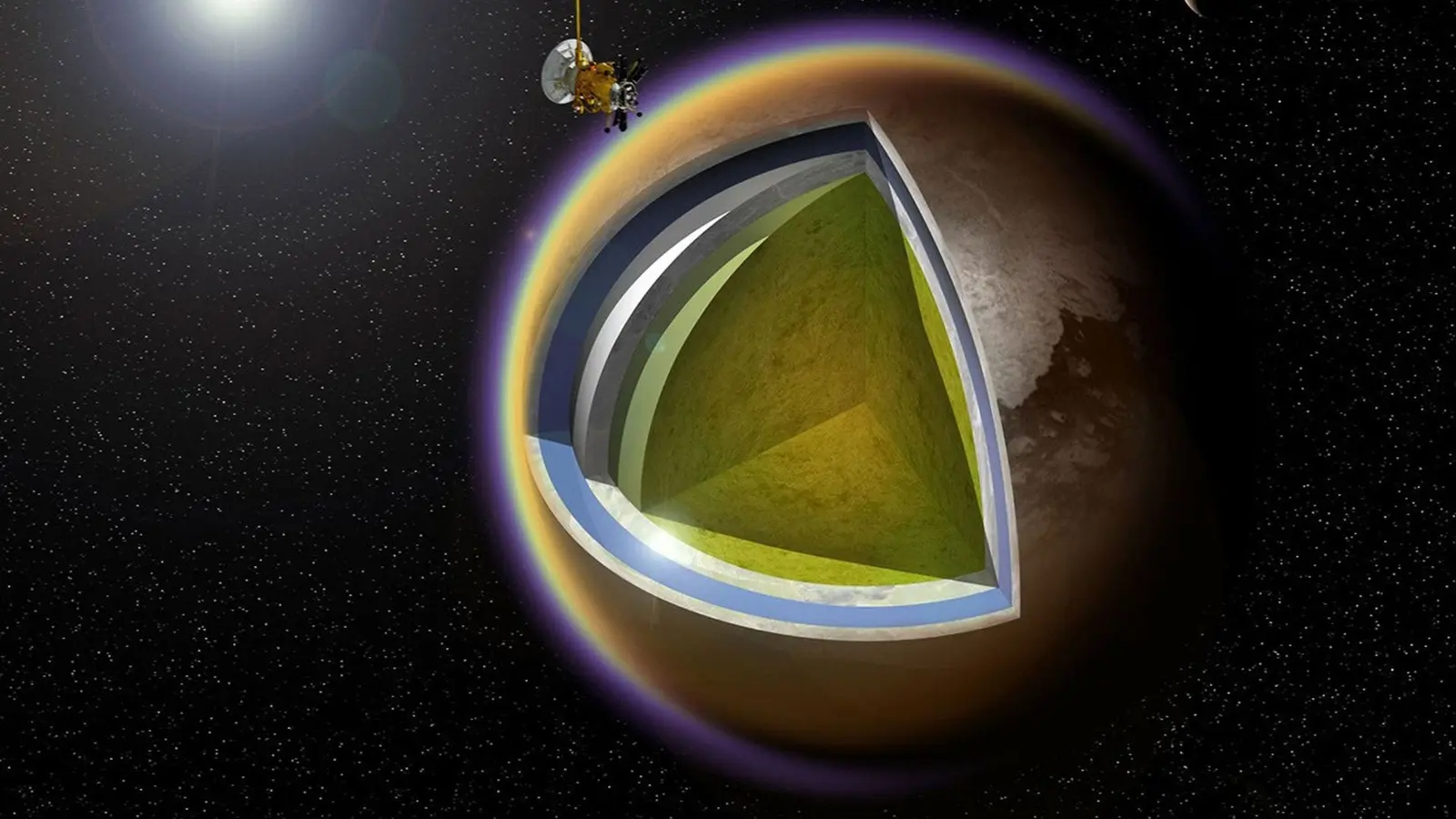
Look closely at that mosaic of Enceladus and you can almost hear the solar system whispering its possibilities. The image, stitched together from Cassini's flybys, is more than a postcard; it is a clue to a larger vision: Saturn and its moons as a sprawling supply line for human expansion into space.
Researchers led by planetary scientist Nixon weighed Titan against familiar contenders for colonization — the Moon, Mars and near-Earth asteroids. The verdict surprised some: distance matters, but what you can live off of matters more. Titan sits far from the Sun, yes. Getting there would likely require advanced nuclear propulsion to shorten transit times and lower mission risk. But once you arrive, you encounter resources that are almost unmatched.
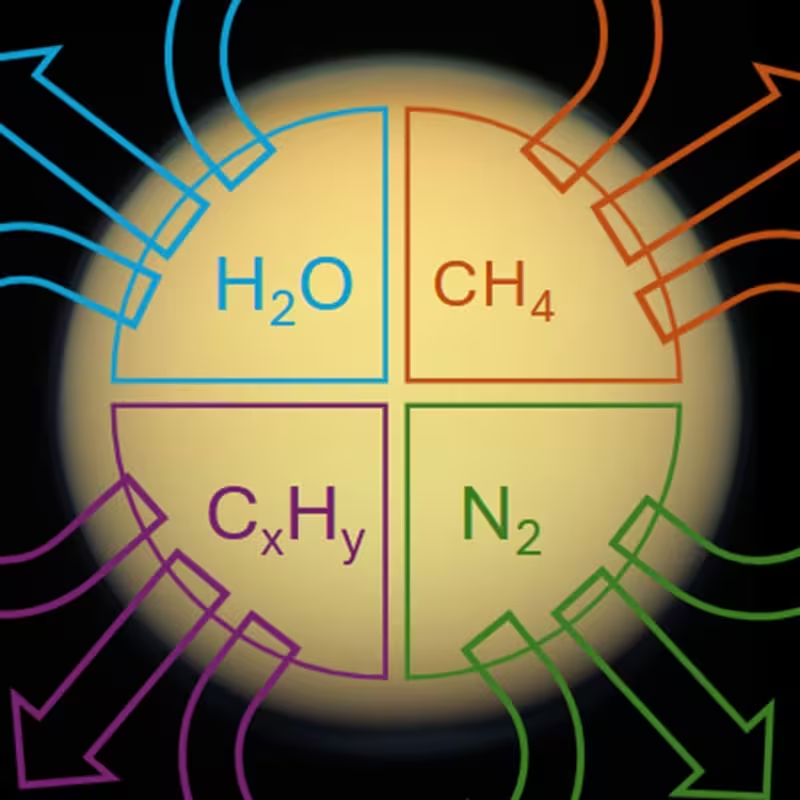
Artistic representation of Titan’s abundant resources and their possible uses.
Titan is strange in the best way. It is the only moon we know with a dense atmosphere. It is one of only two worlds in the solar system, alongside Earth, that hosts abundant hydrocarbons at the surface and in the air. Think of lakes and rivers not of water but of methane and ethane, organic feedstock pooled and ready for chemical processing. What would take cargo ships of polymer and fuel from Earth could be produced in situ on Titan.
Beyond hydrocarbons and local water ice, Saturn's neighborhood hides another prize: helium-3. This light isotope, present in Saturn's upper atmosphere in far greater abundance than near Earth, has long been eyed as an ideal fuel for future fusion reactors and high-efficiency propulsion systems. Harvesting helium-3 from a giant planet is an engineering challenge of the highest order. Yet if it could be done, the payoff would be enormous — not just fuel for rockets, but raw energy for industry across a deep-space network.

A rendering of a notional spacecraft powered by nuclear thermal propulsion.
.avif "Chinese Scientists Pioneer Technology to Extract Oxygen, Water, and Rocket Fuel from Lunar Soil")
Picture Saturn not as a distant gas giant but as a frontier metropolis: floating refueling platforms within the atmosphere, manufacturing hubs in orbit, and surface outposts on icy moons turning local ice and hydrocarbons into plastics, propellant, and building materials. With reliable ISRU — in-situ resource utilization — you change the calculus of exploration. You no longer ship everything from Earth. You build locally, repair locally, and sustain a population without constant resupply convoys from home.
Could a human settlement on Titan survive for generations? The ingredients are there. Abundant water ice can yield oxygen and hydrogen. Hydrocarbons can be cracked into carbon feedstock and energy sources. With electromechanical printers and chemical plants powered by fusion or harvested solar and wind alternatives, communities could manufacture tools, replace parts, and grow habitations. Food production would remain a challenge but not an impossibility: controlled biospheres, engineered crops, and aquaponics could convert local inputs into calories.
There is a romantic side to this idea. Saturn as the 'Persian Gulf' of the solar system — a poetic label, perhaps, but useful for imagining how resource concentration shapes geopolitics and economics in space. Regions rich in helium-3, hydrocarbons, and water would naturally attract infrastructure: processing yards, fuel depots, and specialized habitats. The presence of such a resource base would enable a manufacturing ecosystem that supports explorers, scientists, and settlers across the outer system.
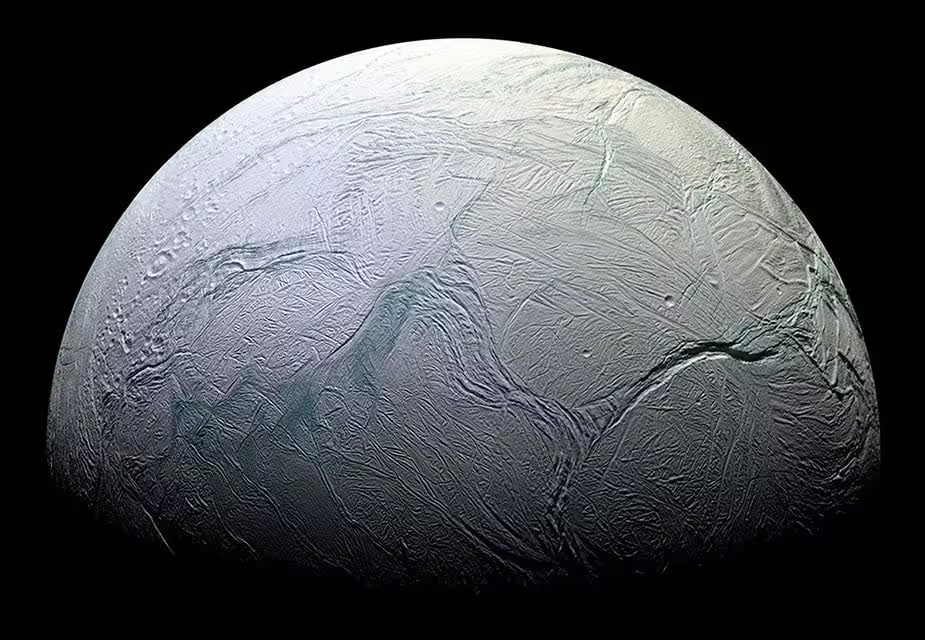
This mosaic of Saturn’s moon Enceladus was created with images captured by NASA’s Cassini spacecraft.
Of course, the practical hurdles are immense. Long-duration human spaceflight to the outer planets requires life-support systems that can endure isolation, radiation shielding that reduces cancer risk, and propulsion systems that can move heavy payloads efficiently. Mining helium-3 from Saturn's upper atmosphere or extracting volatiles from Titan's surface will demand technologies we have only begun to prototype. Legal, political, and economic frameworks for off-world resource use would also need to evolve.
Still, the argument from Nixon and his colleagues reframes the question. Rather than asking which world is the easiest to reach, perhaps we should ask: where can humans find the materials to become self-sustaining? Titan's wealth of organics, Saturn's helium-3 reserves, and the abundance of water across the Cronian moons answer that question in a way that the Moon and Mars cannot fully match.
We may be decades — perhaps centuries — from building a true Saturn-based supply chain. But strategy starts with knowing what is possible. Mapping resource abundance, developing the propulsion to get there, and testing industrial concepts in nearer environments are concrete steps toward a future in which Saturn's neighborhood is not just observed, but worked and lived in. Who will take the first step?

Leave a Comment
Comments (2)
Is this even true? Titan's resources sound amazing but the transit risk, political mess and cost make me skeptical. If someone funds it tho… quick thought
Whoa, Titan as a refueling hub? Mind blown. Still, harvesting He-3 from Saturn sounds insane, what tech even…? risky but exciting tho