
2 Minutes
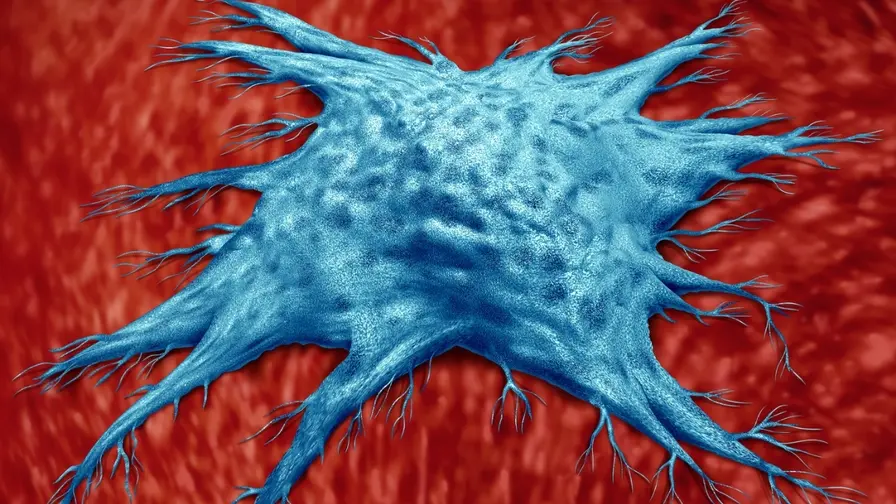
Imagine a workshop where some retired craftsmen still come in to mend broken tools. They don’t work every day. They aren’t rebuilding the place. But when a critical piece fails, their wisdom can be the difference between a quick fix and a catastrophe. That image is useful for thinking about senescent cells—cells that have stopped dividing but haven’t disappeared.
Recent reviews in the field are pushing back against a simple narrative: that all senescent cells are uniformly bad and must be purged. Instead, researchers are arguing for a more surgical approach. Some of these cells act as emergency responders, secreting factors that help heal tissue or halt tumor growth. Others linger and secrete inflammatory signals that accelerate aging and disease. The challenge is telling one from the other.
So what changes? For starters, the goal shifts from indiscriminate removal to precision. That means preventing harmful senescence when possible, mapping the exact functions of senescent cells in different tissues, and developing interventions that target the troublemakers without destroying the helpers. Technologies like single-cell profiling and spatial transcriptomics are making this feasible by revealing cell states and contexts that were invisible until recently.

Clinical translation will demand new biomarkers and smarter drugs. Broad-spectrum senolytics—compounds that clear senescent cells—have shown promise in animal models but can be blunt instruments. Imagine a therapy that only neutralizes senescent cells secreting pro-inflammatory proteins linked to heart disease, while leaving those that help wound closure intact. That kind of selectivity could reduce side effects and preserve beneficial biology.
Targeting the wrong cells can do harm; targeting the right ones could transform healthy aging.
We are not at the finish line. But the direction is clear: aging interventions should behave like expert surgeons, not wrecking balls. As we learn which cellular actors drive decline and which support resilience, therapies will likely evolve from broad clearance toward tailored modulation—editing the cellular community rather than erasing it.

Leave a Comment
Comments
No comments yet. Be the first.