
3 Minutes
Late at night, when loneliness arrives uninvited, more people are typing into a chatbot than dialing a clinician. That shift is not a fluke: a new global survey finds that well over 60% of adults now consult artificial intelligence for mental-health questions, even when they worry the answers aren’t good enough.
The findings come from AXA and IPSOS’s Mind Health Report, based on interviews with 19,000 adults aged 18–75 across 18 countries between January 12 and February 16, 2026. The picture is stark. Nearly seven in ten respondents—68%—say they struggle with anxiety, stress or depression in some form. Among 18-to-24-year-olds, the rate soars to 85%.

Severity is a growing concern. Researchers report that 46% of people are coping with serious mental-health issues and 65% have recently felt persistent low mood. Young adults appear particularly vulnerable: about 43% of 18–24-year-olds report severe symptoms, roughly double the global average of 26%.
Why are so many turning to AI? Practical barriers matter. Cost, time and access make professional care difficult: 43% of those with mental-health problems say they received no specialist help in the past year, and more than a quarter believed medical follow-up wasn’t necessary. In that gap, self-care strategies—exercise, talking with family—and conversational agents have filled a role. Sixty-three percent reported trying self-managed approaches, and chatbots such as ChatGPT or Gemini are now a familiar first stop.
Trust and disappointment coexist. Forty-five percent of chatbot users say the advice they received was unsatisfactory, yet 38% admit they trust AI platforms more than mental-health professionals. That contradiction hints at a broader reality: accessibility sometimes outweighs accuracy. When help is free and instantly available at 3 a.m., it feels like help—no appointment, no bill. But convenience has a cost.
Experts urge caution. Khalid Al Sharani, AXA’s head of health and prevention, says the mental well-being of today’s youth must be watched closely. He points to heavy screen use and tech dependence as factors that amplify isolation. Sophie Morin of IPSOS adds that more than a third of respondents link their screen time to greater social withdrawal.
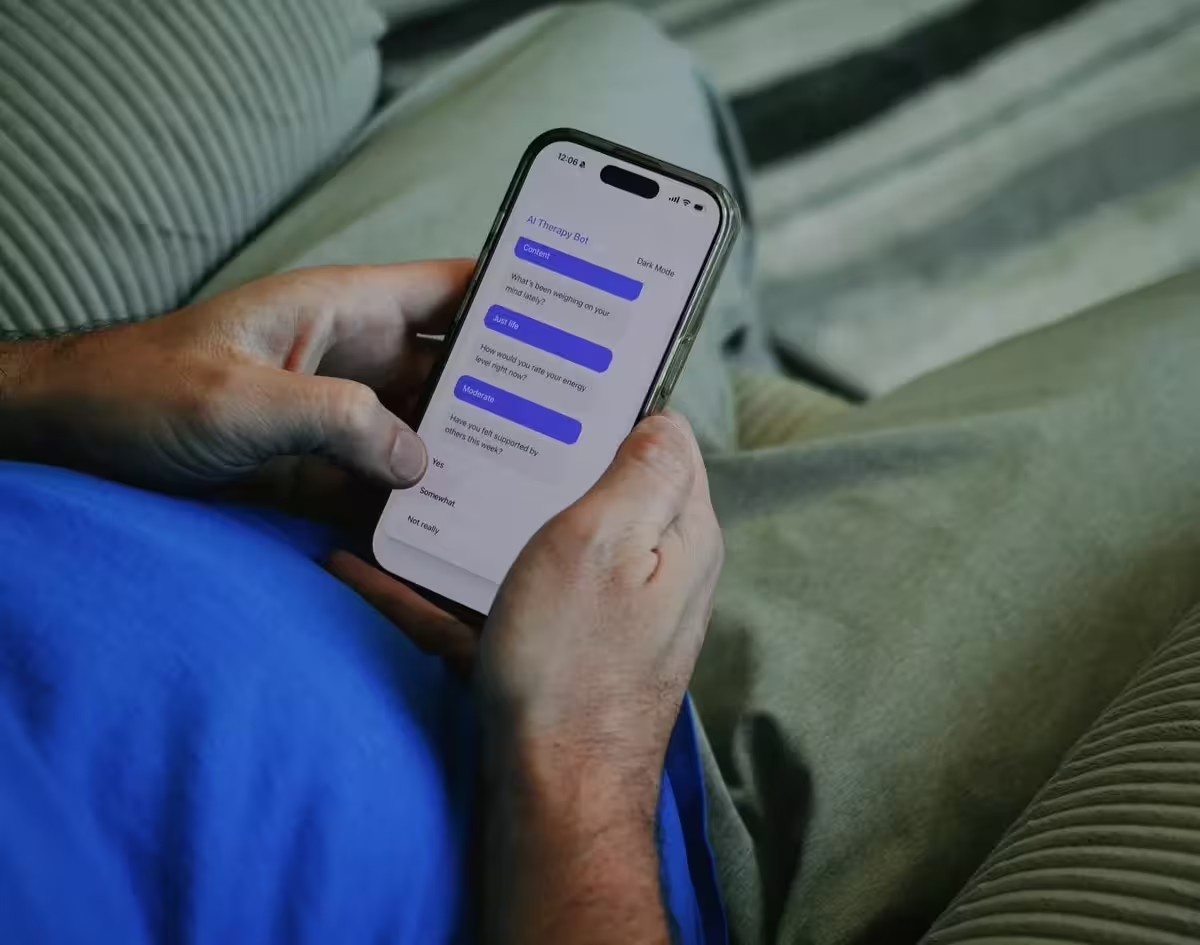
The survey peels back another layer: average daily screen time outside work, studies and weekend activities sits at 5.1 hours. In Thailand and the Philippines it’s higher—about 6.4 hours—while Japan and Switzerland register near 4.1–4.2 hours. Two-thirds of people report that screen habits harm their sleep, focus and physical activity; 39% say those effects are severe.
There’s a concrete risk when general-purpose AI serves as a stand-in for clinical judgement. These models weren’t trained to be therapists. Al Sharani likens asking an unfiltered chatbot about panic symptoms to consulting a worried friend who can list every possible worst-case diagnosis—an answer that can inflame anxiety rather than soothe it. What’s missing, he argues, are guardrails: automated systems that detect red flags and route users to qualified professionals when needed.
Practical steps could help. AI platforms can be improved with safety layers that flag severe symptoms, provide evidence-based coping tools and encourage seeking professional care. They can also be transparent about limitations—so people know when a friendly reply is just that, and not a clinical assessment.
For millions, the appeal of a listening line they can access anytime is irresistible. For clinicians and policymakers, the challenge is to preserve that accessibility without letting convenience substitute for care that’s informed, accountable and safe.


Leave a Comment
Comments
No comments yet. Be the first.