

4 Minutes
It finally happened. At WWDC, Apple pulled the curtain back on what it calls the next generation of Apple Intelligence — and the old Siri has been replaced by something more conversational, more capable, and, crucially, smarter about privacy.
Under the hood, Siri AI leans on Google's Gemini models for its core capabilities, but Apple layers heavy on-device processing and a server fallback called Private Cloud Compute. The pitch is simple: do as much as possible on your device, and when server power is needed, use a privacy‑designed path that Apple says does not store or expose your personal data.
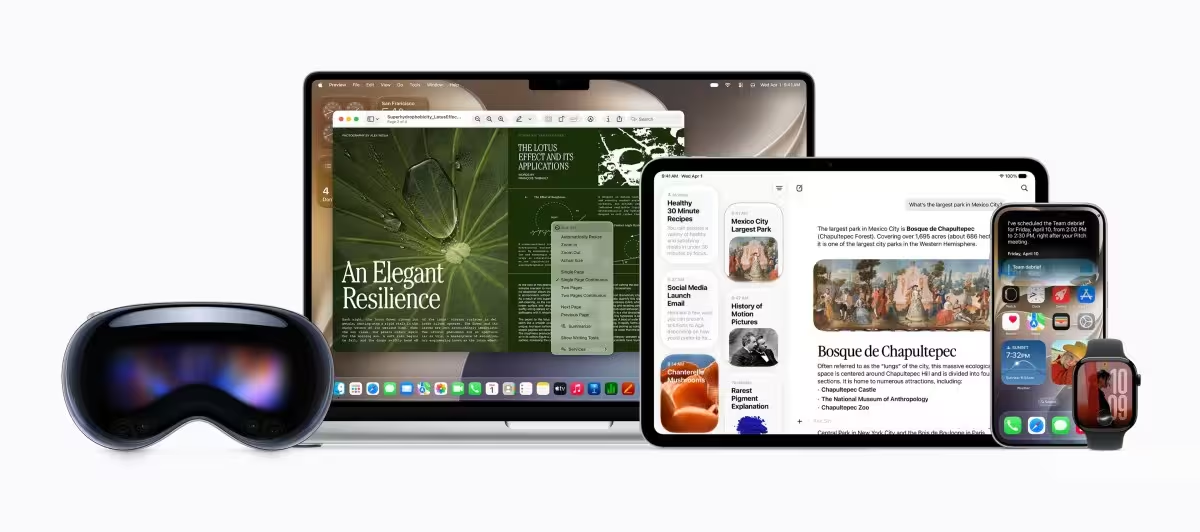
A fresh Siri app will keep a history of chats, and on iPhone the assistant lives in the Dynamic Island for quick access. On iPadOS and macOS, Spotlight gains deep integration so Siri can be summoned from the place many of us already search. Expect the update to expand across watchOS and visionOS as well.
Apple highlights an on-device model for supported hardware that brings more expressive voices and a noticeably better systemwide dictation experience. Voices will be adjustable for tone and pace. As you speak, punctuation, capitalization and formatting happen automatically — which makes long messages and notes less of a chore.

Siri AI will ingest personal context: messages, emails, photos, calendars and more. That contextual awareness works first with Apple's own apps, and Apple says third‑party developers can extend the feature by integrating with Spotlight. In other words, Siri can tailor answers around your data without forcing you to explain who or what you mean.
Need a heads-up on what’s on your screen? Siri can describe content and, when necessary, fetch fresh information from the web using broad world knowledge. All interactions are synced through iCloud so your chat history follows you across devices.
Camera mode is a neat touch. Point your iPhone and ask Siri what you see — identify a dish, split a bill with friends using Apple Cash, or even get nutritional insights about a plate in front of you. Visual Intelligence arrives on iPadOS and macOS too, making screenshots and on‑screen items searchable and actionable with a quick keystroke or tap.

Writing Tools are baked into wherever you type. Describe what you need and Siri AI will draft text, rewrite for a certain tone, or polish grammar. When composing Mail or Messages, Siri adapts to how you normally communicate with each contact, mirroring punctuation and cadence. Apple says this proofreading and refinement will work across the system, including most third‑party apps.
Siri AI can also generate and edit images, though Apple will impose daily usage limits for those features, with higher allowances for iCloud+ subscribers. And yes: the company plans a public beta later this year in English, with additional languages arriving afterward.
EU Availability and the DMA Tangle
Not all regions get the same rollout. Initially in the European Union, Siri AI will be available only on macOS, watchOS and visionOS for supported languages. Apple says it will not enable Siri AI on iOS or iPadOS in the EU because regulators did not accept the privacy‑preserving solutions Apple proposed under the Digital Markets Act.
Apple argues that current interpretations of the DMA would force it to give other virtual assistants direct access to users' private data and the ability to control apps, without adequate protections to keep that data safe. Craig Federighi said the company hopes to find a path forward with EU regulators but, for now, there is no timeline for full iPhone and iPad support in the region.
So what should you take away? Siri AI looks like a serious reimagining of Apple's assistant: conversational, context‑aware and tuned for on‑device privacy. But regulatory realities mean the new Siri will reach users in different ways depending on where they live, at least for now. Keep an eye on the beta this year — and on the next round of policy talks across the Atlantic.

Leave a Comment
Comments (2)
love the on device voices and auto punctuation, big time saver. EU nonsense though, hope they fix it fast
Sounds slick, but Google Gemini powering Siri? Apple says most work on device, then Private Cloud Compute, wait not allowed in EU? hmm. How private is that really, feels fuzzy tho