
6 Minutes
BMW teams up with Great Wall to build the Ora 7 electric wagon
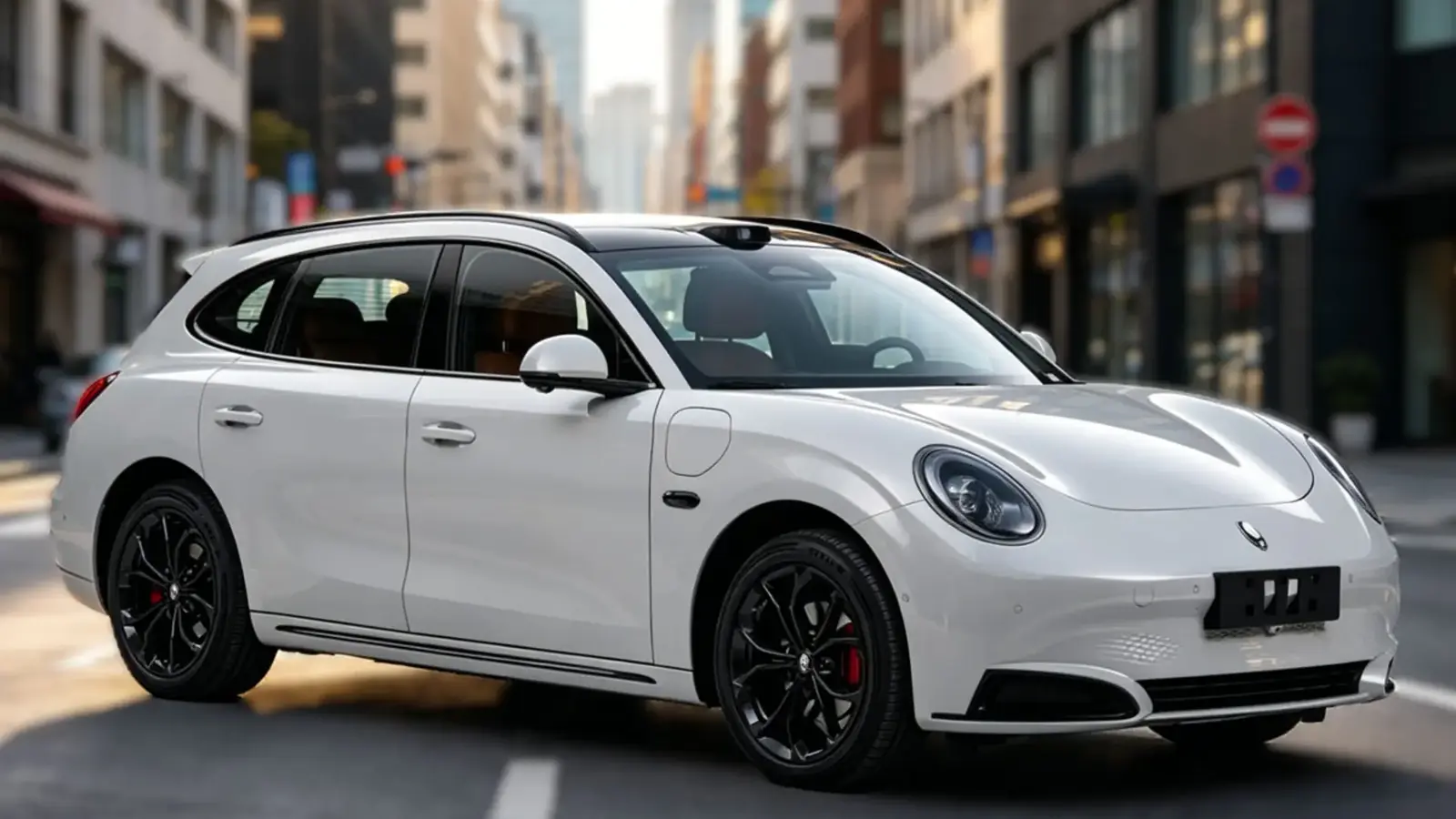
Great Wall Motor and BMW will co-produce the new Ora 7 electric wagon at Spotlight Automotive in China, marking a notable step in Ora's evolution. Announced for the 2026 Chinese market, the Ora 7 expands the model line beyond the sedan to include a practical station-wagon body style aimed at families and outdoor enthusiasts. The top AWD variant will pair roof-mounted lidar with an output of about 310 kW (roughly 422 hp) and use lithium-iron-phosphate (LFP) batteries across the range.
Why the production link with BMW matters
Spotlight Automotive, the joint venture where BMW and Great Wall hold equal stakes, already builds battery-electric models for the MINI brand. That factory applies European production standards and stricter quality control processes. Although the Ora 7 rides on its own dedicated platform with no direct technical lineage to BMW or MINI products, assembly at Spotlight means Ora 7 will be manufactured under the same structural checks, quality audits, and production rigour.
Industry observers had speculated about moving Ora models to the joint plant since 2020. The plan appears to be entering execution: BMW board member Milan Nedelkovic visited Great Wall facilities in late April 2026 to discuss production expansion and future collaboration—an encouraging signal that the JV capacity will be used for more than MINI models.
Factory capacity and commercial logic
Spotlight Automotive has been operating with notable spare capacity. Official figures show only 5,571 vehicles were produced from the plant in April 2026, a low volume for a high-capacity facility. Adding new production lines such as Ora 7 helps smooth fixed costs, increase throughput and improve factory economics. For Great Wall, Ora 7 could become one of the cornerstone models to lift overall output and better utilize the JV's manufacturing muscle.
Market positioning: moving beyond the 'cat' branding
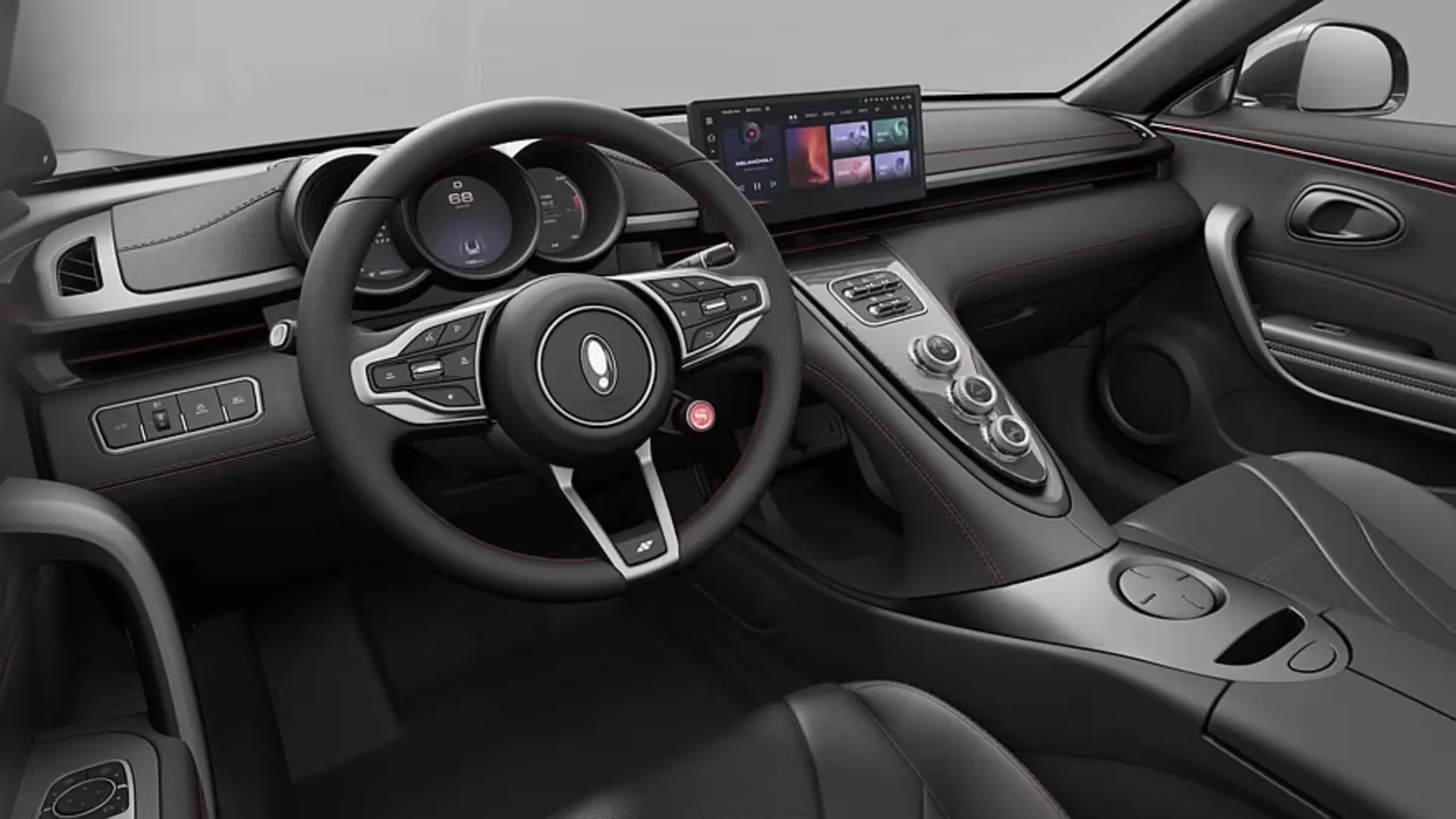
Ora previously leaned into playful product names—Good Cat, Lightning Cat and Funky Cat—targeting female buyers with a whimsical brand identity. Ora 7 signals a deliberate shift to a more mainstream, gender-neutral naming and product strategy. Great Wall appears intent on broadening Ora's appeal: the station-wagon body, more rugged appearance cues, and practical features aim to attract families, male buyers and outdoor lifestyles as well as urban drivers.
This repositioning is consistent with other Ora moves, including introducing gasoline and hybrid trims for budget-conscious buyers to expand market reach.

Specifications and what sets the wagon apart
Documents lodged with China’s Ministry of Industry show that the Ora 7 wagon and sedan share the same 2,870 mm wheelbase, but body dimensions differ:
- Sedan: length 4,890 mm, width 1,850 mm, height 1,503 mm
- Wagon: length 4,820 mm, width 1,850 mm, height 1,520 mm
The wagon sacrifices a bit of overall length while adding height to increase cargo flexibility and improve utility—delivering more usable luggage space without needing a completely new platform.
Key technical highlights for the top AWD wagon:
- Dual electric motors: 160 kW front + 150 kW rear (total ~310 kW / ~422 hp)
- All-wheel drive and roof-mounted lidar for enhanced environment sensing
- Top speed limited to about 180 km/h
- Battery chemistry: lithium-iron-phosphate (LFP) for all variants

Lidar and ADAS ambitions
The roof-mounted lidar is a notable inclusion for this segment. It will collect high-resolution environmental data to support advanced driver assistance features—ranging from enhanced highway navigation to more capable semi-autonomous driving functions. If Ora couples lidar with strong software and OTA updates, the wagon could offer compelling safety and convenience features in its class.
Battery choice: LFP across the line
Ora 7 will use LFP batteries for every version. Compared with nickel-manganese-cobalt (NMC) packs, LFP offers several advantages that suit mass-market Chinese EVs:
- Lower raw-material cost and easier supply-chain scaling
- Better thermal stability and safety margins
- Long cycle life and predictable capacity retention
Manufacturers such as BYD and Geely have popularized LFP in China. Ora’s adoption of LFP aligns with current domestic trends favoring lower-cost, reliable chemistry for mainstream electric cars.

Design and practical changes: less flash, more utility
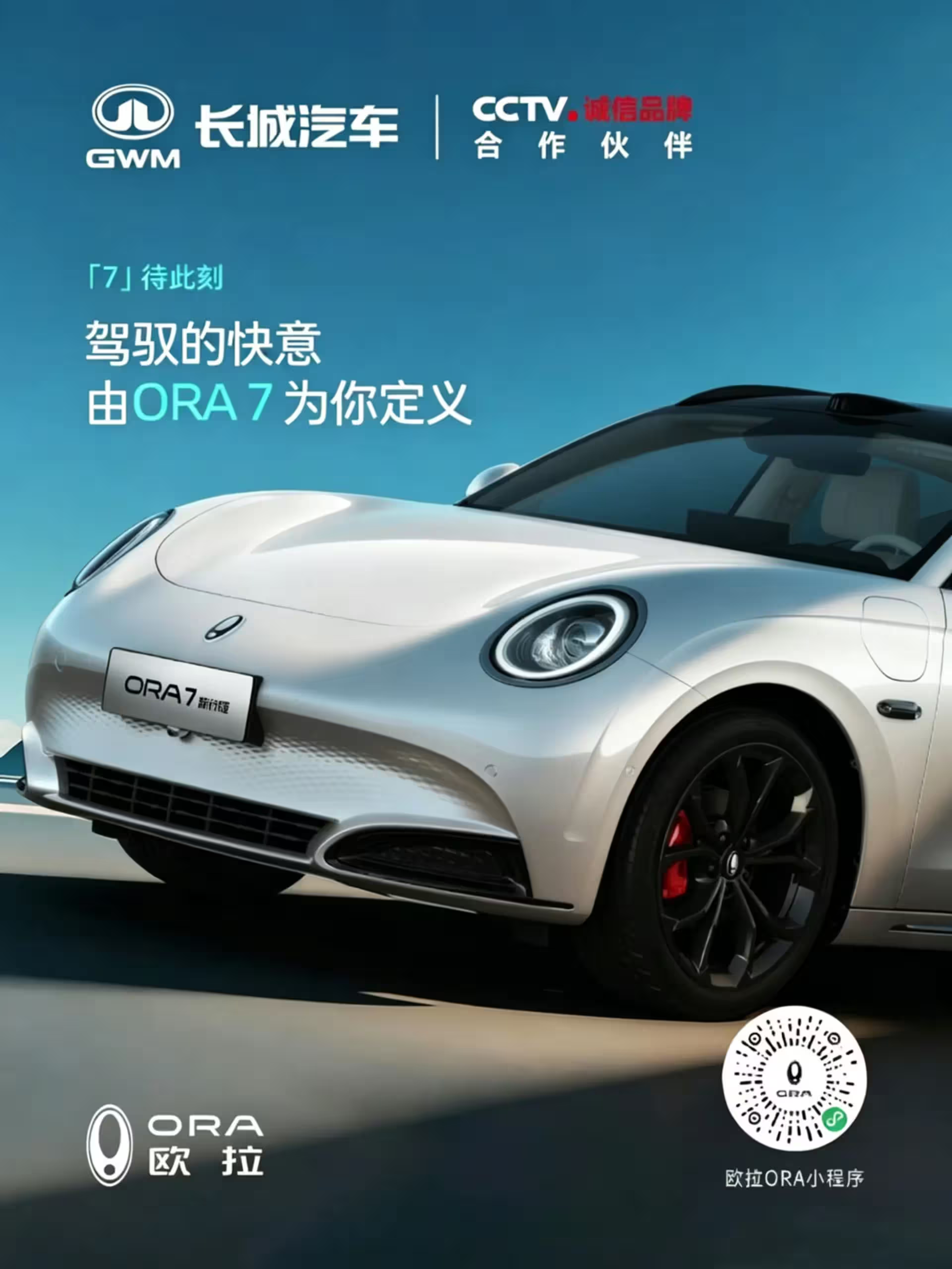
The new Ora 7 wagon takes a more pragmatic route in several places. One conspicuous change is the removal of flush, electrically actuated door handles in favour of traditional mechanical handles. While flush handles can look sleek, they have proven susceptible to problems in freezing climates. Great Wall’s decision prioritizes reliability and lower maintenance costs—traits buyers who use their cars for travel and outdoor activities will appreciate.
Pricing and competitive landscape
Reported pricing targets put the Ora 7 around 200,000 CNY (roughly $28,000 USD, depending on exchange rates). That positioning aims squarely at value-conscious buyers who want a feature-rich EV without premium pricing. If Ora 7 successfully blends European-level assembly standards (from the Spotlight plant) with competitive Chinese EV pricing, it could challenge compact premium and mid-range rivals.
Competitors to watch in China include domestic brands ramping up lidar-equipped or AWD models and large players using LFP packs for cost-effective ranges. The Ora 7’s combination of practical wagon packaging, AWD performance and lidar-enabled ADAS could help it stand out in a crowded marketplace.
Sales momentum and why Ora 7 matters to the brand
Ora’s retail performance has recently rebounded. Monthly deliveries rose from just 839 units in February 2026 to 1,785 in March and 3,831 in May—an impressive year-over-year increase reported at approximately 238 percent. The Ora 7 launch could further accelerate this growth by expanding the brand’s audience and adding a headline product to the line-up.
Highlights:
- New body style broadens appeal beyond urban-focused sedans
- Production at BMW-partnered plant boosts perceived build quality
- Lidar and AWD position Ora 7 as a tech-forward family vehicle
What to watch next
Key milestones to follow include official pricing tiers, detailed range and efficiency figures for different battery sizes (if any), and the launch timing for markets outside China. Also watch how Ora packages software and driver-assistance capabilities—good software ergonomics and frequent OTA updates can be a decisive differentiator.
In short, the Ora 7 wagon is more than a fresh body style: it represents a strategic pivot for Great Wall’s Ora brand. If the company can combine competitive pricing, LFP durability, thoughtful features like mechanical handles, and the manufacturing polish of a BMW-linked plant, the Ora 7 could become a significant player in China’s increasingly sophisticated EV market—and possibly beyond.

"Ora 7 could be the test case for whether Chinese EV brands can marry mass-market pricing with near-premium manufacturing standards," industry analysts say. For consumers, the promise is simple: a practical, powerful electric wagon with modern ADAS hardware and dependable battery chemistry—built in a factory that knows how to meet European-quality expectations.

Leave a Comment
Comments (2)
Wow, a practical electric wagon with lidar, AWD and LFP at ~200k CNY? Sign me up! If range and OTA are decent this could be a sleeper hit. export pls
Hmm, BMW assembling Ora 7 in a MINI plant? Sounds smart for quality control, but is it PR spin or a real step up in durability and software? curious