
3 Minutes
Imagine unfolding a phone like a paper concertina — except this time the folds run vertically and the display bends into an S. A fresh patent leak suggests Huawei is chasing exactly that kind of trick, pushing the boundaries of how a smartphone can collapse and expand.
The concept, first surfaced by leak accounts on X and reposted across tech channels, sketches a vertical tri-fold device that tucks into a remarkably compact footprint. Think of a three-panel display joined by two hinges. Closed, it’s a tidy slab. Opened, it unfurls into a large canvas. The designers even show the screen reduced to roughly one-third of its full size when folded, letting you pocket a big-screen device without bulk.
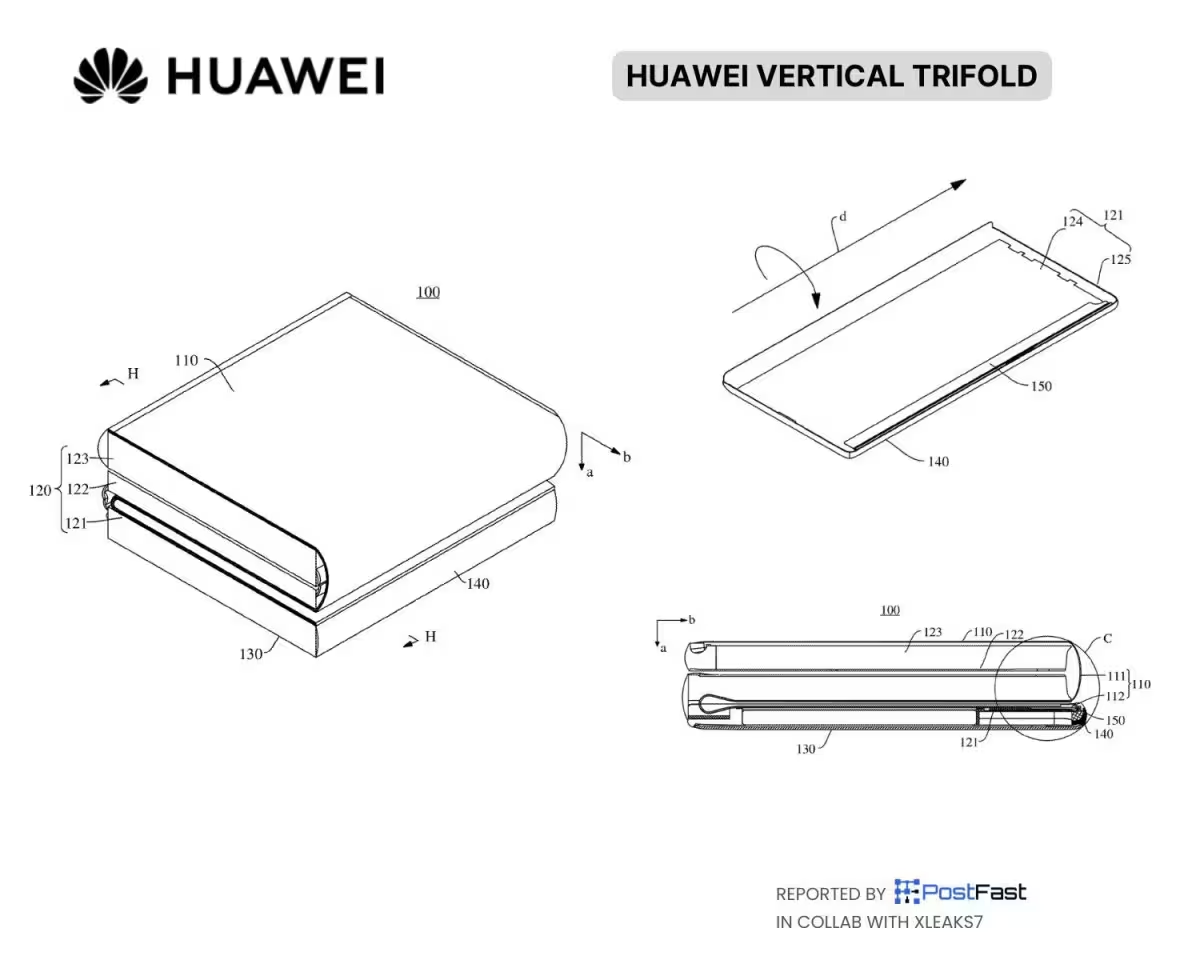
Huawei isn't new to tri-fold experiments. In 2024 the Mate XT Ultimate introduced a horizontal tri-fold form, and this new filing appears to transplant that ambition into a flip-style, vertical format that flips the familiar foldable script. The patent imagery leans on an S-shaped hinge mechanism, a geometry that lets the panels nest cleanly while minimizing protrusions.
There's practical thinking here, not just theatrics. The documentation references a shielding element meant to curb signal loss when panels overlap — a clear nod to the physical and radio-frequency challenges that plague multi-hinge designs. Foldable phones already wrestle with antenna tuning and RF continuity; stack three display segments and the problem scales. Huawei's patent hints at an RF-friendly gasket or shield that maintains connectivity as the device transitions between states.

Will this make it from patent office artwork to store shelves? That’s the million-dollar question. Turning a bold sketch into a reliable consumer product demands durable hinges, uniform screen tension, and affordable manufacturing — and those items are expensive to perfect. Even so, if anyone has the engineering depth to try, Huawei is a plausible contender. The company has iterated aggressively on hinge mechanisms and display substrates in recent years.
There are user-experience payoffs if it works. A vertical tri-fold could let you use a phone as a compact handset, a tall clamshell for quick interactions, or a tablet-length display for reading and multitasking. App continuity and flexible UI design would need to catch up, but Android's foldable frameworks are already drifting in that direction.

Patents are blueprints, not guarantees. Still, they reveal intent: where a firm is investing design effort and which engineering headaches it hopes to solve. Whether Huawei intends this for the Pura lineup, a premium niche device, or merely as intellectual property leverage, the sketch signals that foldable design is far from settled.
Keep an eye on supply chains and future filings; the next fold could arrive from an unexpected angle.

Leave a Comment
Comments
No comments yet. Be the first.