
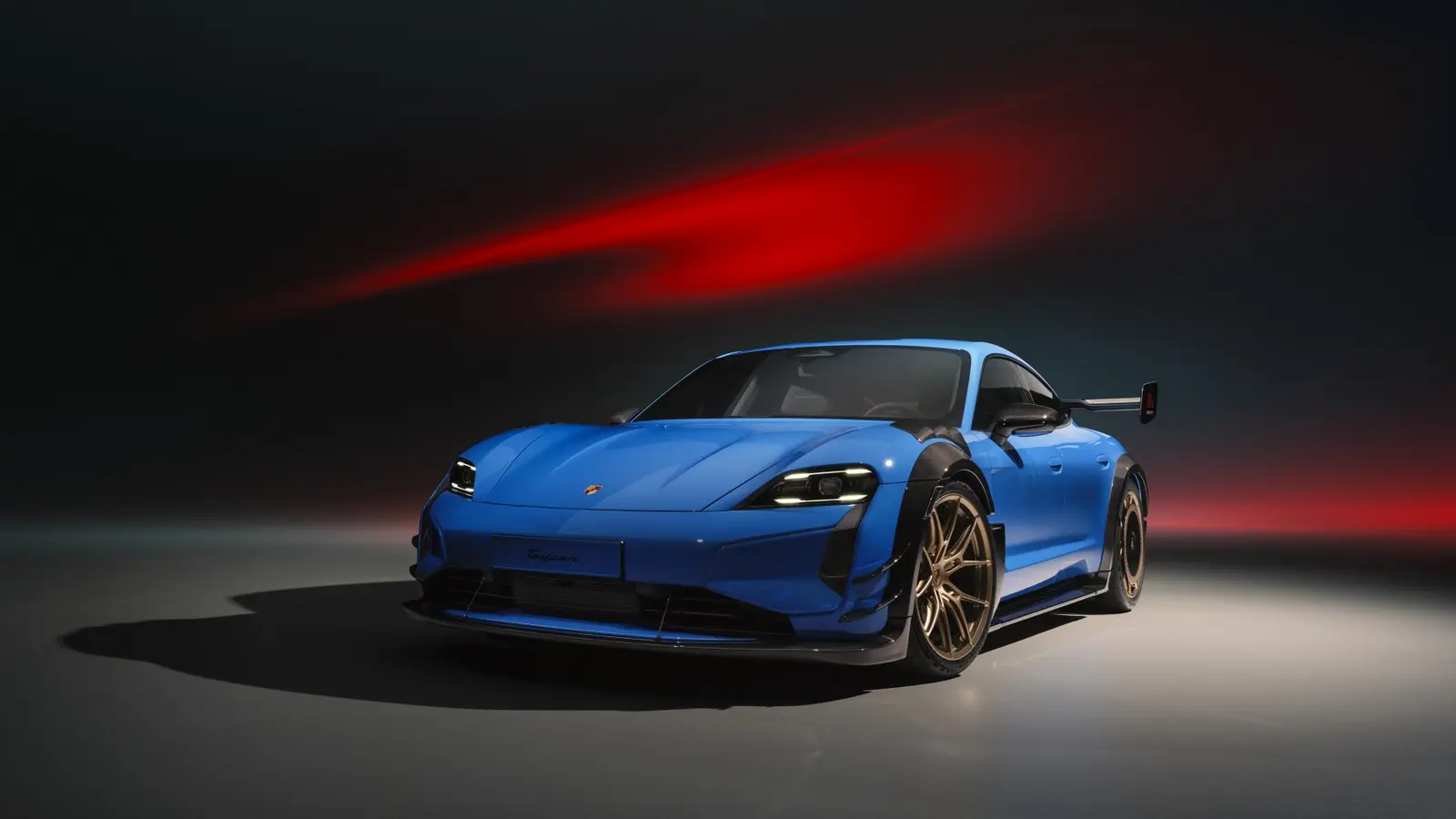
Key update: Taycan adds virtual gears, range tweaks and Manthey track kit
Porsche has given the Taycan another meaningful update for 2027 — and it’s a curious mix of showmanship and substance. The headline-grabbing addition is an “E‑Shift” virtual-gear function, complete with paddle shifters, simulated revs and amplified electric-sport sounds. But beneath the theatrics there are practical improvements too: modest range gains thanks to low-rolling-resistance tires, wider availability of the Performance Battery Plus in some markets, a new Digital Interaction infotainment system with OTA updates, and factory-ordered Manthey performance upgrades for hardcore buyers.

This refresh arrives almost seven years after the Taycan launched as Porsche’s first production EV. The model helped define Porsche’s electric ambitions, but the market has moved fast. New rivals — including performance-oriented offerings from Europe and China — now challenge the Taycan on range and value. Porsche’s 2027 package looks like a two-pronged response: inject headline-worthy tech to keep brand fans excited, while improving real-world usability and track capability to protect the model’s sporting reputation.

What is E‑Shift? Porsche’s virtual gearbox explained
The most controversial piece of the 2027 update is E‑Shift: a software-driven system that lets drivers select eight simulated gears via paddles on a new steering wheel. Activating E‑Shift changes several sensory cues:
- Simulated gear‑shift jerks and engine‑braking behavior that mimic a combustion transmission.
- A virtual tachometer that climbs to 8,000 rpm with a visible redline near 7,200 rpm.
- An altered interior and exterior “Porsche Electric Sport” sound package tuned to the selected gear mapping.

Porsche will make E‑Shift standard on the range‑topping Taycan Turbo GT and offer it as an option across the rest of the lineup. The software maps and acoustic profiles are model-specific, tuned to match output that ranges from roughly 408 PS in base performance configurations up to about 1,034 PS in Turbo GT launch-control trim. Porsche says the experience simulates shifting behavior while tailoring sound and regenerative-braking characteristics to each model and body style.

Why the fuss? Hyundai, AMG and the debate over simulated shifts
E‑Shift’s arrival at Porsche won’t surprise anyone who follows EV trends: Hyundai first popularized the gimmick on performance versions of its EVs, and Mercedes‑AMG recently did something similar with the second‑generation AMG GT 4‑Door. What is striking is Porsche’s apparent change of heart. In 2024 Porsche development driver Lars Kern reportedly said the firm had studied Hyundai’s approach and decided not to copy it, asking rhetorically, “why should we make something worse?” — a fair point given that introducing extra shift events can slow lap times compared with full, seamless electric torque delivery.

A year later, senior Porsche executives reversed course after sampling hot-hatch EVs like the Ioniq 5 N. Frank Moser, head of the 718 and 911 model lines, described the Hyundai as “eye‑opening,” and even Andreas Preuninger — Porsche’s GT boss and a noted purist — softened his stance after a test drive. The result: E‑Shift joins the Taycan’s set of options, promising a more analogue-feeling interaction for drivers who crave paddles and revs even in a 800‑volt electric platform.
Real-world benefit: modest range gains where it counts
Beyond the showpiece E‑Shift, some of the 2027 changes deliver measurable everyday value. Rear‑wheel‑drive variants of the Taycan sedan and Sport Turismo now offer optional 20‑inch summer tires with low rolling resistance. On cars equipped with the Performance Battery Plus, that change can increase WLTP-rated range by up to 20 km (about 12.4 miles). With the Performance Battery Plus fitted, Porsche claims a new WLTP ceiling of up to 700 km (435 miles) on specific configurations — the highest WLTP figure ever applied to a Taycan.
It’s important to temper that number: WLTP figures are optimistic and real‑world range depends on driving style, temperature and charging strategy. Still, these incremental gains matter in a segment where customers scrutinize every kilometer. For the U.S., Porsche has broadened access to the Performance Battery Plus (now 105 kWh usable capacity in many trims), and increased the maximum DC fast‑charge power on compatible 800‑volt chargers to around 320 kW. That improves both range potential and charging speed, two factors that buyers compare closely against competitors from China and Europe.
Charging hardware: NACS, CCS adapter and the odd exception

Porsche is also aligning the Taycan with North American charging realities. Most U.S. Taycan cars now feature an NACS DC fast‑charging inlet on the passenger‑side fender while retaining a J1772 AC inlet on the driver side. To simplify access to Tesla’s Supercharger network, Porsche will offer a built‑in CCS adapter that integrates into the car without the aftermarket look of dangling connectors.

There is, however, one quirky exception: the Taycan Turbo GT with the Weissach Package does not get the NACS inlet. Whether that’s an oversight or a deliberate nod to ultra‑premium buyers who charge at home is open to interpretation — but it underlines the sometimes-absurd choices automakers make when juggling trim differentiation and perceived customer habits.
Interior tech: Digital Interaction, OTA and smarter connectivity
The 2027 Taycan receives Porsche’s Digital Interaction infotainment suite, already seen on the Macan Electric and the Cayenne EVs. Improvements include faster response times (Porsche claims menus respond up to five times quicker), configurable widgets, and an attractive 3D vehicle model rendered in the car’s actual paint color.
Voice Pilot gets a more natural conversational layer, Google point‑of‑interest search is integrated, and Apple CarPlay and Android Auto functionality is expanded. Oddly, Porsche hasn’t announced Apple CarPlay Ultra support despite its long relationship with Apple.
Perhaps the biggest convenience change is ongoing software support: infotainment now receives over‑the‑air (OTA) updates, meaning feature upgrades and bug fixes can arrive remotely instead of through dealer visits. Practical additions include a 25 W wireless phone charger and a new Themes app that synchronizes ambient lighting and instrument display schemes. Porsche’s Paint to Sample palette also expands to 153 colors — 16 added this round — keeping personalization (and a lucrative revenue stream) front and center.
Manthey Kit: track optimization built at the factory

If you’re buying a Turbo GT for the Nürburgring rather than the grocery run, Porsche has another answer: the Manthey Kit is now available as a factory‑installed option for the Taycan Turbo GT with the Weissach Package. Manthey — the German firm known for Porsche race development — previously offered its upgrades only as aftermarket retrofits. Integration at the factory means the modifications are included under the factory warranty and are applied during production.
Porsche describes the kit as a suite of “aerodynamic, chassis and powertrain optimizations” that substantially increase lap performance. The numbers back that claim: a Turbo GT wearing the Weissach Package and Manthey equipment ran a 6:55.533 on the Nürburgring Nordschleife with Lars Kern at the wheel — a benchmark time that underscores how seriously Porsche treats track credentials even in its electric models.
What the Manthey Kit adds
- Enhanced aerodynamic elements for greater downforce and stability
- Track‑focused chassis tuning and adjustable suspension components
- Powertrain calibrations that optimize thermal management and lap‑to‑lap performance
For the minority of buyers who will take a Taycan to the circuit, this option delivers a plug‑and‑play, factory‑backed track package — an attractive proposition for owners who want race‑car performance without dealer‑installed complexity.
Performance and model positioning
The Taycan range remains broad in 2027. Power outputs span from the lower‑four‑hundreds PS in entry performance specs up to well over 1,000 PS on the Turbo GT with launch control. Porsche keeps three main body styles in play — sedan, Sport Turismo and Cross Turismo (depending on market) — and the platform remains unique within the Volkswagen Group, shared only with the Audi e‑tron GT. That bespoke architecture allowed Porsche to keep a distinct driving character, but it also made Taycan development a significant investment.
Market forces have complicated Porsche’s EV roadmap. The company once planned a larger seven‑seat EV and electric replacements for the 718 models by the end of 2026. Those plans were reassessed — in part because Taycan sales softened and the model’s depreciation curve proved steep — and Porsche decided to preserve some combustion platforms alongside electric plans. The 2027 refresh therefore plays a defensive role: it keeps the Taycan relevant in a fiercely competitive premium EV segment.
How the Taycan stacks up against rivals

The Taycan still sells on driving feel, build quality and brand cachet. But rivals are closing the gap. For instance, Mercedes‑AMG’s GT 4‑Door in the 55 configuration can be specified to reach a similar WLTP range (up to around 700 km in ideal setups) while delivering performance close to Taycan Turbo levels. Chinese EVs have also pushed range, battery capacity and value aggressively, pressuring European manufacturers to extract every efficiency gain.
Porsche’s strengths remain its driving dynamics, Manthey‑level track engineering, and the premium ownership experience. The 2027 updates emphasize those assets while adding optional spectacle (E‑Shift) and practical improvements (battery availability, tires, charging compatibility) to keep the model competitive.
Highlights — quick take
- E‑Shift virtual eight‑gear system with paddle control and simulated revs
- Low rolling resistance 20" summer tires available for certain RWD trims; up to +20 km WLTP
- Performance Battery Plus more widely offered (105 kWh usable); up to ~320 kW peak DC charging
- NACS inlet on most U.S. Taycans, J1772 AC inlet retained; built‑in CCS adapter available
- Digital Interaction infotainment with OTA updates, improved Voice Pilot, Google POI and 3D vehicle model
- Manthey Kit factory‑orderable for Turbo GT Weissach; Nürburgring 6:55.533 benchmark
- Paint to Sample expands to 153 colors, including Loretta Purple
Bottom line: practical gains, headline moments
The 2027 Taycan update is a layered package that mixes marketing theater with technical upgrades. E‑Shift will make the biggest splash in headlines and forums — it’s visually and aurally dramatic, and it gives drivers something analogue to manipulate in an electric car. But for many buyers the quieter additions will be more important: better charging compatibility in the U.S., slightly improved range with the Performance Battery Plus and low‑rolling‑resistance tires, and the convenience of OTA updates.
Porsche has chosen to address both emotion and practicality. The Manthey Kit preserves the Taycan’s sporting halo at the track, while efficiency tweaks and expanded battery options try to keep real‑world ownership competitive. Whether these changes arrest the Taycan’s sales slide or materially improve resale values remains to be seen — but for enthusiasts and loyal Porsche customers, the 2027 update deepens the Taycan’s appeal by combining sensory engagement with incremental utility.
As electric performance becomes ever more mainstream, Porsche’s challenge is twofold: to protect the marque’s DNA while responding to technological and market shifts. The 2027 Taycan is a snapshot of that balancing act — equal parts engineering pragmatism, brand theater and track obsession.
“Obviously, we look into what the competition does, but our perspective on this is always: why should we make something worse?” — Lars Kern, quoted in 2024
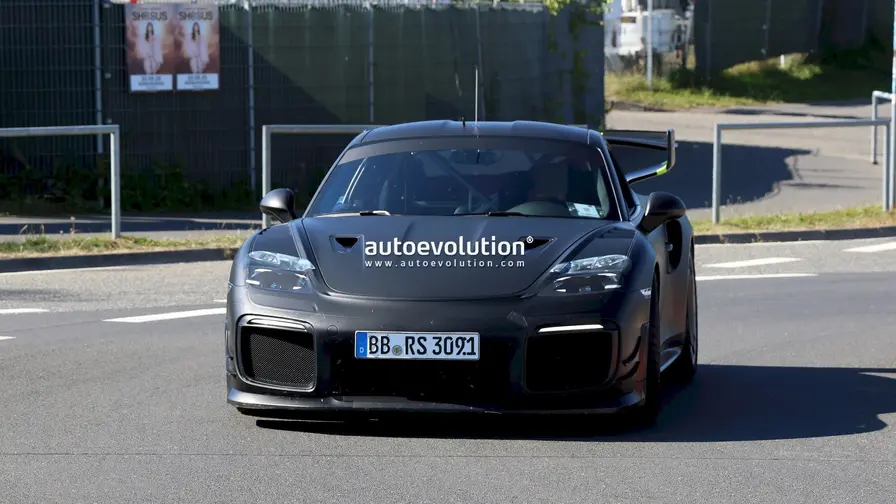
That tension — between purism and entertainment, efficiency and emotive appeal — is the story behind the 2027 Taycan. E‑Shift may be the most talked‑about feature, but the model’s ongoing evolution will be decided in months and years by buyers voting with their wallets and by how Porsche continues to refine both software and hardware on this bespoke EV platform.

Leave a Comment
Comments (4)
I test EVs at track days, simulated gears = neat demo, rarely faster tho. Manthey as factory option is the real draw. Wonder about that Turbo GT charging omission?
Feels overhyped but okay. Manthey kit is cool tho, factory warranty is the real win. E-Shift? meh, give me lap times not fake revs
is this even true? 700 km WLTP sounds great on paper, but real world temps, heat and speed will kill that. also why no CarPlay Ultra??
Wow, Porsche really went full theatre with E-Shift! Paddle shifters in an EV? kinda silly but also fun, curious how it feels lap after lap…