
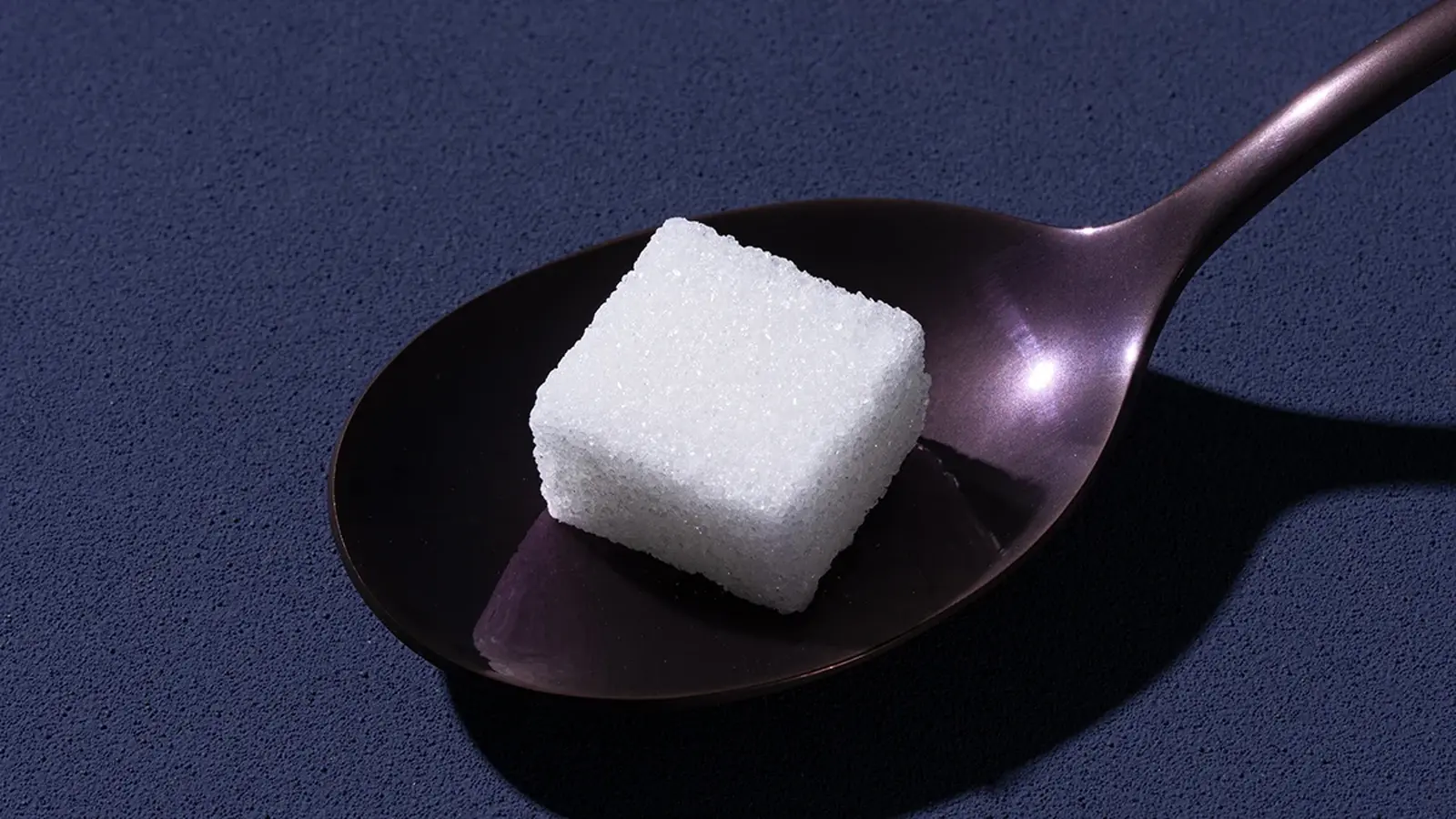
Everyone knows cutting back on sugar is supposed to be a health win. Teeth thank you. Waistlines often do, too. But a small new mouse study throws a surprising wrinkle into that tidy narrative: remove sucrose from a low-fat diet, and the body’s internal ecosystem can shift in ways that may not be obviously beneficial.
Researchers fed a pair of low-fat diets to two groups of mice for 16 weeks — one diet contained sucrose, the other did not. Twelve animals in total. By the end of the experiment the sucrose-free animals showed several troubling signs: an altered gut microbiome with fewer helpful bacteria and more inflammation-associated strains, poorer blood-glucose regulation and early markers of insulin resistance, and an accumulation of fat in the liver despite no change in body weight compared with the sugar-eating group.
Removing sugar entirely from a low-fat diet may disrupt gut microbes and metabolic balance, at least in this small mouse study.
Why might this happen? The gut microbiome is an unruly, sprawling community. Some microbes thrive on simple sugars; others prefer complex fibers or host-derived mucus. Pull one energy source away and you change the competitive landscape. That can alter microbial metabolites — like short-chain fatty acids — which in turn influence inflammation, how the liver handles fat, and how the body responds to insulin. The chain of events is plausible, but not yet nailed down.

The authors of the study — presented at ENDO 2026 and accepted for publication in Frontiers in Immunology: Nutritional Immunology — emphasize balance. They suggest that completely eliminating sucrose from a low-fat dietary framework may unintentionally harm gut and metabolic homeostasis, and that maintaining a range of carbohydrate types could be important for immune and metabolic health.
Experts outside the study urge caution. Nutrition rarely bends to single-factor explanations. Eliminating one ingredient is simple in theory but messy in practice: people and microbes respond to the total diet, not just a single sugar molecule. And because this was a small animal experiment, it can’t tell us how humans would react to the same change.
Context matters. Decades of research link excess added sugar to diabetes, heart disease and other chronic conditions, so the public-health message to cut back on processed sugar still stands. But this work suggests that pushing restriction to an absolute — a zero-sugar rule — could carry trade-offs, at least in terms of microbiome composition and early metabolic signals in mice. Earlier human research has even hinted that occasional sweets, depending on source and context, may not be uniformly harmful to cardiovascular health.
There are important limitations here. The sample was small, and mouse metabolism and microbiomes are not identical to ours. Details about the exact dietary formulations will be crucial when the full paper appears. Replication in larger animal cohorts and carefully designed human trials will be needed to test whether the pattern holds up and to tease apart mechanisms.
Still, the study is a useful reminder: nutritional interventions can have unintended ripple effects. Sometimes moderation is not just a moral cliché; it might be a biological one. Perhaps the wiser path is less “all or nothing” and more “what mix supports the microbes that support us.”


Leave a Comment
Comments
No comments yet. Be the first.