

Two people can shed the same 10% of their body weight and walk away with very different metabolisms. One sees dramatic drops in liver fat and steadier blood sugar; the other simply looks slimmer in the mirror. What explains the gap? A clinical trial from Washington University suggests the answer lies in what you eat, not just how much you lose.
Researchers enrolled 55 adults with obesity who also had prediabetes and excess liver fat, then fed them one of three diets for roughly five months: a very low-carbohydrate, high-fat ketogenic plan; a Mediterranean-style diet; or a high-carbohydrate, low-fat, plant-forward regimen. The study team supplied all meals and met with participants weekly to keep adherence tight. By the end, each group had lost about the same amount of weight—roughly 10% of starting body weight. But the metabolic story diverged sharply beyond the scale.
Muscle insulin sensitivity improved by about half across all three groups. That was a clear win for weight loss itself: when people shed pounds, their muscles generally respond better to insulin. The liver, however, told a different tale. On the ketogenic diet, liver insulin responsiveness rose two to three times more than on the other diets. Liver fat fell by 67% in the ketogenic group versus roughly 45% in the Mediterranean and high-carbohydrate groups.
Blood sugar regulation followed the same pattern. Twenty-four-hour glucose readings dropped about 20% on the ketogenic diet, compared with roughly 8% for the other two approaches. Daily insulin exposure plunged most on keto—about a 74% decline—while the Mediterranean and high-carbohydrate diets produced 44% and 27% drops, respectively. Half of the people on the ketogenic plan reversed their prediabetes over the study period, compared with 29% on the Mediterranean diet and only 7% on the high-carbohydrate diet.
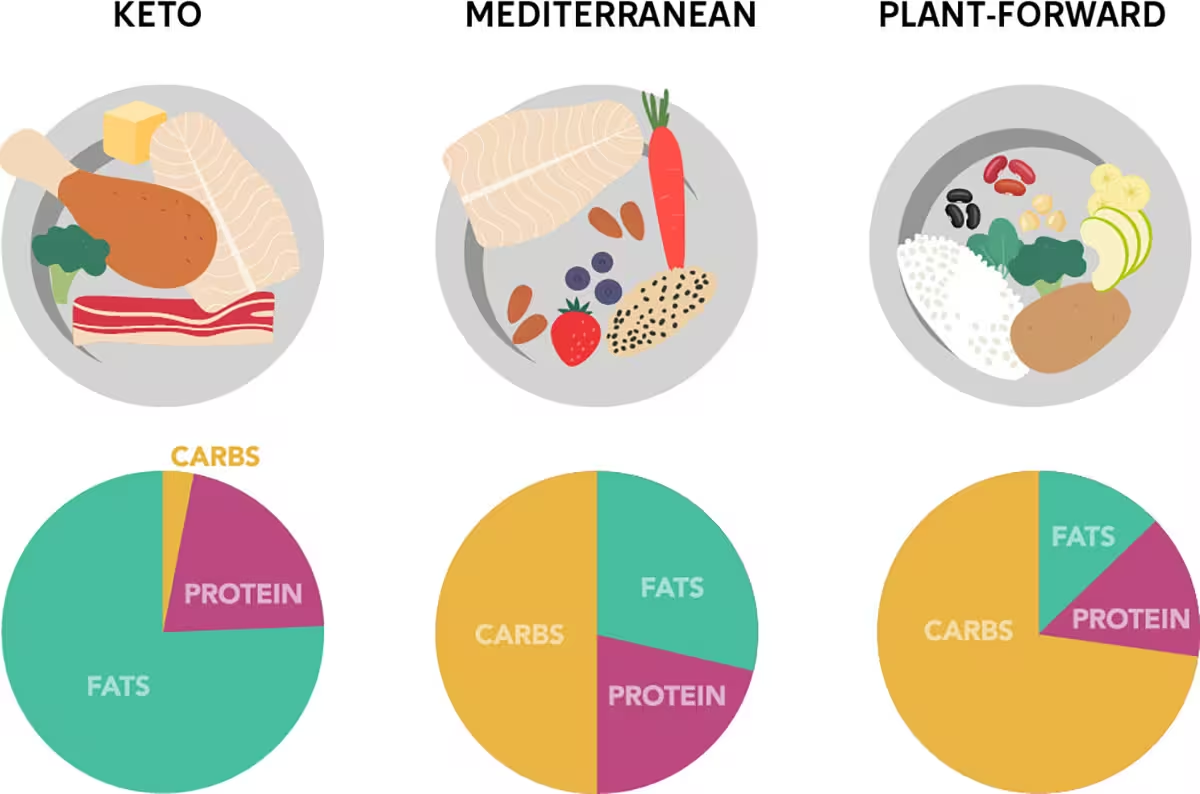
WashU Medicine researchers led a clinical trial testing three diets with different proportions of carbohydrates, fats and proteins and found all of them improved metabolic health, but a very low-carb ketogenic diet had additional benefits for liver health and blood sugar control.
A very low‑carbohydrate ketogenic diet may offer liver- and glucose-specific benefits beyond weight loss alone.
Those findings matter because fatty liver disease is not rare in people with obesity; it affects a large majority and is a leading cause of chronic liver problems worldwide. The study’s authors—clinicians and nutrition scientists at Washington University—argue that for patients wrestling with obesity, prediabetes and fatty liver, the extra metabolic gains of a ketogenic approach could slow progression toward more serious disease.
That is not an argument to dismiss other diets. All three eating patterns improved metabolic health with weight loss, and many patients will benefit from a Mediterranean or plant-forward approach for reasons beyond liver fat—sustainability, cardiovascular risk reduction, personal preference. And with more people using medications such as GLP-1 receptor agonists to help with weight loss, diet choice still matters: the combination of weight reduction and targeted macronutrient changes can influence specific health outcomes in different ways.
Dietary decisions are personal, but this trial is a reminder that shedding pounds and shifting metabolism are related yet distinct goals. Choosing the path that best matches someone’s health priorities—especially when fatty liver and blood sugar control are at stake—can change more than the number on the scale.


Leave a Comment
Comments
No comments yet. Be the first.