
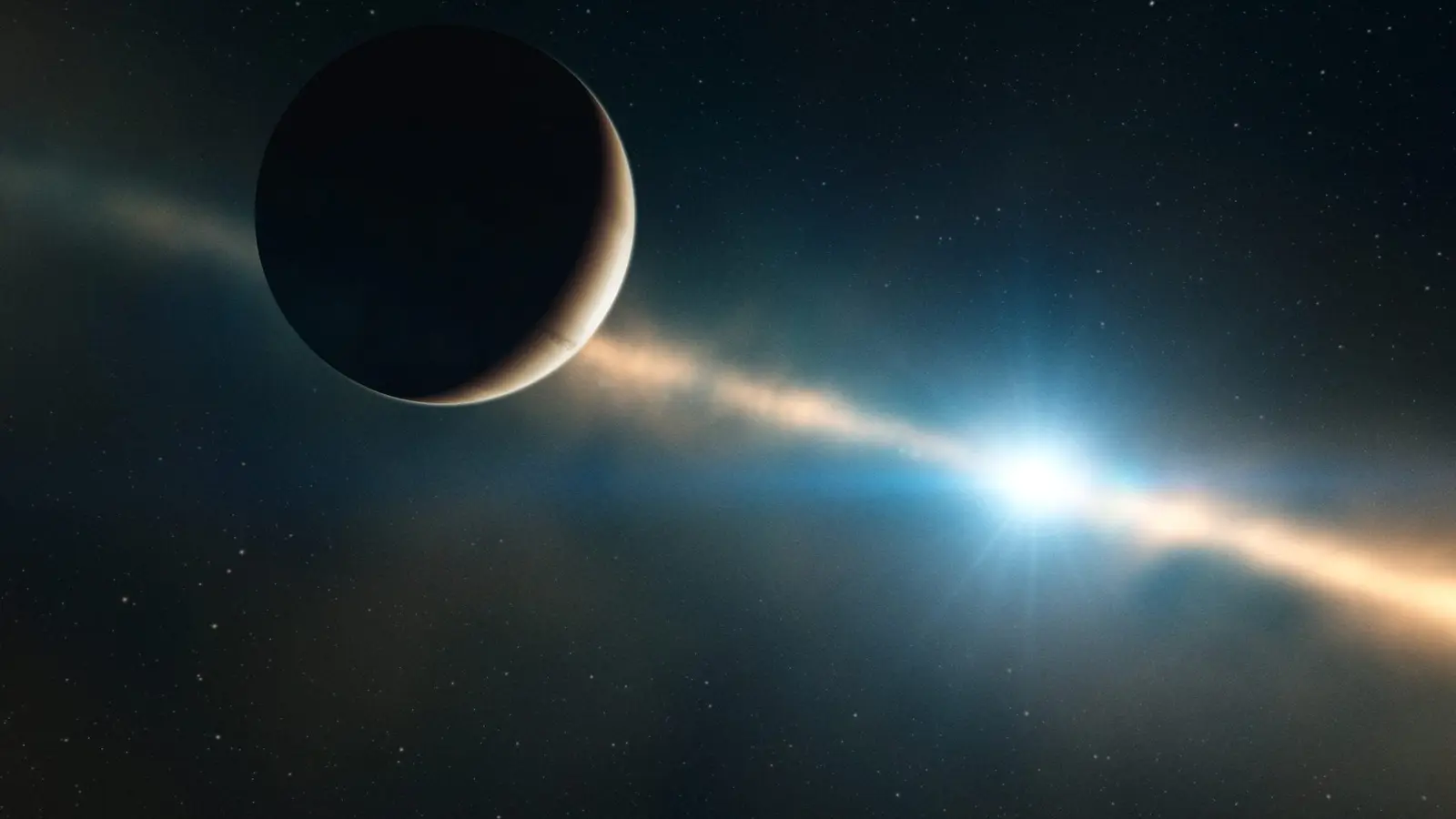
Imagine a world eleven times the mass of Jupiter, orbiting its star at a distance that would place it just beyond Saturn in our own Solar System. That planet exists: Beta Pictoris b. It orbits every 23 years, sits roughly 10 astronomical units from its young host, and is forcing astronomers to rethink a tidy tool they hoped would pinpoint where giant planets are born.
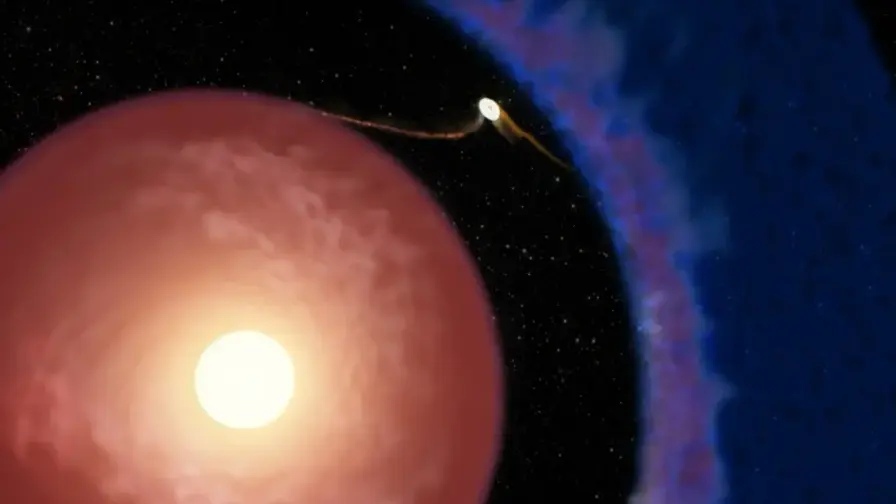
Scientists once pinned hope on a subtle chemical clue. Carbon monoxide comes in two isotopic flavors—12CO and its rarer sibling 13CO—each carrying a different carbon nucleus. In theory, the ratio between those two molecules in a planet’s atmosphere could betray whether the world formed inside a warm, gas-dominated zone or farther out where CO freezes onto grains at the so-called CO snowline. A low 12CO/13CO ratio would hint at formation beyond that icy boundary, followed by inward migration. Elegant. Simple. Too good, it turns out, to be trusted without better data.
Early measurements with the GRAVITY instrument at the Very Large Telescope Interferometer suggested Beta Pictoris b had an unusually low 12CO/13CO ratio, a result consistent with an origin in the cold reaches of the disk. But instruments are imperfect. Signals from 13CO are faint. Systematic biases can nudge interpretations. Observers cautioned as much then. Now, with GRAVITY+—an upgraded, higher-precision version of the interferometer—those tentative conclusions are being overturned.
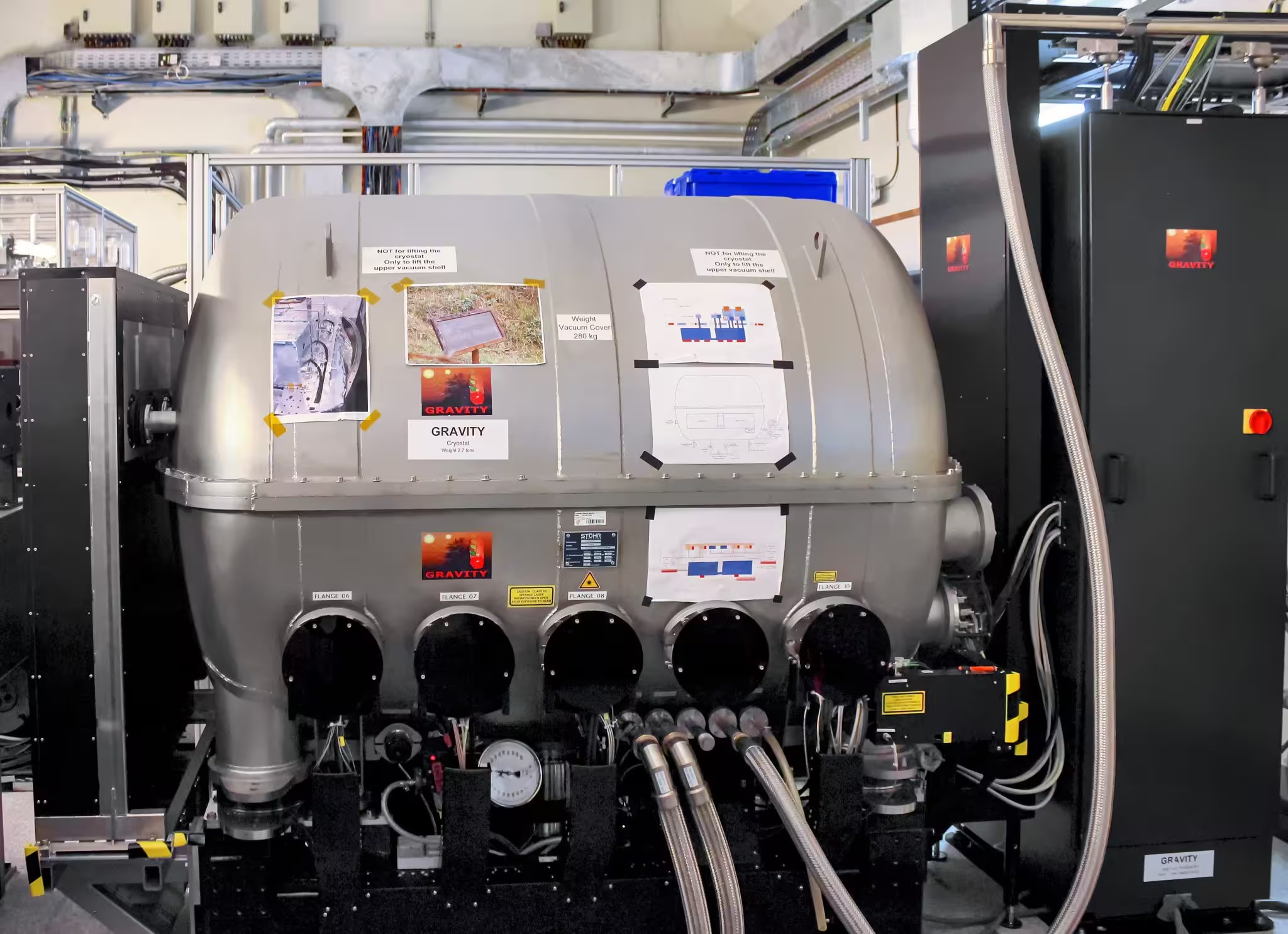
The GRAVITY instrument of the Very Large Telescope Interferometer (VLTI) at the European Southern Observatory’s (ESO) Paranal Observatory.
Antonia von Stauffenberg and colleagues at the Max Planck Institute for Astronomy returned to Beta Pictoris b with GRAVITY+ at ESO’s Paranal Observatory. The upgrade sharpens adaptive optics and stabilizes the interferometric signal. The payoff was immediate: a substantially higher 12CO/13CO ratio than previously reported. Independent work by González Picos et al. (2026) using a different instrument found a matching value, strengthening the case that the earlier low ratio was affected by instrumental uncertainty rather than a genuine chemical fingerprint of formation far from the star.
What does this higher ratio mean? On first pass, it favors a birthplace closer to the star—inside the CO snowline—consistent with the planet’s present orbit. But the story is messier. The new ratio mirrors values measured across the Solar System and the interstellar medium. In other words, atmospheric carbon isotope ratios so far seem to lack the contrast needed to reveal a planet’s natal address. Most of the young giant planets examined with this method show similar values, suggesting the diagnostic power of 13CO as a formation tracer may be limited by natural uniformity or gaps in the models.
‘It is still difficult to utilize 13CO as a formation tracer of giant planets,’ von Stauffenberg notes, pointing to lingering uncertainties in both observations and disk chemistry models. The chemistry of CO ice and how isotopes partition during disk processes may hide important physics that our current simulations miss. Until those mechanisms are better mapped, a single isotopic ratio cannot be treated as a smoking gun for migration histories.
GRAVITY+ delivered more than an isotopic correction. The team noticed tentative changes in the planet’s brightness on timescales near 8.7 hours—close to an inferred rotation period. If real, these flickers could signal patchy clouds or chemical heterogeneity sweeping across the visible hemisphere as the planet spins. The statistical weight of that detection is still light. But the possibility excites researchers because it shows ground-based interferometry can begin to probe weather on bona fide exoplanets, not just bulk composition.
Jonas Sauter of MPIA emphasizes the leap in data quality: the upgraded interferometric stability and fidelity open doors for characterizing directly imaged planets in ways that were previously out of reach. Better fidelity means fewer false leads. It also means that weak but telling signals—rotational modulation, subtle molecular lines—can be teased from noisy backgrounds.
So where does that leave the quest to rewind a planet’s past? For now, in a more cautious place. Carbon isotope ratios remain a promising tool, but not yet a standalone answer. The field needs improved instruments, a larger sample of planets, and refined disk chemistry models that capture how isotopes behave during ice formation and grain growth. Combining isotopic data with other chemical markers and dynamical information may finally let astronomers reconstruct a planet’s migratory path with confidence.
The takeaway is equal parts humbling and invigorating: nature rarely hands over clear-cut answers. Instruments improve, models evolve, and planets keep surprising us—if we keep looking closely enough.

Leave a Comment
Comments (1)
Wow, didn't expect that. CO isotopes looked so promising, but instruments can rly fool us. The possible 8.7h flicker though, clouds? If real, that's awesome