
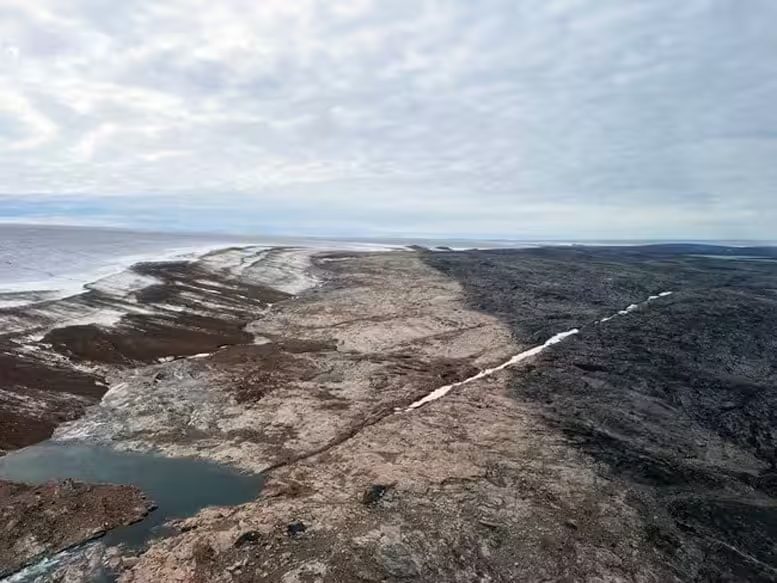
On a windswept ridge of Baffin Island, a strip of bare rock reads like a clock. Pale lichen gives way to fresh, dark stone where ice once pressed and paused. That trimline — the line the ice left behind — is a quiet witness to something surprising: the slow beginning of a new glacial cycle that never finished.
Scientists studying the remnant of the great Laurentide Ice Sheet, now shrunken to the Barnes Ice Cap, found plant material that had been buried and preserved under cold, unmoving ice. Unlike ordinary glaciers that grind the landscape clean, this cap was frozen to its bedrock and simply covered vegetation as it crept forward. When the ice retreated after 1960, those time-stamped plants reemerged.
Carbon-14 dating of those buried plants, along with samples from nearby thawing caps, mapped a clear arc: the Laurentide reached one of its smallest footprints about 3,000 years ago. Around 2,000 years ago, conditions cooled enough for ice to begin advancing again. In other words, the very earliest phase of a glacial period was under way. Then the 20th-century warming arrived and put the brakes on that process.
It’s an odd kind of counterfactual history. Imagine the planet taking a first, tentative step toward the next ice age—an inching of ice margins across tundra and rock—only for us to pull it back. The team behind the study positions that initial growth as the start of a new glaciation, a perspective that nudges the definition of an ice age back into its formative centuries rather than waiting for continental-scale ice to reassemble.
Why does that matter? Because early-stage ice behaves as a seedbed. A persistent patch of cold, thick ice can trigger local feedbacks—reflecting more sunlight, changing regional moisture and temperature patterns—that help ice grow and spread. The old Laurentide once acted like that. The Barnes remnant could have been a natural launching pad when the next long-term cooling arrived. With that foundation erased, future ice sheets would have to begin from scratch.
There’s no dramatic overnight switch. Even with the early growth the researchers documented, building the Laurentide back to its former continental reach would have taken tens of thousands of years. Noticeable cooling on human timescales? Unlikely. But removing the nascent ice alters the long game, the slow choreography of Earth’s climate over millennia.
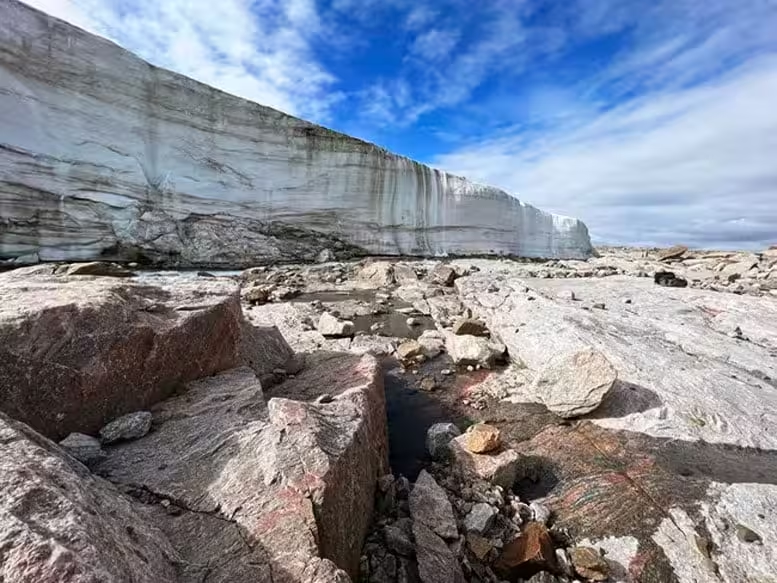
Using careful fieldwork, carbon dating and landscape forensics, the scientists offer a humbling conclusion: human-driven warming didn’t just melt ice; it halted the opening chapter of the next glaciation. The Barnes Ice Cap itself is projected to dwindle away within centuries, and with it a natural foothold that once made the return of vast ice more likely.
Warming interrupted the earliest stages of a new glacial period, removing the natural seed that might have helped future ice sheets grow.
The story is both local and planetary. A strip of exposed rock on Baffin Island tells us about processes that unfold over thousands of years, yet which we have already influenced. What will the next few centuries of climate change mean for the slow rhythms of Earth? The answer will depend on choices we still have time to make.


Leave a Comment
Comments
No comments yet. Be the first.