
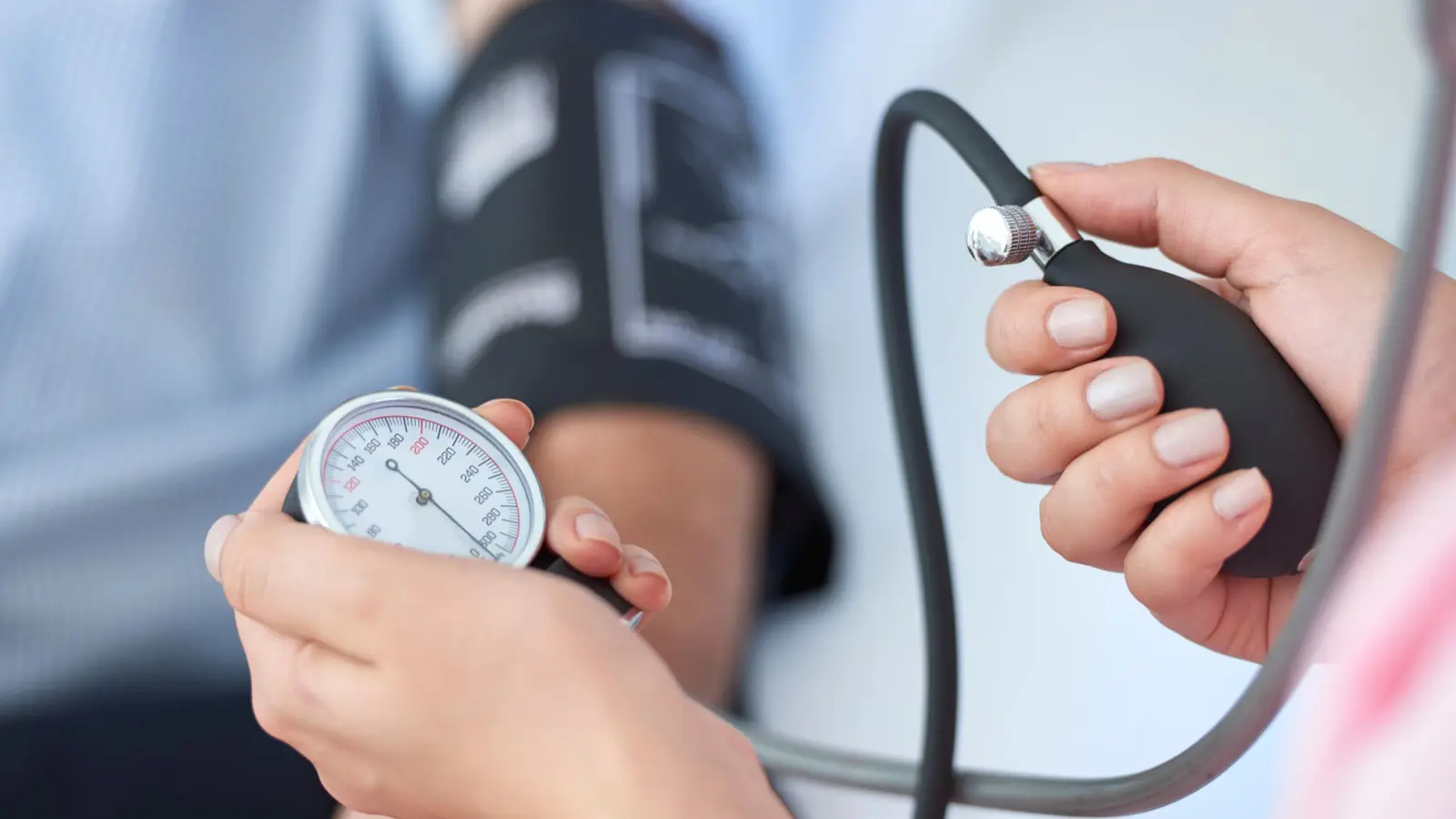
What if a fingertip-sized patch, soft as jelly, could nudge the body’s own blood-pressure controls back into line? That is the image looming from a new study out of Penn State: a 3D-printed, hydrogel-based implant that hugs an artery and uses gentle electrical pulses to bring down high blood pressure without stitches or rigid hardware.
Hypertension is common and stubborn. Many patients respond to drugs and lifestyle changes, but a significant minority have drug-resistant hypertension — the kind that persists despite three or more medications. For them, engineers and clinicians have been exploring another tactic: bioelectronic medicine that taps the nervous system’s built-in reflexes rather than relying solely on pharmaceuticals.
Tao Zhou and his team built such a device and named it CaroFlex. It targets the carotid sinus, a small region where baroreceptors—specialized stretch-sensitive nerve endings—monitor the artery’s distension. When those receptors fire, they trigger the baroreflex, a neural feedback loop that can relax blood vessels and lower blood pressure. Stimulate that region electrically, and you can effectively turn the reflex up.
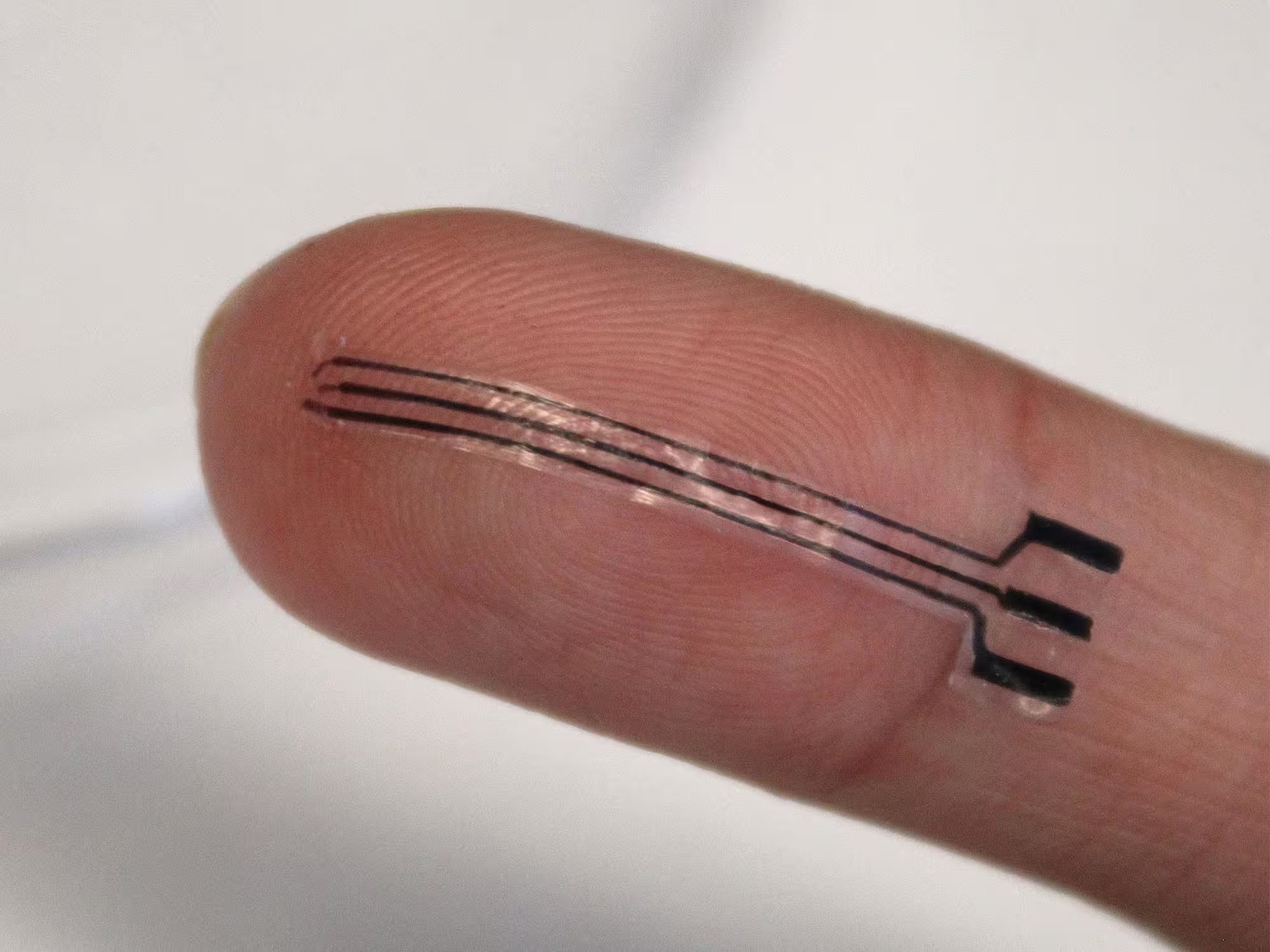
Even though the team’s new bioelectronic is only about the size of a fingertip, it could offer an effective and biocompatible approach to addressing high blood pressure.
But there’s a mechanical problem. Arteries do not behave like metal. They stretch. They contract. They are soft. Traditional electrodes are rigid and typically require sutures to stay put. Over time, stitches and stiff implants can cause irritation or damage, undermining long-term performance. The CaroFlex approach tries a different tack: make the device behave more like living tissue.
Made mostly of hydrogel, CaroFlex combines conductive and adhesive layers in a printed stack. Conductive hydrogel elements deliver the electrical pulses. Adhesive hydrogels act like a painless glue, letting the device stick to the artery’s surface without needles or sutures. The team used 3D printing to integrate these functions into a single, flexible construct tailored to soft tissue mechanics.
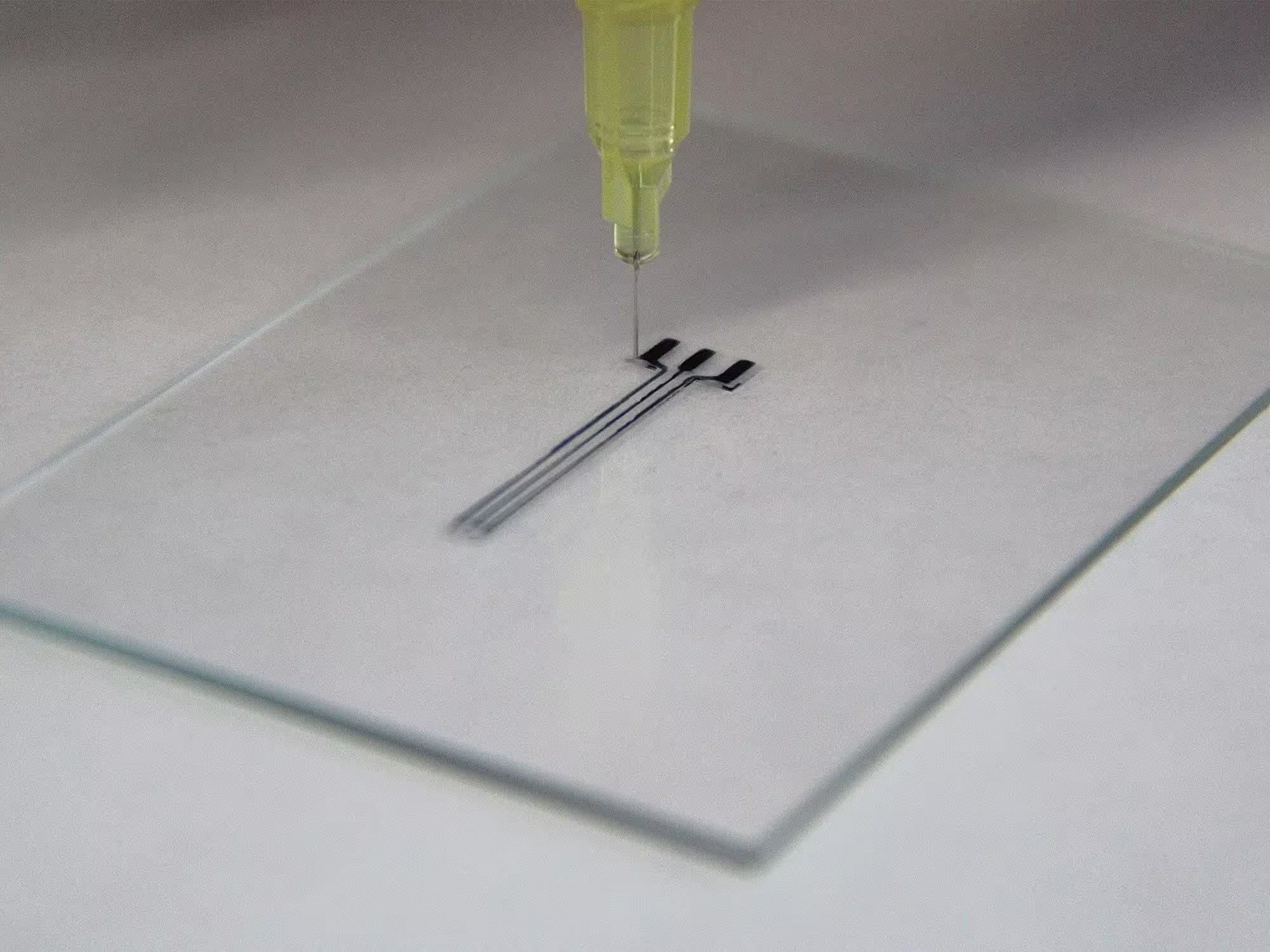

3D printing allows the team to produce bioelectronics faster and with better biocompatibility to the body’s soft tissues than traditional fabrication methods.
In rat experiments the results were striking. Researchers placed CaroFlex on the carotid sinus and tested multiple stimulation frequencies during short monitoring sessions. Four out of five frequencies lowered arterial pressure, with average drops exceeding 15 percent across tested measures.
The implant produced meaningful reductions in systolic, diastolic, and mean arterial pressure in the rodent model.
Beyond acute efficacy, the material behavior mattered. Tissue samples and explants examined two weeks after implantation showed no clear signs of damage or immune rejection. In bench tests the device stretched to more than twice its original length before breaking, and the adhesive film maintained a reliable bond even after storage for months. When compared to traditional platinum electrodes, the hydrogel interface adhered more closely to tissue and provided a more consistent electrical connection under dynamic conditions.
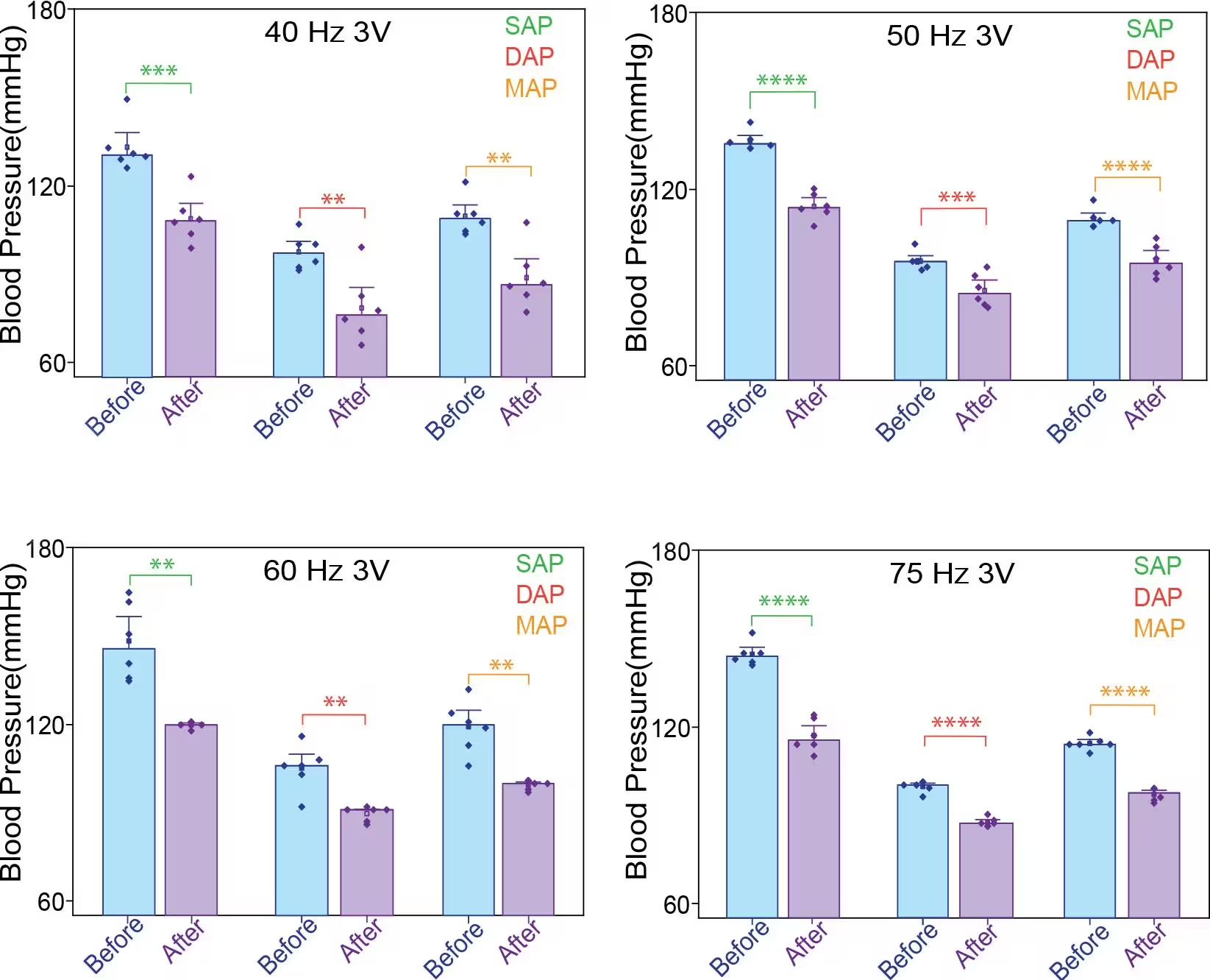
The figure demonstrates the impact CaroFlex had on systolic arterial pressure (SAP), diastolic arterial pressure (DAP) and mean arterial pressure (MAP) in rodent models. The team compared readings taken from before and after stimulation, using four different electrical frequencies, reporting that CaroFlex reduced average levels across all domains.
There is elegance in that simplicity. Rather than overpowering the cardiovascular system, CaroFlex leverages an existing reflex, modulating it gently and locally. The soft, jelly-like composition reduces mechanical mismatch with arteries and removes the need for sutures that can abrade tissue during the natural pulsing of blood.
Of course, rodent success is not the same as a clinical fix. The researchers note the usual caveats: scaling the device, optimizing stimulation parameters for human anatomy, long-term safety beyond weeks, and regulatory pathways all lie ahead. But the manufacturing angle also matters. 3D printing allows rapid iteration of geometry and material blending, which could speed development toward human testing and, eventually, wider distribution.

This work sits at the intersection of materials science, neural engineering, and cardiovascular medicine. It is a reminder that sometimes the path forward is not a stronger drug or a more forceful implant, but a softer, smarter interface with the body itself — one that listens and helps the body listen back.

Leave a Comment
Comments
No comments yet. Be the first.