

Heard the stat about 99 percent? It stuck like a shockwave when it first hit headlines. A 2017 autopsy series found nearly every examined brain from former NFL players showed chronic traumatic encephalopathy, or CTE. The result was sensational — and incomplete.
That early figure came from a very specific pool: families who chose to donate brains to research. People with worrying cognitive or mood changes are more likely to take that step. The consequence is a classic selection bias, and in the world of post-mortem brain research, that bias warps the picture of how common CTE really is among all players.
Researchers from Boston University and collaborators have now pushed past that fog. By linking the UNITE brain bank data with national mortality records and explicitly modeling the donation bias, they produced what they describe as the first population-level estimate of CTE neuropathology at death among former NFL players. Their conclusion is sobering: about 74.5 percent of deceased players had CTE pathology at the time of death between 2008 and 2023.
How did they reach that number? It helps to walk back through the evidence. Another recent effort identified 1,712 former NFL players who died between 2008 and 2021. Of those, 338 had donated brains and 315 of donated specimens showed CTE. That raw sample creates an enormous uncertainty window — anywhere from roughly 18.5 percent up to nearly 99 percent could be true for the full population, depending on how donation choices skew the sample.
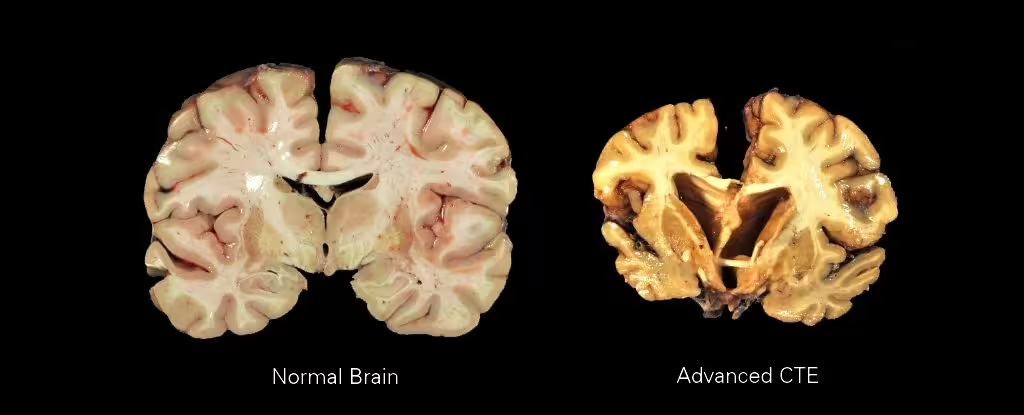
To tighten that range, the new analysis estimated how much more likely someone with cognitive or behavioral symptoms would be to donate. Using plausible values for that selection effect — the team modeled symptomatic players as about five times more likely to contribute brains — they recalculated prevalence for the whole group of deceased players. The result lands near three-quarters, a figure that is strikingly high even after accounting for bias.
These findings do not mean all affected players developed dementia or that every former athlete will face severe decline. Clinical expression varies. Some people with CTE pathology show cognitive or mood problems; others have fewer symptoms or different trajectories. Clinicians working with former players report that targeted therapies and proactive brain-health strategies can improve memory, mood and daily functioning, especially in midlife.
Still, the public-health implications are hard to ignore. If CTE neuropathology is this prevalent among professional players at death, questions multiply. How common is CTE among college or high school players? Which patterns of hits, seasons and positions carry the greatest risk? Can early interventions — rule changes, equipment improvements, or training techniques — blunt the long-term toll?
Researchers emphasize that more work is needed on mechanisms, on how pathology translates into symptoms, and on prevention across all levels of play. The new study, published in JAMA Network Open and led by biostatistician Julia Gallini at Boston University with contributions from neuroscientists including Daniel Daneshvar, marks a methodological advance but also a stark call for broader data and better diagnostics in living athletes.
For now, the takeaway is plain and pressing: repeated head impacts in football leave a legacy that shows up in the brain long after the final whistle. How the game, the medical community, and players respond will shape not only careers but decades of brain health.


Leave a Comment
Comments
No comments yet. Be the first.