
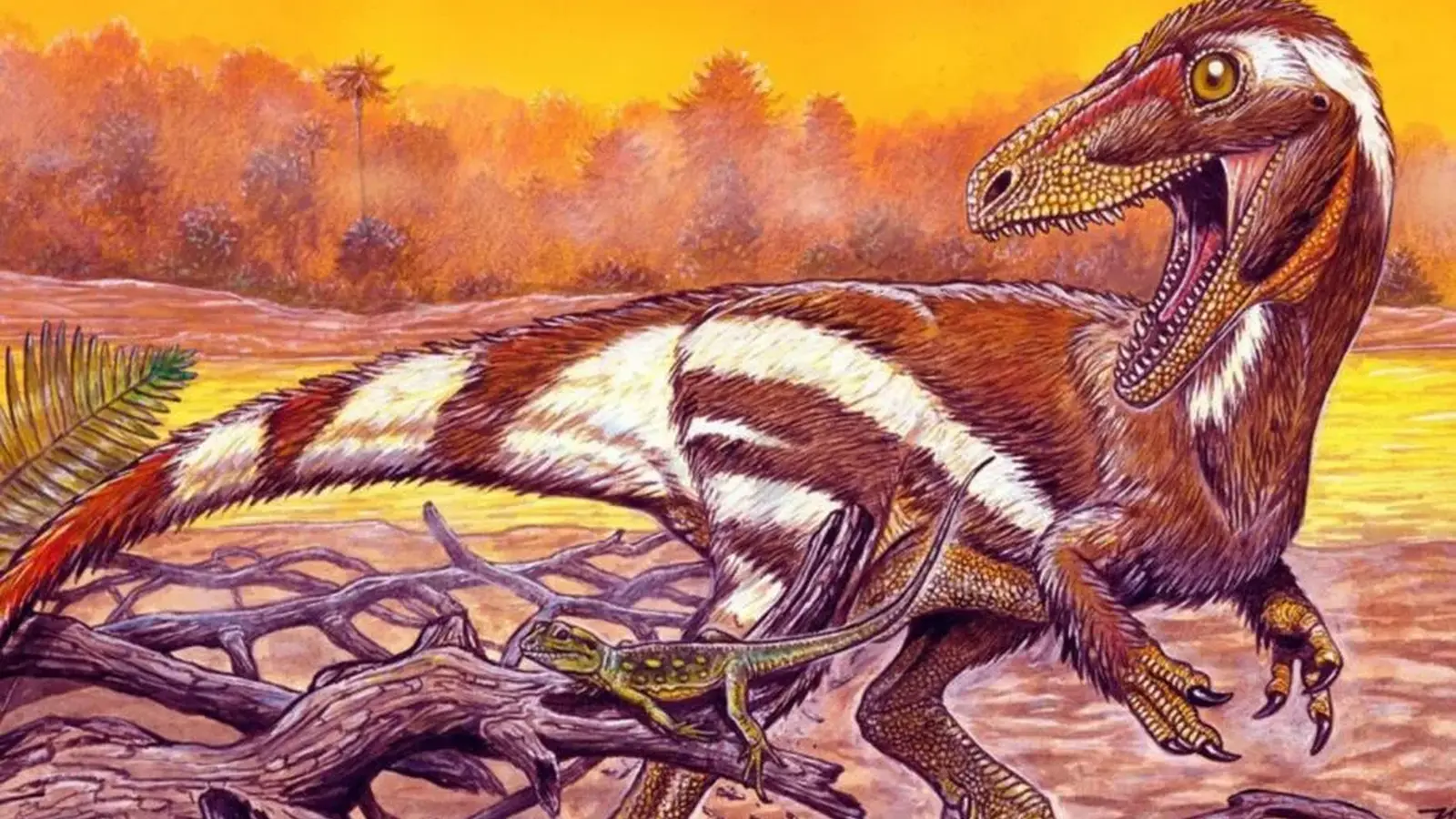
Imagine peering into a 115‑million‑year‑old bone and seeing the echo of blood. That is precisely what a team from Curtin University claims after reexamining a small right leg bone recovered in Brazil in 2008.
Under microscopes, researchers found oval, cell‑sized structures lodged inside tiny vascular canals. They looked like red blood cells — in shape, size and location. The quick, easy explanation would be contamination: fungal threads, modern microbes, or mineral grains masquerading as biology. The team did not stop at appearances.
Microscopy was paired with chemical sleuthing. High‑performance liquid chromatography and mass spectrometry flagged the presence of heme B, a molecule intimately linked to oxygen transport in red blood cells. Elemental mapping revealed iron, carbon and nitrogen concentrated with the cell‑like features, while the bulk bone matrix was dominated by phosphorus, calcium and fluorine. Tests also failed to show pyrite framboids, sediment particles, fungal hyphae or spores that could explain the shapes.
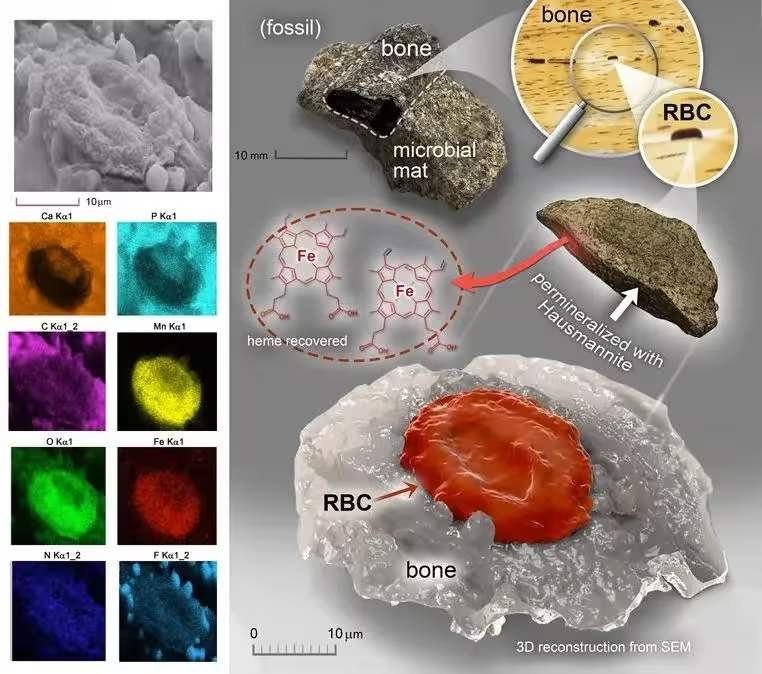
Context matters. The bone appears to have been buried rapidly in shallow, low‑oxygen water, under a thin microbial layer. The researchers argue that manganese‑rich mineralization during fossilization may have stabilized or replicated the original soft structures long enough for them to mineralize and persist.
Does this mean intact dinosaur blood is sitting in a museum drawer? Not exactly. What the team describes are mineralized traces that retain chemical fingerprints of blood‑derived molecules — not living cells. The authors are cautious: further independent analyses are needed to confirm biological origin and rule out all alternative pathways.
If confirmed, these would be among the oldest molecular traces of dinosaur blood yet reported.
The study, published in Proceedings of the National Academy of Sciences, nudges open a door to molecular paleontology. It suggests that under rare and specific conditions, chemical whispers of soft tissues can survive deep time — waiting for new tools and fresh eyes to hear them.

Leave a Comment
Comments
No comments yet. Be the first.