
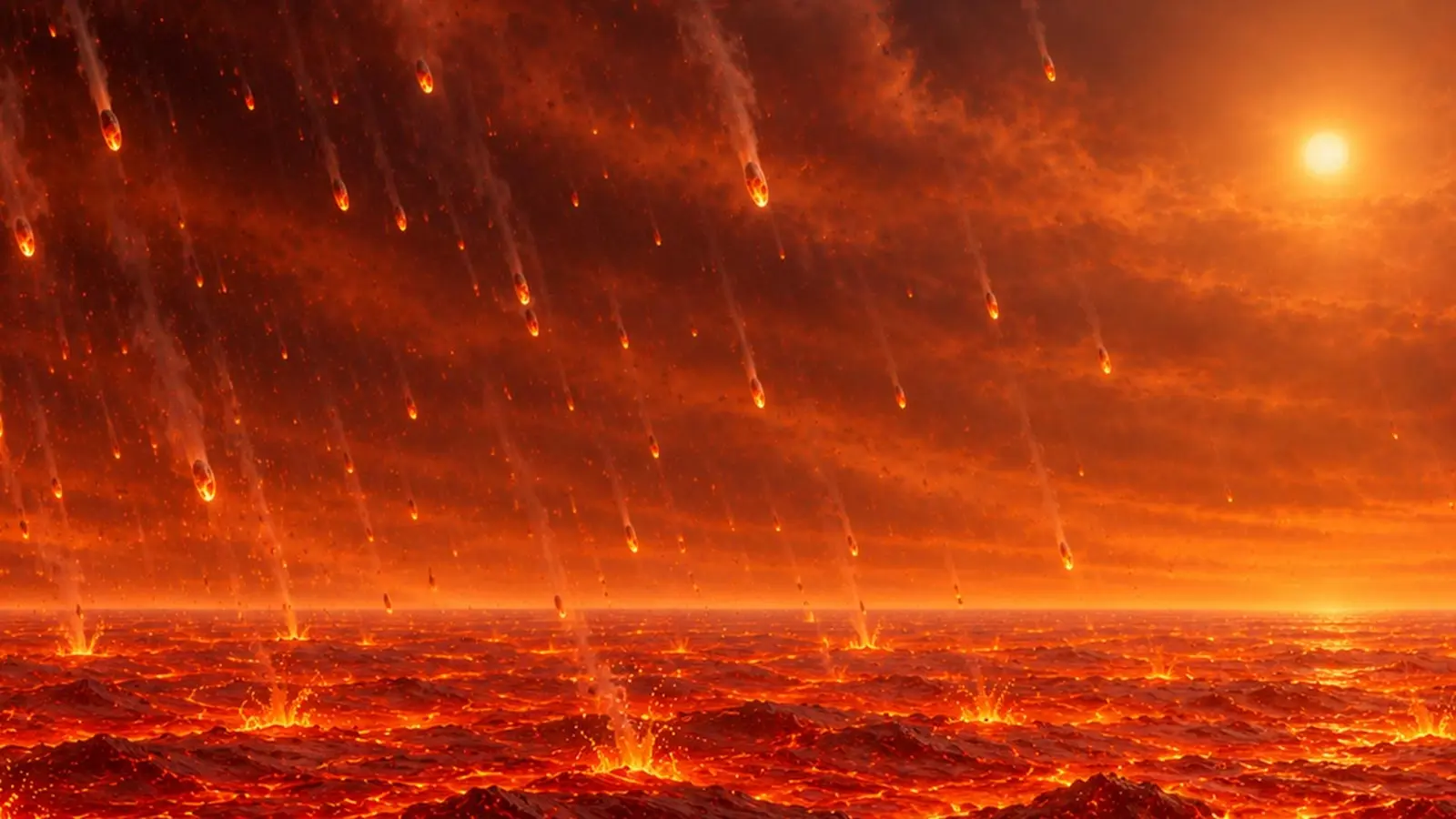
Imagine rain that doesn’t wet your skin but changes the chemistry of a whole planet. Strange as it sounds, laboratory work now suggests that tiny rocky particles falling through a hot, hydrogen-rich atmosphere could have forged much of Earth’s water as the planet was assembling.
Graduate researcher Susmita Garai and colleagues Zachary Sharp and Peter Olson at the University of New Mexico set out to test a simple but bold idea: can iron-bearing silicate rocks, heated to molten temperatures and bathed in hydrogen, turn their bound oxygen into water? To mimic the brutal environment of early planetary growth they heated silicate samples to roughly 1,200–1,400 °C and held them there for periods spanning 15 minutes up to three hours. Some experiments flowed hydrogen over the molten rock; others used helium as a control.
The result was surprisingly fast chemistry. Under hydrogen, much of the iron oxide in the samples reduced to metallic iron, and water vapor emerged as a byproduct. In fact, nearly 80% of the iron oxide converted to metal in the hydrogen runs; the helium experiments showed no comparable reaction. The key was hydrogen snatching oxygen atoms from iron-bearing minerals, leaving elemental iron behind and releasing H2O into the surrounding gas.
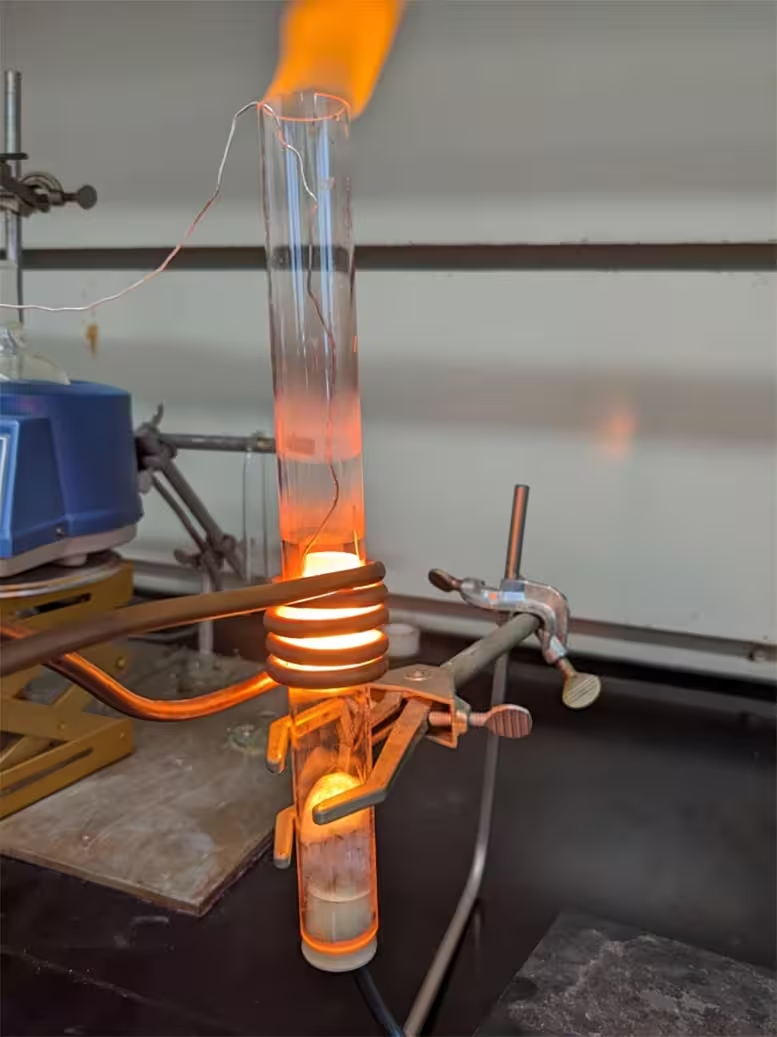
Experimental apparatus heating silicate rock samples.
It’s a vivid image: pebbles—think grain-sized fragments of rock—plunging through a searing atmosphere, shedding oxygen as they melt and, in the process, generating steam. If an infant Earth acquired a substantial hydrogen envelope as it grew, that falling material would have been exposed to just the right conditions for this chemistry to proceed.
Why does any of this matter for the question of where Earth’s water came from? For decades, the dominant explanations have pointed to icy visitors: cometary impacts or hydrated meteorites delivering water from the cold outskirts of the solar system. But those stories face challenges, including matching Earth’s detailed chemical fingerprint. The pebble-rain mechanism sidesteps some of those difficulties by producing water in situ during accretion—no long-distance deliveries required.
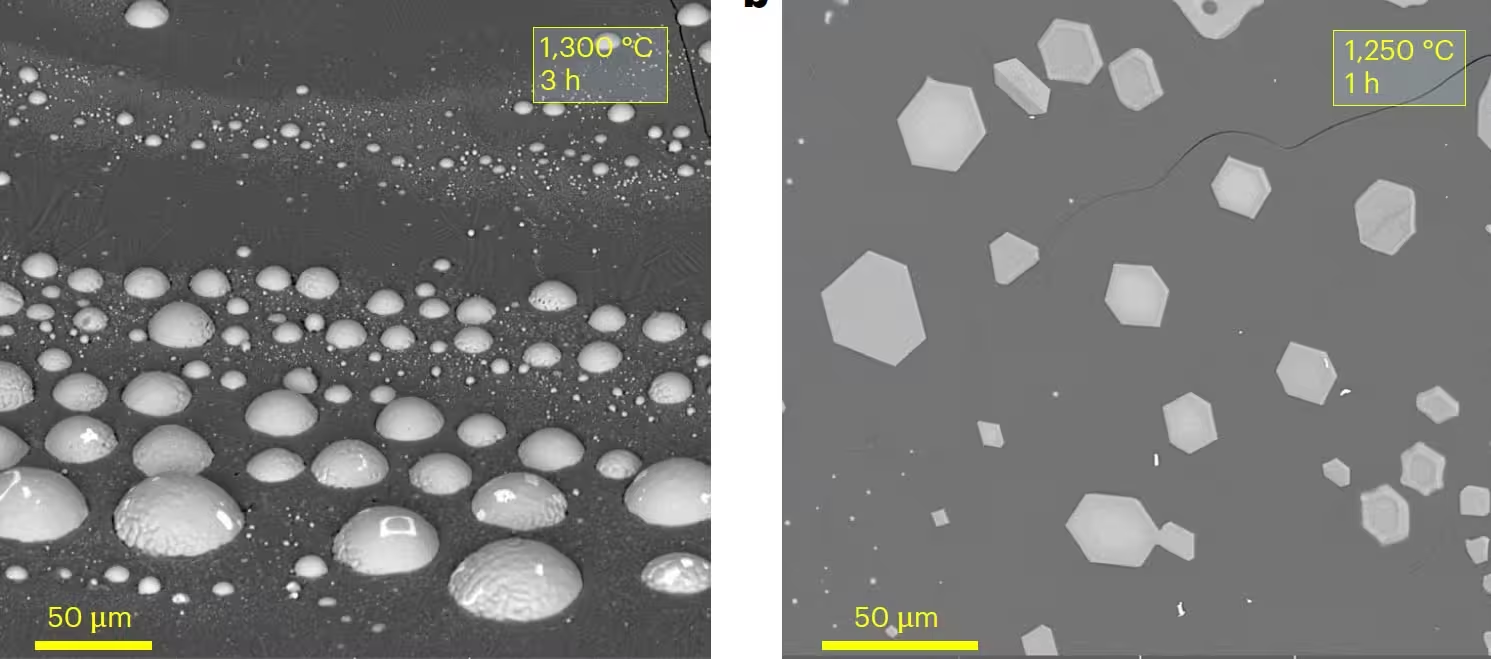
Results from the experiment. Left showcases the molten iron in silicate melt. Right shows the solid iron crystals in silicate melt.
When the researchers extrapolated their experimental rates to realistic pebble-accretion scenarios, the numbers grew astonishing. Their calculations indicate that this reduction chemistry could plausibly manufacture amounts of water equivalent to hundreds of Earth oceans. That does not prove every ocean came from pebbles. But it does open a new pathway that could have contributed substantially to our planet’s hydrosphere.
This work implies that any Earth-sized world that develops a hot, hydrogen-rich atmosphere while it’s forming could naturally make its own water. The implication ripples outward: if pebble accretion and hydrogen envelopes are common in planet formation, then watery worlds may be more frequent than we assumed.
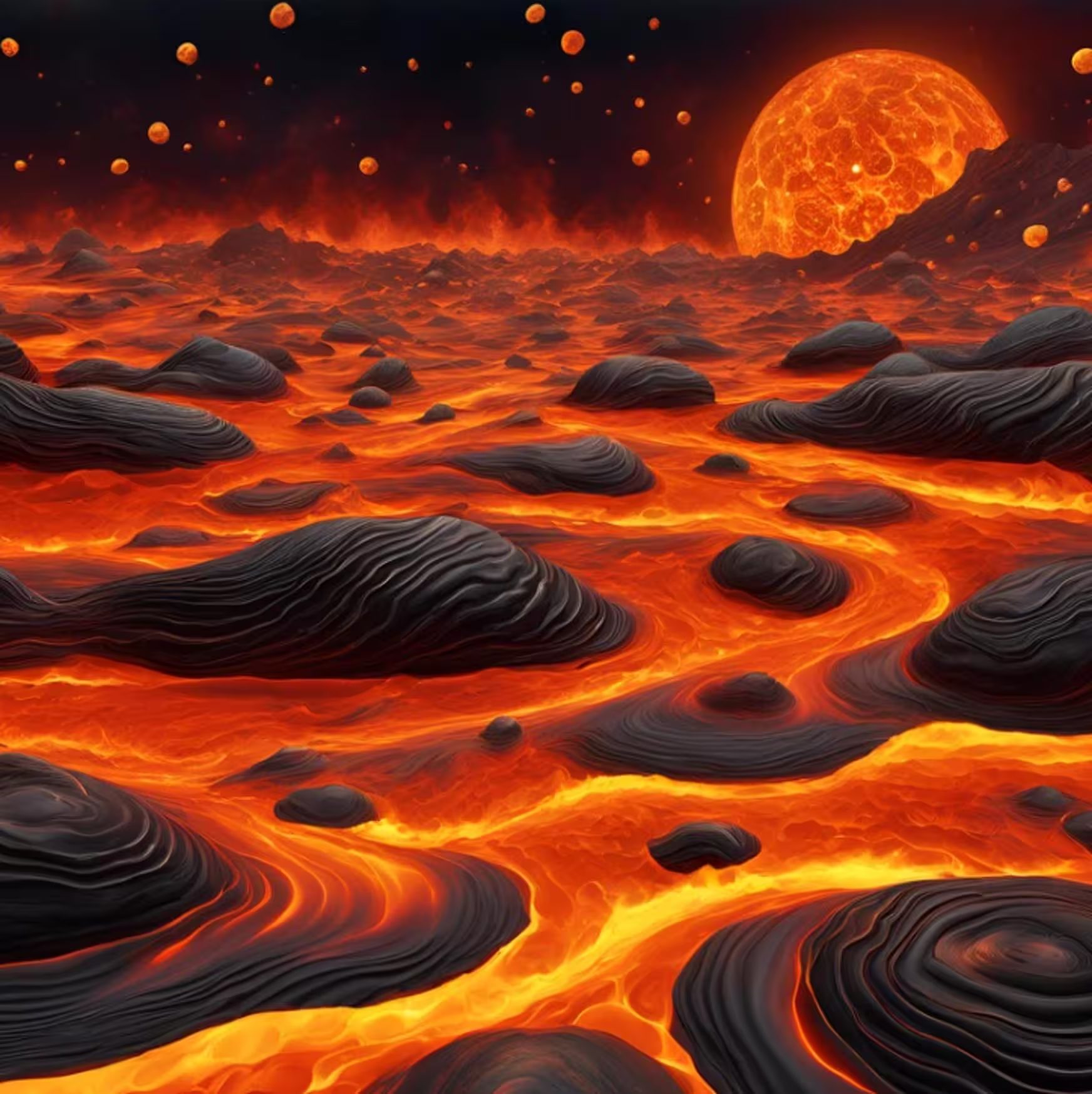
AI generated illustration of pebble rain.
There are caveats. The pebble-accretion idea itself is a newer addition to planet-formation theory and still under active debate. How many pebbles actually survive passage through a thick atmosphere? How much hydrogen can a growing planet hold, and for how long? Translating bench-top reaction rates into global planetary inventories involves many assumptions. Further experiments and modeling are needed to pin down how much of Earth’s oceans—if any—came from this route.
Still, the image is hard to forget: a hellish, incandescent sky, stones raining down and, amid the glow, the first plumes of steam rising from a newborn world. It nudges open a different perspective on habitability, one where chemistry and the violence of formation collaborate to make one of the most familiar ingredients for life: water.

Leave a Comment
Comments
No comments yet. Be the first.