
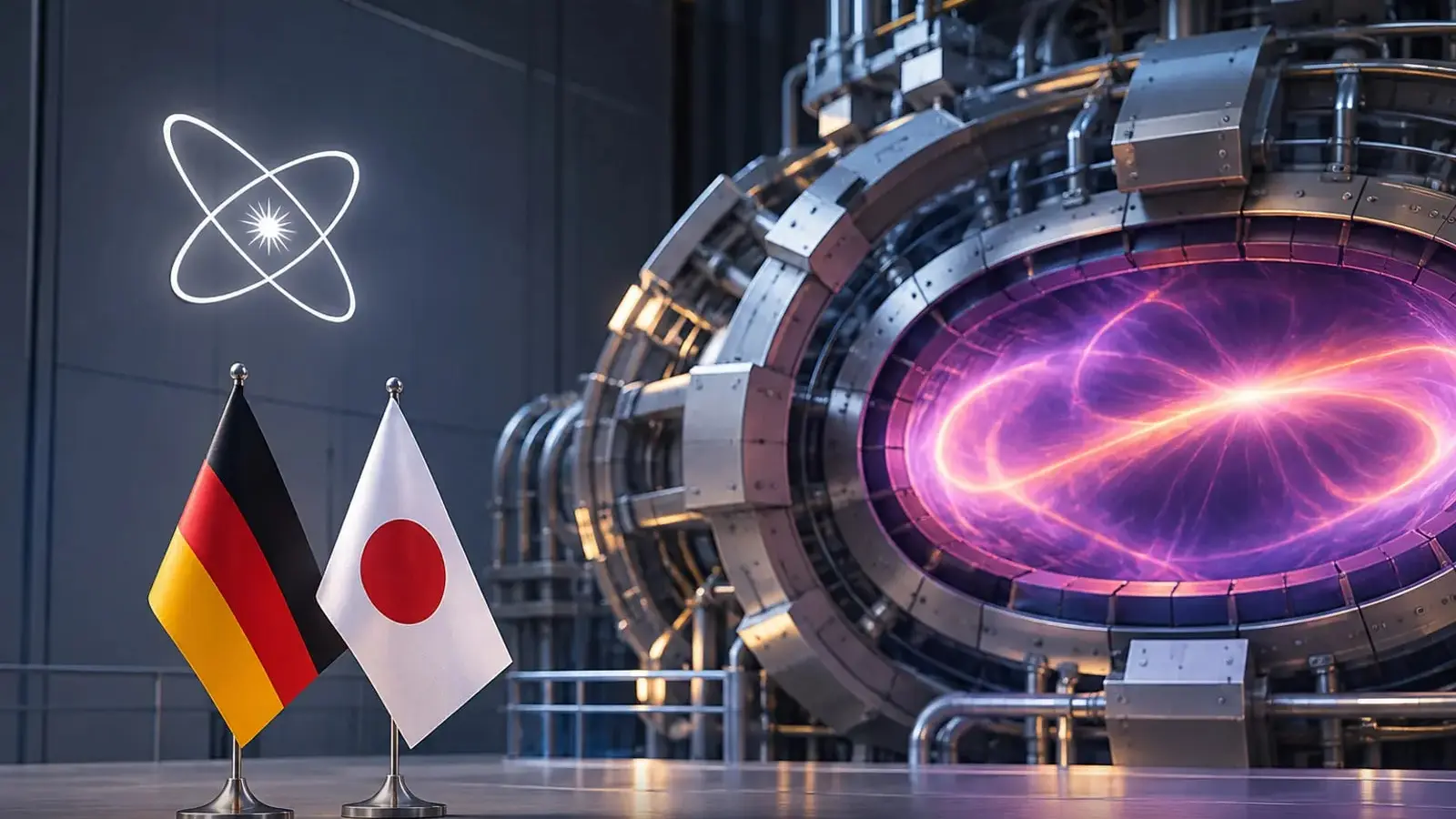
Imagine a power plant that mimics the sun. Bright, relentless, and clean. That’s the vision behind a new commercial sprint: Proxima Fusion, a Munich-based startup, has signed memoranda of understanding with two Japanese industrial heavyweights — Fujikura and Kyoto Fusioneering — in Tokyo, with Prime Minister Sanae Takaichi and German Chancellor Friedrich Merz on hand for the ceremony.
The aim is straightforward but enormous: localize the supply chain and speed up construction of the first commercial fusion power plant in Europe. Simple in words. Monumental in practice.
Proxima isn’t chasing laser-driven flash-bangs. Instead it builds on a magnetic device called a stellarator — a twisted, elegant cage that holds superhot plasma for long stretches. Why does that matter? Because sustained confinement could be the difference between a demonstration and a dependable electricity source.
Under the deal with Kyoto Fusioneering, engineers will push the next generation of gyrotrons — the microwave behemoths that heat plasma to fusion temperatures. The Fujikura agreement targets industrial-scale production of high-temperature superconducting (HTS) tape in Germany. Wrap those tapes into coils and you get the powerful magnets that steer the searing plasma.
“They think this tape could be the next optical fiber,” said Francesco, Proxima’s CEO and co-founder, capturing the optimism swirling around the materials. It’s not just rhetoric: Proxima, valued at about $2.7 billion and backed by investors including Alphabet and Google, plans a $160 million factory in Lower Saxony. The first phase targets roughly 5,000 kilometers of HTS tape per year by 2030. For context, their test reactor, Alpha, will need some 20,000 kilometers; a full-scale plant dubbed Stellaris would require about 40,000 kilometers.
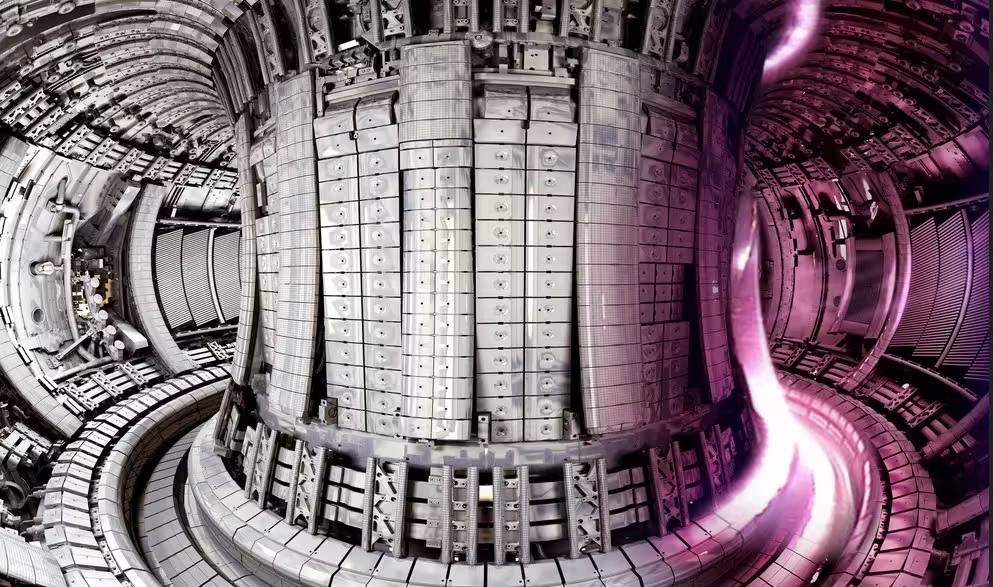

Engineering such supply chains is a feat of logistics and metallurgy. HTS tapes are strips of superconducting material layered on metal substrates — thin, brittle, and unforgiving. Wind them into coils and they become the magnetic muscles of a fusion machine. Scale that up, and you’re manufacturing the magnets that will literally hold the artificial sun in place.
There are practical complications. Building a reactor is one thing. Designing it so its day-to-day operation is simple, reliable and maintainable is another. Proxima’s leadership is explicit about that distinction: they believe they can manage design and construction complexity, but insist that operations must be straightforward if fusion is to become a practical power source.
The company aims for net energy gain in the early 2030s.
Proxima’s rush arrives amid fierce global competition. In the U.S., Commonwealth Fusion Systems and Helion Energy are pushing alternative magnetic and pulsed approaches; Canada’s General Fusion pursues its own path. China’s state and private players — including China Fusion Energy Co. — are investing heavily. Even in Japan, startups such as Helical Fusion are accelerating work on ground-based artificial suns. It’s a crowded field because the payoff is so large: abundant, carbon-free electricity with a tiny waste footprint.
Still, having political leaders present during the Tokyo signing was no accident. Fusion sits at the nexus of industry policy, national security and climate strategy. Nations want domestic supply chains for critical components — superconductors, gyrotrons, vacuum vessels — not least to avoid depending on distant suppliers for parts that will be central to their energy futures.
Can a stellarator built with HTS coils and fired by next-gen gyrotrons deliver a reliable, commercial artificial sun? The experiments ahead will decide. For now, the agreements mark a shift: partnerships across borders, where private startups and established manufacturers pool know-how and factory lines, trying to turn a decades-old promise into kilowatts on the grid.

For anyone who remembers fusion as a perpetual promise, the new question is blunt: how fast can supply chains, engineering teams and regulators move to meet a science that suddenly feels closer than it did a decade ago?

Leave a Comment
Comments (1)
Hmm, stellarator + HTS tape sounds cool, but can supply chains scale that fast? 20k km tape by 2030... seems tight