
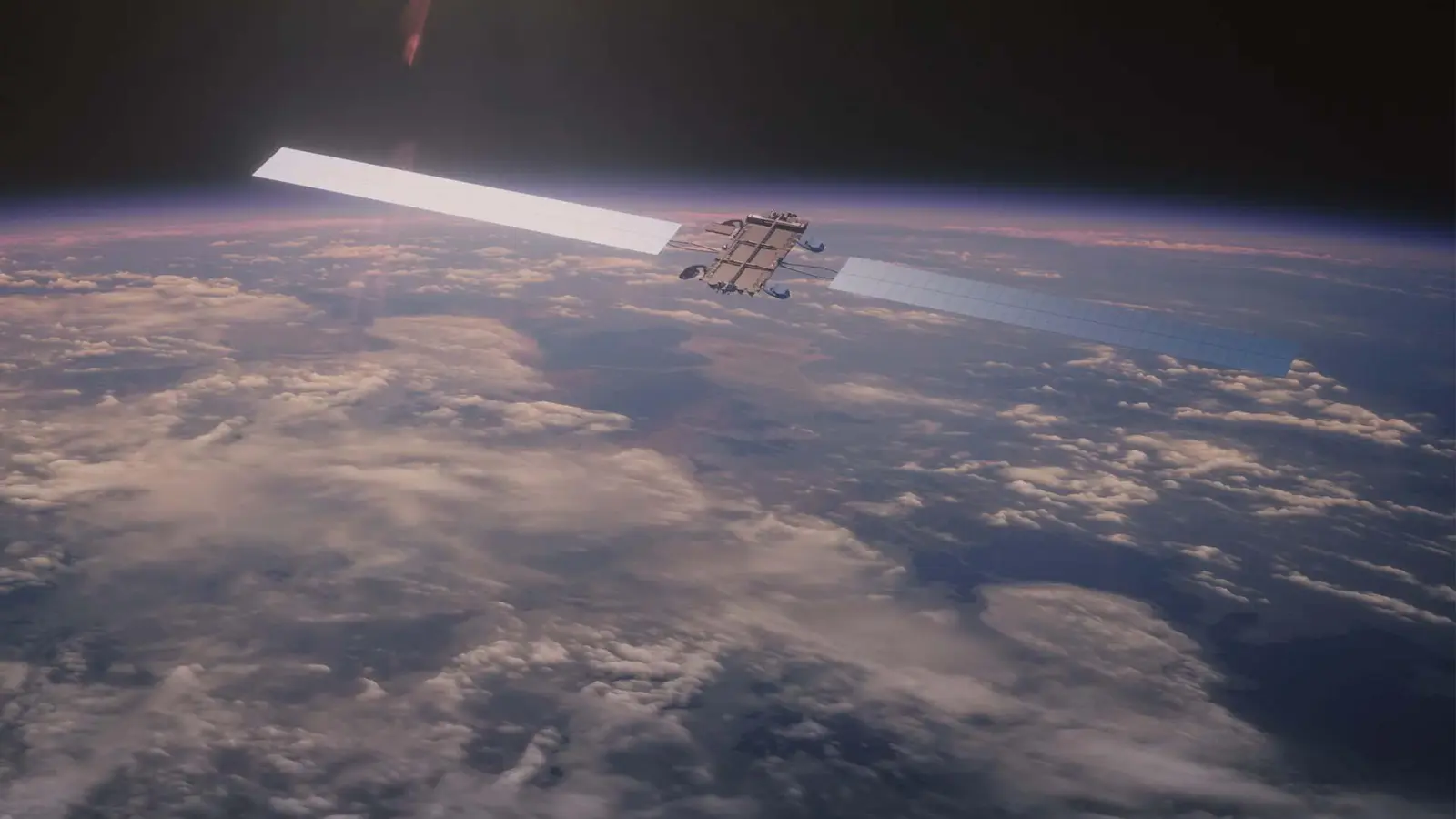
SpaceX has just taken a major step toward a denser, faster satellite internet—no marketing spin, just rockets and silicon. On Starship's 14th flight the vehicle deployed 26 operational Starlink V3 satellites into orbit, marking the first time this heavy-lift launcher placed live, high-capacity hardware on a stable orbital track.
Earlier Starship test flights carried mockups that burned up on suborbital trajectories. This flight was different: real satellites, real capabilities, released to join an already sprawling low-Earth-orbit constellation.
What makes V3 notable is raw backbone capacity. Each satellite can support roughly 1 terabit per second of consolidated downlink and about 160 gigabits per second of uplink. In plain terms, that’s roughly ten times the downlink capacity of current V2 hardware and more than twenty times its uplink.
That capacity is an aggregate measure—it's what a single V3 can move across many users and ground stations at once, not the per-user download speed on your phone.
The secret sauce is beamforming at scale. V3 uses advanced phased-array antennas able to form thousands of narrow beams simultaneously: up to 2,048 downlink beams and 2,048 uplink beams, compared with V2's hundreds. Instead of covering a broad region with a handful of channels, the satellite slices the surface into many finely targeted sectors and steers bandwidth precisely where demand spikes. New onboard processing chips then reassign those beams in real time as users move and traffic patterns shift.
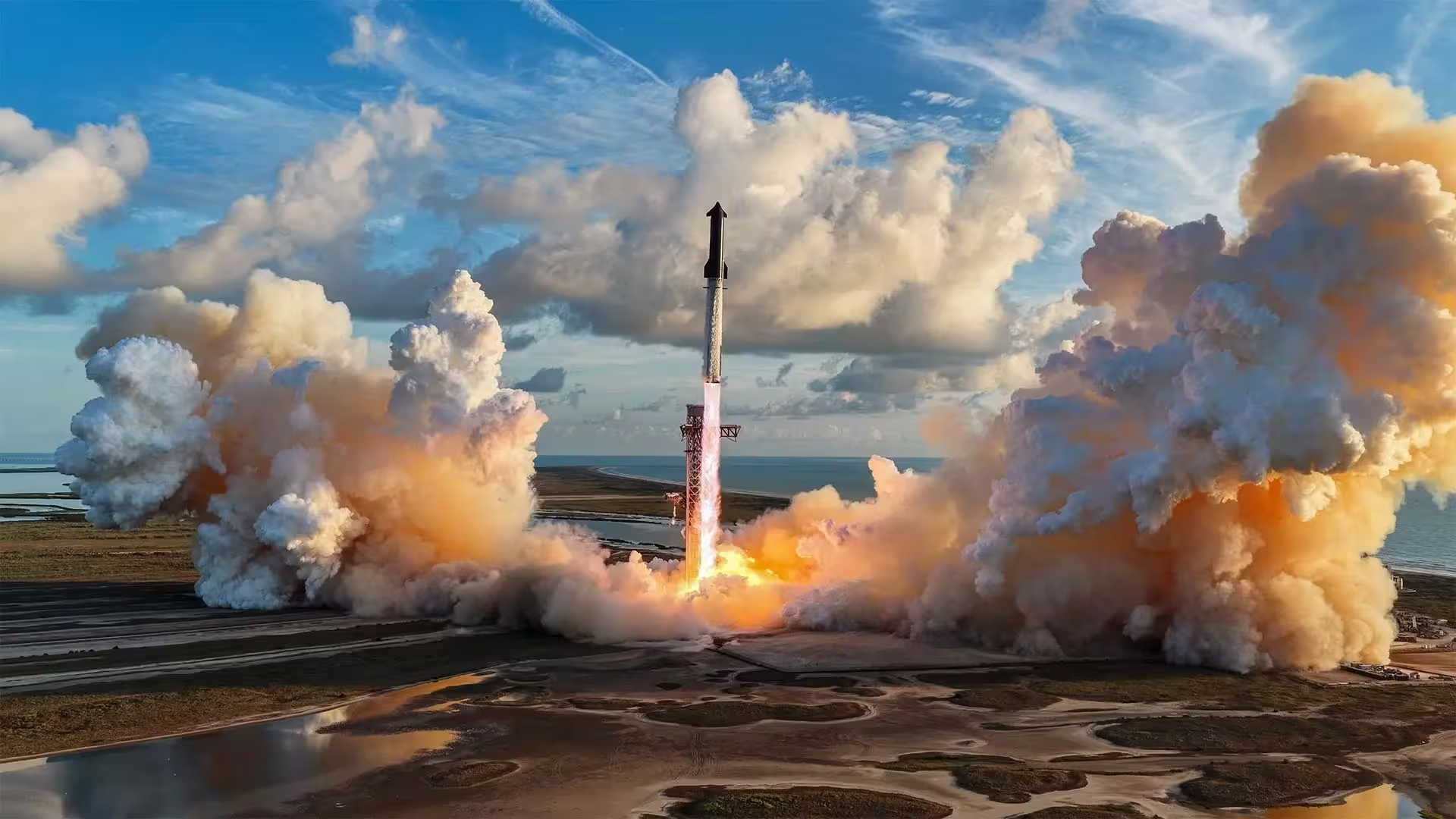
And the satellites talk to each other. Each V3 carries six laser inter-satellite links, each rated at 400 Gbps, creating a high-speed optical mesh in space. That reduces reliance on ground stations for long-haul routing and gives the network multiple alternative paths to shuttle data around the globe.
On the ground-facing side, V3 includes four high-capacity radio links able to provide up to about 1.2 terabits per second of connectivity to terrestrial infrastructure—more than eight times what V2 offered. All of that extra electronics needs power, so V3 sports solar arrays roughly twice as productive as the previous generation, optimized for life in lower Starlink altitudes.
SpaceX is also pushing the envelope on direct-to-phone service. Starlink Mobile—direct-to-cell connectivity—aims to let ordinary smartphones reach satellites without a dish. The V3 satellites launched now are not part of the mobile-satellite fleet, but many of the technologies developed for V3 will be folded into future mobile-capable nodes. First-generation mobile sats were built for emergency messaging and basic voice or light data; second-generation designs promise roughly a 20-fold increase in per-satellite capacity, moving closer to streaming-capable connections in remote areas.
Finally, the choice of Starship matters. Its much larger payload capacity means SpaceX can loft far more V3-class satellites per flight than a Falcon 9 could, speeding rollouts and shrinking the calendar for meaningful coverage and redundancy gains.
There’s a lot of engineering left to prove in regular operations, but with Starlink V3 now in orbit the conversation shifts from prototypes to scale—an era where satellites behave more like dense, traffic-aware cell towers circling the planet.

Leave a Comment
Comments
No comments yet. Be the first.