
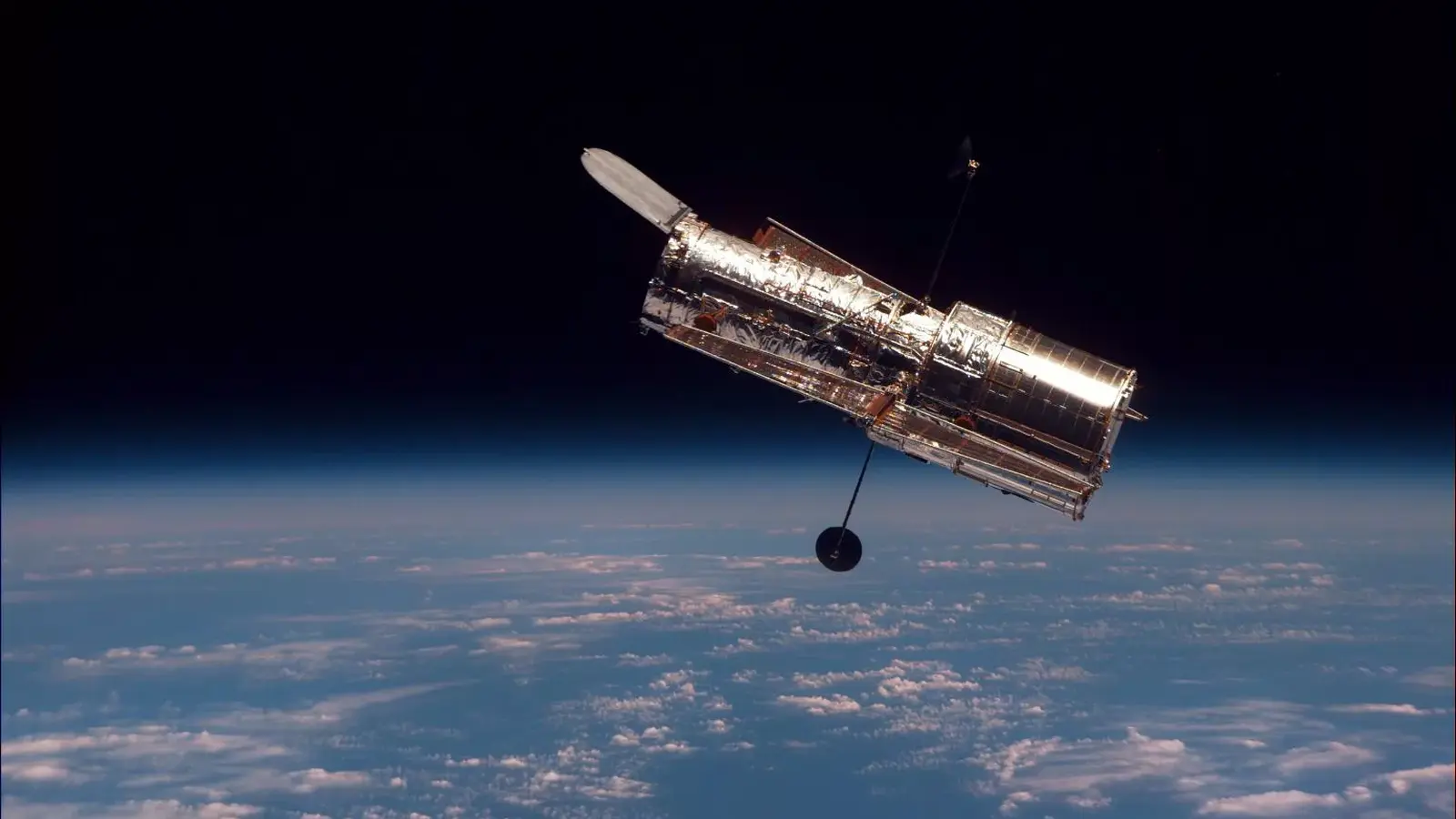
Hubble has now wrapped around our planet 200,000 times. A small, metal odometer in the sky keeps registering revolutions while the telescope keeps doing its real work: looking outward, pulling in images that change how we imagine the universe.
On Friday, 19 September, the Space Telescope completed that 200,000th circuit. Thirty-six years after launch, and after more than 1.7 million observations, Hubble remains a steady presence in a nearly circular path roughly 470 to 475 kilometers above Earth. Each lap takes about 94 minutes. Fast goes the clock up there.
Why do some objects vanish sooner than others? The answer hides in the air, thin though it is. Even at several hundred kilometers altitude, the wispy upper atmosphere produces slight aerodynamic drag. That drag robs satellites of velocity and, over years, nudges them into lower altitudes where heating and friction finish the job. Put a satellite higher, and those effects fade; put it lower, and the lifetime shrinks. Simple, ruthless physics.
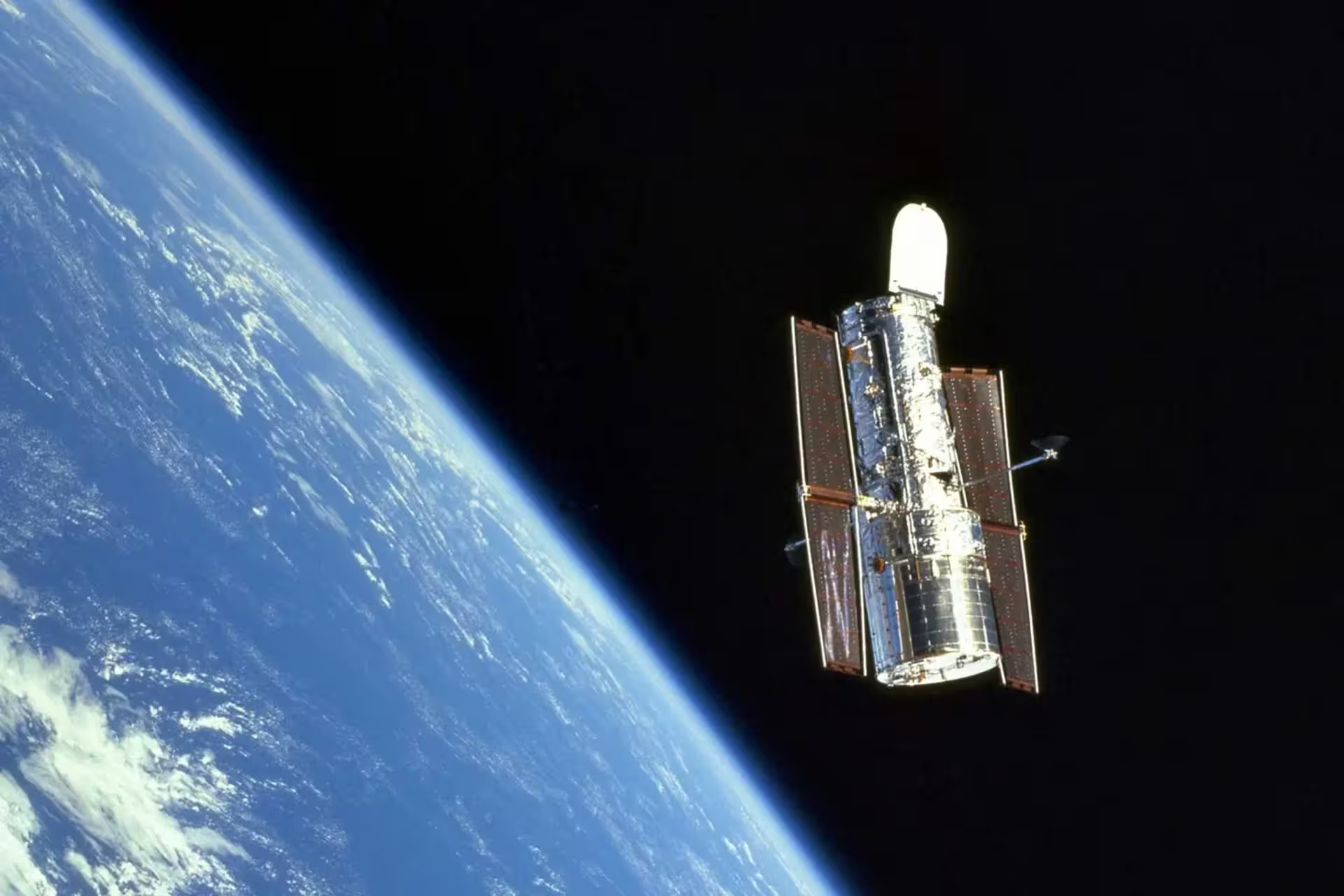
Still, Hubble is not the oldest traveler on the block. Relics from the dawn of the space age still circle Earth. Vanguard 1, launched in March 1958, has already logged more than 274,550 orbits and is expected to remain in orbit until at least 2198. Explorer 7 and the weather satellite TIROS-1 have accumulated even higher tallies, with over 347,440 and 352,640 orbits respectively. Their orbital setups allowed them to rack up revolutions over decades.
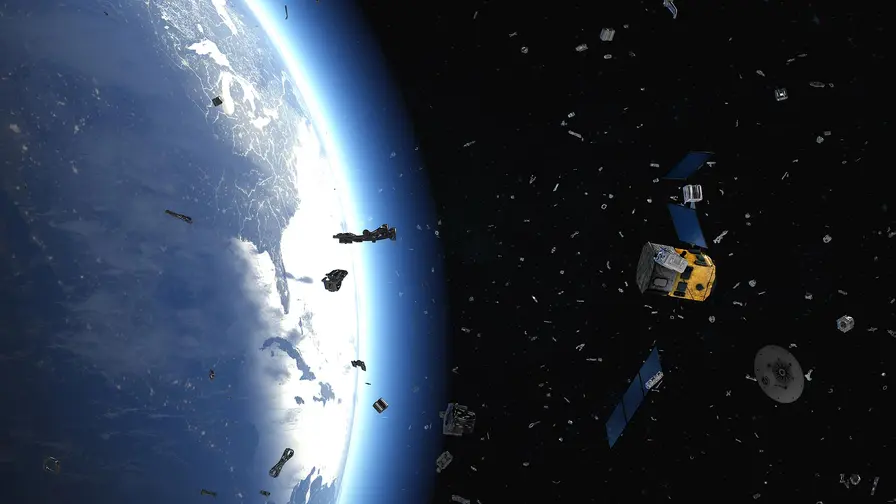
Those long-lived artifacts are a mixed blessing. On one hand they are historical artifacts, quiet witnesses to early space exploration. On the other hand they are part of the growing catalog of space debris that complicates current and future operations. Pieces that were once mission hardware now clutter valuable lanes above our heads.
The International Space Station is another veteran. It circles Earth in roughly 93 minutes, more than 15 times a day, and has completed about 152,800 orbits since the first module launched in 1998. Humans have lived continuously aboard the station for roughly 26 years. The milestone of 150,000 human-occupied orbits is due around 2 April 2028, so bring cake if you happen to be on board that week.
Hubble will keep circling, collecting photons and rewriting textbooks in small, stubborn increments. It is a reminder that persistence in orbit can yield extraordinary returns, and that the skies above us are crowded with both instruments of discovery and the detritus of past endeavours. What will the next 200,000 orbits show us?

Leave a Comment
Comments
No comments yet. Be the first.