
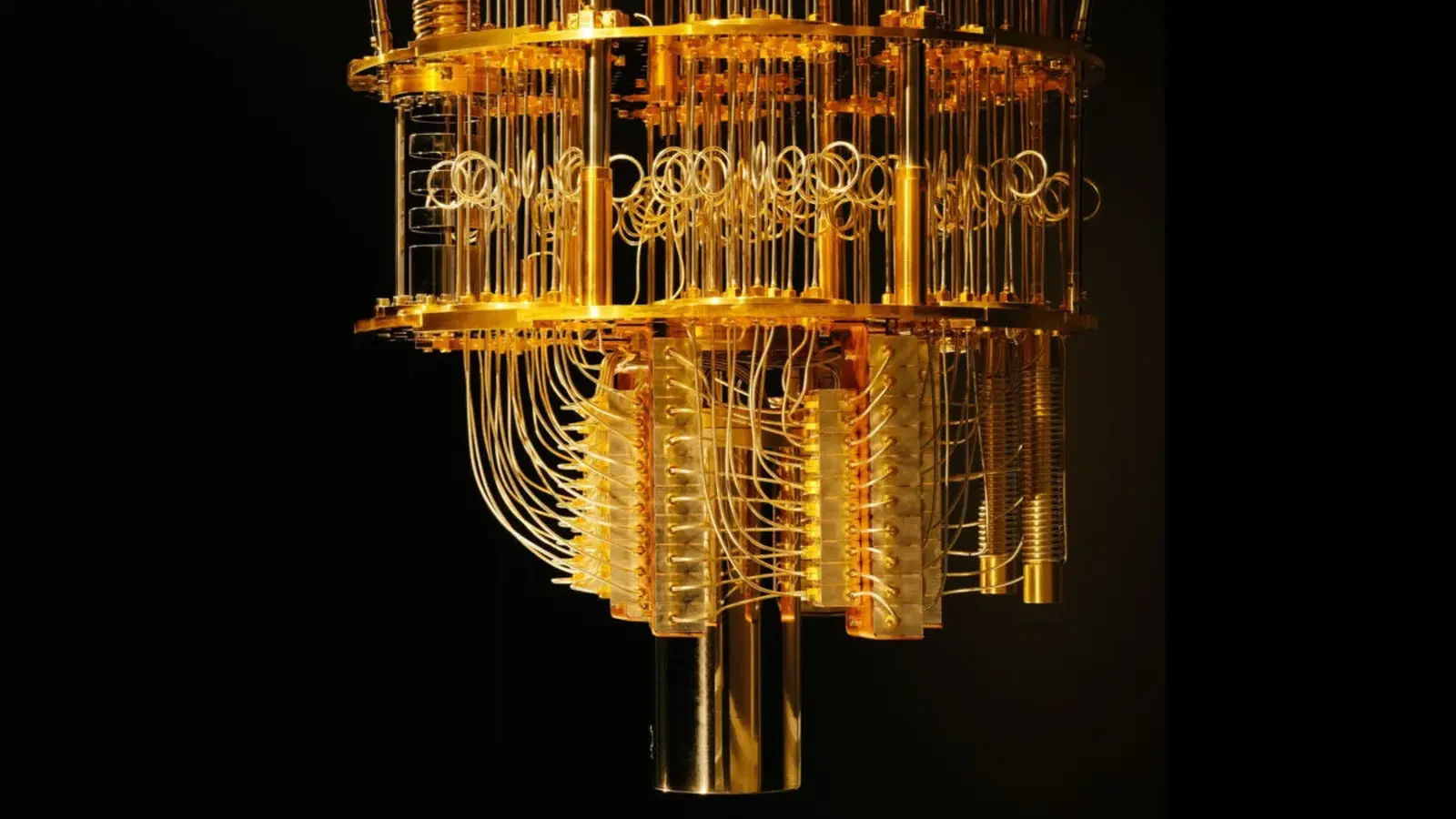
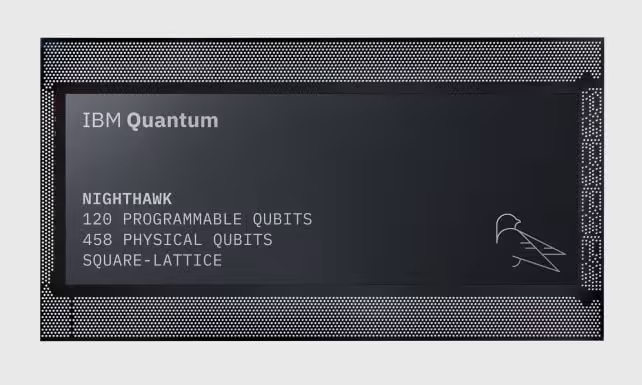
Nineteen seconds. That was all it took for IBM's Nighthawk r2 quantum processor to spit out a million measurement samples — a task researchers estimate would take a top-tier supercomputer on the order of a century. Short. Shocking. Hard to forget.
The experiment reads like a line from a technology thriller: researchers harnessed a commercially available, 120-qubit superconducting processor accessible through IBM's cloud, picked 61 qubits, and ran increasingly complex random circuits until they hit a sweet spot. At 36 cycles — about 918 two-qubit gates — the system produced one million samples in just 19 seconds. No bespoke lab tricks. No custom calibration. Just the public cloud stack and repeatable circuits.
Why does that matter? Because this is another milestone in the contest known as quantum advantage — the assertion that some computation exists that classical machines simply can't perform within reasonable time or resources. Random circuit sampling, the task used here, has long been a favorite test because adding qubits and gates makes the underlying probability distribution explode in complexity. You can generate samples from a quantum device quickly. Reproducing them deterministically on a classical supercomputer becomes, in principle, untenable.
But principle and practice are different animals. After Google reported a similar claim in 2019, classical-computing teams found clever simulation techniques that pushed the boundary back. History shows this is an arms race of ideas, not raw bragging rights. In the current work, the authors used tensor-network contraction methods to estimate how costly it would be for a classical machine to reproduce those million samples. Their best estimate: about 1.2 × 10^27 computational operations. Converting that into wall-clock time against a conservative sustained performance measure for Frontier, the exascale system once topping global charts, yields roughly 110 years.
Numbers like 10^27 and multi-decade runtimes are abstract until you place them in context. This isn’t a claim that classical computers are forever doomed. It’s an empirical benchmark based on a particular simulation strategy. History has repeatedly shown that classical researchers find clever shortcuts — algorithmic sleights of hand that dramatically lower resource costs. The team behind the IBM run acknowledges that openly: they’re throwing down a gauntlet for the community, not issuing a final verdict.

What nudges this result from curiosity to consequence is accessibility. Past demonstrations of quantum advantage typically relied on specialized lab hardware. This time, the experiment ran on a publicly available quantum processing unit through a cloud interface, using the platform’s standard execution workflow. The circuits, samples, and analysis code were released so anyone can try to reproduce or challenge the finding.
Technically, the experiment used random circuit sampling (RCS), where qubit operations are chosen largely at random to create an entangled quantum state that is then repeatedly measured. Producing the samples on the quantum device is straightforward. Simulating the same distribution classically becomes a Sisyphean task once the depth and breadth of the circuit climb. Tensor networks let researchers estimate the classical cost by decomposing the calculation into a network of smaller tensors and contracting them in an order that minimizes temporary data growth. The catch: finding that optimal contraction path is itself a hard optimization problem, and different classical strategies lead to very different cost estimates.
The team chose a pragmatic route: run on standard cloud hardware, avoid exotic tuning, document everything, and present a reproducible benchmark. That approach matters because it invites scrutiny. It also reframes the competition: it’s not just about the fastest single demonstration but about what can be achieved on hardware that ordinary researchers can access. If a claimed advantage requires bespoke magic, it feels academic. If anyone with an account can run the same job and watch the same result, the claim gains practical weight.
There are other subtleties. Circuit depth, qubit connectivity, gate fidelity, and noise all shape the difficulty of both the quantum run and any classical simulation. The team found a Goldilocks zone — deep enough to be hard to classically simulate, but not so deep that noise destroys the signal. That balance is part art, part hard engineering.
So where does this leave us? With an open invitation. The researchers have posted a preprint and shared data. Classical teams will chew on tensor contraction approaches and likely find efficiencies that narrow the gap. Quantum teams will push device quality, scale, and novel error mitigation techniques. Progress will come from both fronts.
This result doesn’t declare a permanent victor; it marks the next round in a spirited contest that will sharpen both quantum devices and classical algorithms.

The gauntlet has been laid on a public cloud. Who will pick it up, and how fast, will tell us more about the future of computation than any single benchmark ever could.

Leave a Comment
Comments (1)
Wait, 19s for a million samples? Sounds wild but is that really 110 years for a supercomputer? feels like there's a catch.