
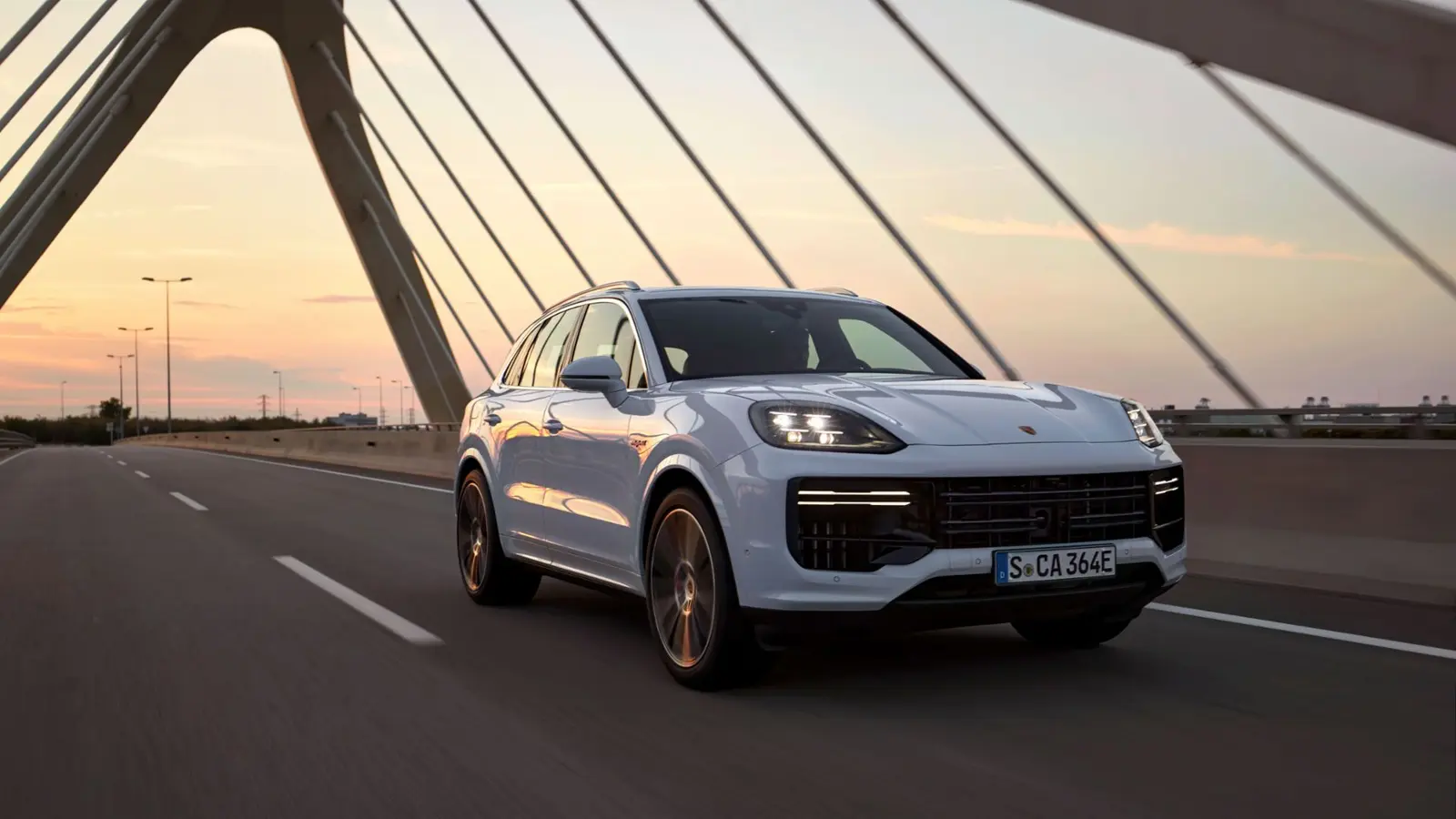
Porsche eyes shift of Cayenne assembly from Bratislava to Leipzig
Porsche is reportedly considering a major reshuffle of its production footprint: moving full assembly of the Cayenne SUV from the Bratislava plant in Slovakia to the Leipzig factory in Germany. The move, first reported by Frankfurter Allgemeine Zeitung and not yet confirmed by Porsche, would reshape where one of the brand's most profitable models is built and highlight growing emphasis on flexibility within the Volkswagen Group's manufacturing network.

The Cayenne has been a financial cornerstone for Porsche since its debut in 2002. For nearly 25 years that large, performance-oriented SUV has helped underwrite the development of the 911 and Porsche’s mid‑engined sports cars while competing strongly with the Macan for volume. Despite its German badge, the internal-combustion Cayenne has spent most of its life being assembled outside Germany — primarily in Bratislava.
From split production to full assembly in Bratislava
In the early generations, Bratislava handled heavy body work and rolling chassis, while final interior assembly and rigorous quality checks were performed in Leipzig. Over time Porsche consolidated those steps: Bratislava moved to end-to-end production and began shipping fully finished Cayennes worldwide. That plant now specializes in large premium SUVs and also manufactures mechanically similar models like the Audi Q7 and Q8, and historically the VW Touareg. The centralized approach brought clear economies of scale and benefited margins thanks to lower Slovakian labor costs.

Why Leipzig could become the Cayenne's new home
Sources suggest the key driver behind a potential relocation is operational efficiency within Germany. Leipzig already builds the Panamera and the Macan Electric — the latter using Volkswagen Group’s Premium Platform Electric (PPE) architecture, which is shared with the Cayenne Electric. Consolidating internal-combustion, hybrid, and electric Cayenne variants on a single, ultra-flexible line in Leipzig would deliver logistical advantages and reduce complexity across the model range.

However, retooling an assembly line to accommodate mixed powertrains is costly. Transitioning production would require significant capital expenditure and careful planning to avoid production disruption. Labor and operating expenses in Germany are higher than in Slovakia, and those higher costs could pressure Porsche’s margins on a model that has historically been a major profit contributor.
Platform evolution and the road ahead

The current Cayenne lineup — internal combustion, hybrid, and electric variants — is built on the MLB Evo architecture. As Volkswagen Group updates its platforms, the Cayenne could migrate to the next combustion-focused architecture that replaces MLB Evo, known internally as Premium Platform Combustion (PPC), which will underpin redesigned Audi models such as the upcoming Q7 and Q9. A Leipzig-based assembly strategy might make it easier to integrate PPC and PPE variants under one roof.

Key considerations for Porsche and VW Group stakeholders include:
- Capital costs of retooling Leipzig versus continued production in Bratislava
- Impact on margins owing to higher German labor rates
- Supply-chain and logistics benefits of consolidating platforms
- Flexibility to build ICE, hybrid, and BEV Cayennes on one line
"Bringing Cayenne production home would be symbolic as well as strategic," said an industry analyst. "But symbolism doesn't outweigh operational cost — Porsche will need a convincing business case."

Market and manufacturing implications
If Porsche proceeds, the decision would reflect broader industry trends: automakers are rethinking plant roles as electrification and flexible architectures change the economics of vehicle production. For Porsche, keeping development and final assembly closer to Zuffenhausen could strengthen control over quality and logistics, but it will also require absorbing higher fixed and variable costs.
As of publication, Porsche has declined to confirm specific plans. Discussions reportedly continue within the Volkswagen Group as executives explore cost-saving measures and structural adjustments across brands. For now, the Cayenne’s potential return to Germany remains a strategic option — one that could reshape Porsche’s manufacturing map and influence how premium SUVs are built in the EV era.
Highlights:
- Report from FAZ suggests full Cayenne assembly may move from Bratislava to Leipzig
- Move would consolidate ICE, hybrid and electric production in Germany
- Higher labor costs and retooling investments are major hurdles
Whether the Cayenne moves or not, the conversation underlines how platform convergence and electrification are forcing even the most established nameplates to reconsider where and how they are built.


Leave a Comment
Comments (2)
Is this even true? huge CAPEX and higher labor — wait no, sorry. huge CAPEX and higher labor, but consolidation could help logistics. Who pays?
wow, bringing the Cayenne home to Leipzig? kinda poetic, but german wages will hit margins. If quality gains are real, maybe worth it... but risky