
4 Minutes
McMurtry moves from prototype talk to production reality
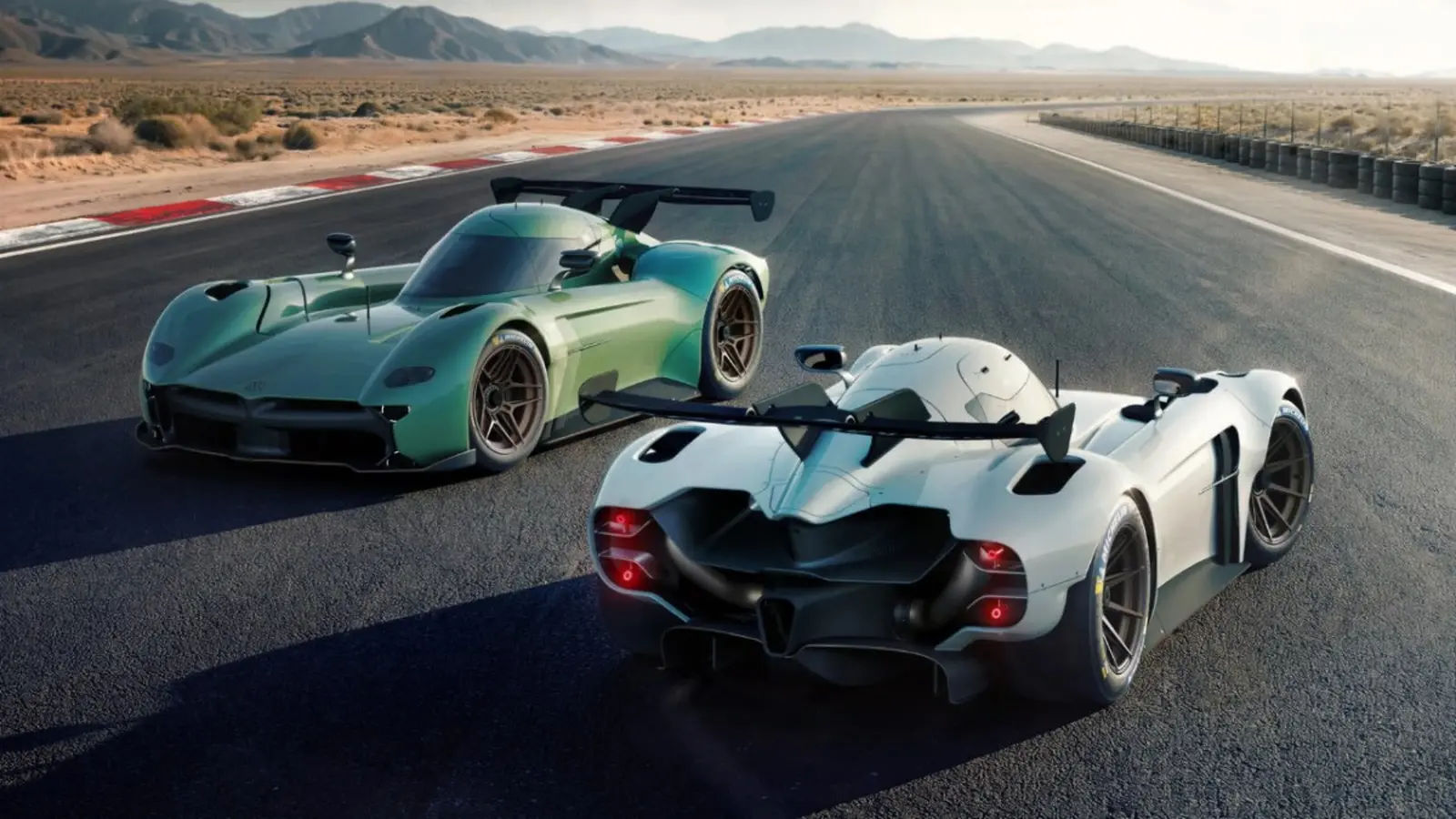
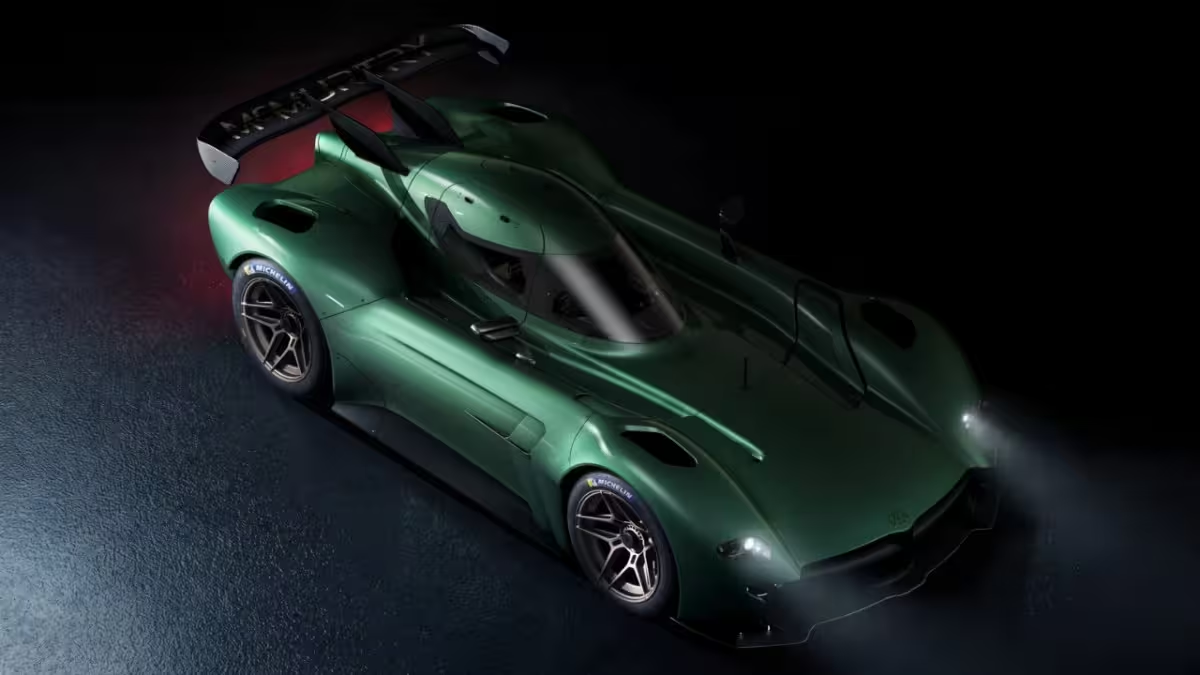
Small British outfit McMurtry has done what many bold automotive startups only promise: it has taken its one-seat, 1,000 hp track car out of development and into series production. The Spéirling PURE — an extreme electric track machine built around a novel aerodynamic concept — is now a customer-ready vehicle rather than a proof-of-concept on display boards.
The achievement is significant in an era when dozens of new brands unveil dramatic renderings but few deliver actual cars. McMurtry’s engineers didn’t simply tweak a prototype; the company says roughly 95% of components were revised between the early test car and the production specification, so buyers are getting a fully engineered machine rather than a half-baked track project.
Key specs: battery, power and performance
Under the carbon shell sits a bespoke 100 kWh battery pack feeding two electric motors mounted at the rear axle. Combined output: 1,000 hp (746 kW). The single-seat layout and focused powertrain enable blistering straight-line speed — McMurtry claims 0–97 km/h in just 1.55 seconds, and a limited top speed of 306 km/h.
Highlights:
- Battery: 100 kWh bespoke pack
- Powertrain: dual rear electric motors — 1,000 hp total
- Acceleration: 0–97 km/h in 1.55 s
- Top speed: 306 km/h (limited)
More than straight-line pace
Acceleration numbers are impressive, but the Spéirling PURE’s standout innovation is aerodynamic: a patented Downforce-on-Demand fan system. Where conventional wings and spoilers rely on velocity to generate grip, McMurtry’s electric fans draw air from beneath the chassis to create aerodynamic load even when the car is stationary. The system produces up to 2,000 kg of downforce at zero speed, allowing drivers to extract up to around 3 g lateral under heavy cornering and braking.
That extraordinary grip has translated into headline-grabbing lap times during development: a prototype set a new benchmark up the Goodwood Hillclimb in 39.08 seconds, posted a record on the Top Gear Test Track outpacing a modern Formula 1 car, and shaved 14.1 seconds off a lap at Hockenheim compared with the Mercedes-AMG One hybrid hypercar during test comparisons.
Designed for owners, not a travelling pit crew
Unlike many hypercars that demand a trailer full of engineers and diagnostic rigs to operate away from the factory, McMurtry deliberately engineered the PURE to be more owner-friendly. The company wants buyers to use the car at local track days without hiring a race team. The vehicle’s electrical and mechanical architecture is intended to be plug-and-play enough that an owner — with a single helper in the paddock — can get on track and drive.
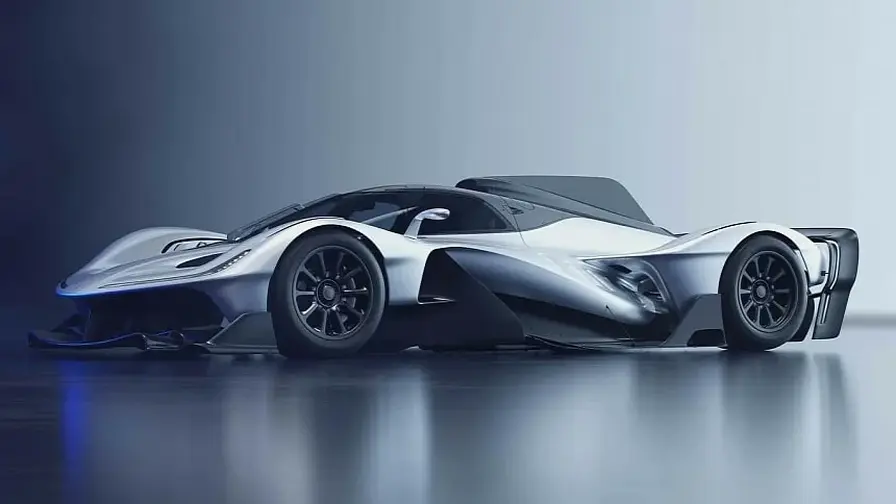
Managing director Thomas Yates summed up the philosophy: the Spéirling PURE delivers performance in the ballpark of Formula 1, but an ownership experience closer to a Porsche 911 GT3 RS. To that end, the engineering program focused heavily on lowering running costs and simplifying routine servicing so track-day upkeep won’t require running a second mortgage.
Practical updates from prototype to production
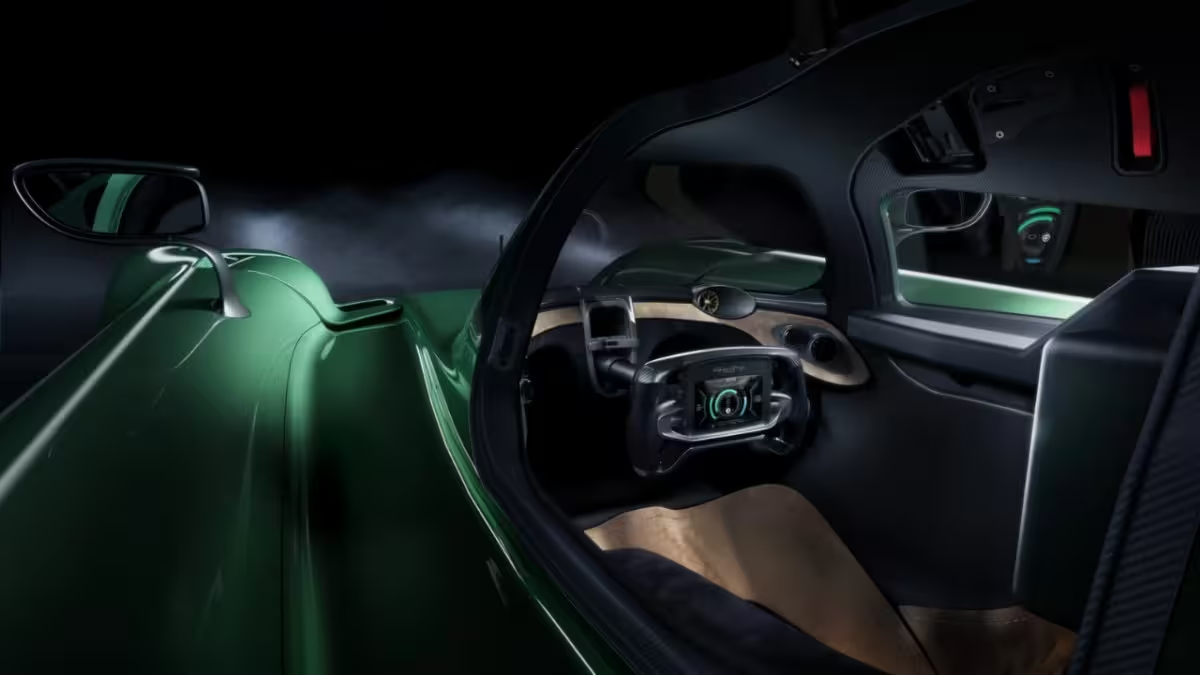
The production PURE includes several owner-focused refinements versus the early test cars. Engineers reworked the central carbon-fibre monocoque to enlarge the cockpit and improve comfort and visibility. Integrated lighting systems were added for road-official illumination where needed, and the bodywork and mechanical packaging were revised to make routine service access easier. There’s even a dedicated storage cubby beneath the rear wing sized for a racing helmet and a HANS device.

Market positioning, price and demand
All of this comes at a very high price: the Spéirling PURE starts at €1,166,700 before local taxes and optional extras. Yet McMurtry reports solid early interest and confirms 25 units have already been sold. For wealthy enthusiasts who want extreme lap times and a relatively manageable ownership experience, the PURE offers a rare combination: radical performance paired with a leaner operational model.
In a market crowded with ambitious EV projects — some of which never make it past the digital concept stage — McMurtry’s launch of a bona fide production track car stands out. The company’s approach demonstrates that small teams can innovate around aero, battery and powertrain to produce an electric hypercar that not only breaks records but is also designed for customers to actually use.
Why this matters for electric performance cars
The Spéirling PURE is notable for more than headline figures. It points to where high-performance electric vehicles can evolve: bespoke battery integration, creative aerodynamic solutions, and a focus on owner usability rather than trophy-only exclusivity. If more manufacturers apply similar development discipline, the era of track-focused electric cars that are both usable and astonishingly fast may expand beyond one-off prototypes to viable, limited-production realities.
Quote highlight:
“Performance close to Formula 1, ownership closer to a 911 GT3 RS,”

McMurtry may be a niche maker, but by moving the Spéirling PURE into production — with dozens already sold — it has made a persuasive case that radical EV concepts can cross the chasm from sketchpad to paddock without becoming vaporware.


Leave a Comment
Comments (2)
Hold up, 2,000kg downforce at zero speed? Sounds bonkers. Anyone confirm durability of those fans after track abuse, or is that hopeful marketing?
Wow, didn't expect a tiny British outfit to deliver a 1,000hp one-seater. If the fan aero works as claimed this is insane, but that price... ouch