
Volkswagen weighs sweeping cuts amid industry upheaval
Volkswagen is preparing to present a dramatic cost-reduction plan to its supervisory board that could include nearly 100,000 job cuts and the closure of four German plants. The proposal comes as employee protests against deep structural changes unfold across the automaker's workforce.
What management will propose
According to reports, CEO Oliver Blume will seek agreement from worker representatives at the Wolfsburg supervisory board meeting to shrink the company's workforce and simplify corporate structures. The restructuring would affect Volkswagen Group brands across the portfolio, including Audi and Porsche, and is reportedly far larger than earlier forecasts.
- Possible plant closures include Hannover, Emden, Zwickau and the Audi site in Neckarsulm.
- The 100,000 figure is roughly double previous estimates for reductions in the group.
Why Volkswagen says this is necessary
Rising production costs, significant overcapacity at German factories, aggressive competition from Chinese automakers—especially in electric vehicles—and U.S. import tariffs have all put unprecedented pressure on Volkswagen’s traditional business model. The Porsche-Piëch family, as major shareholders, has also pushed for structural reforms after a steep fall in the company’s share value.
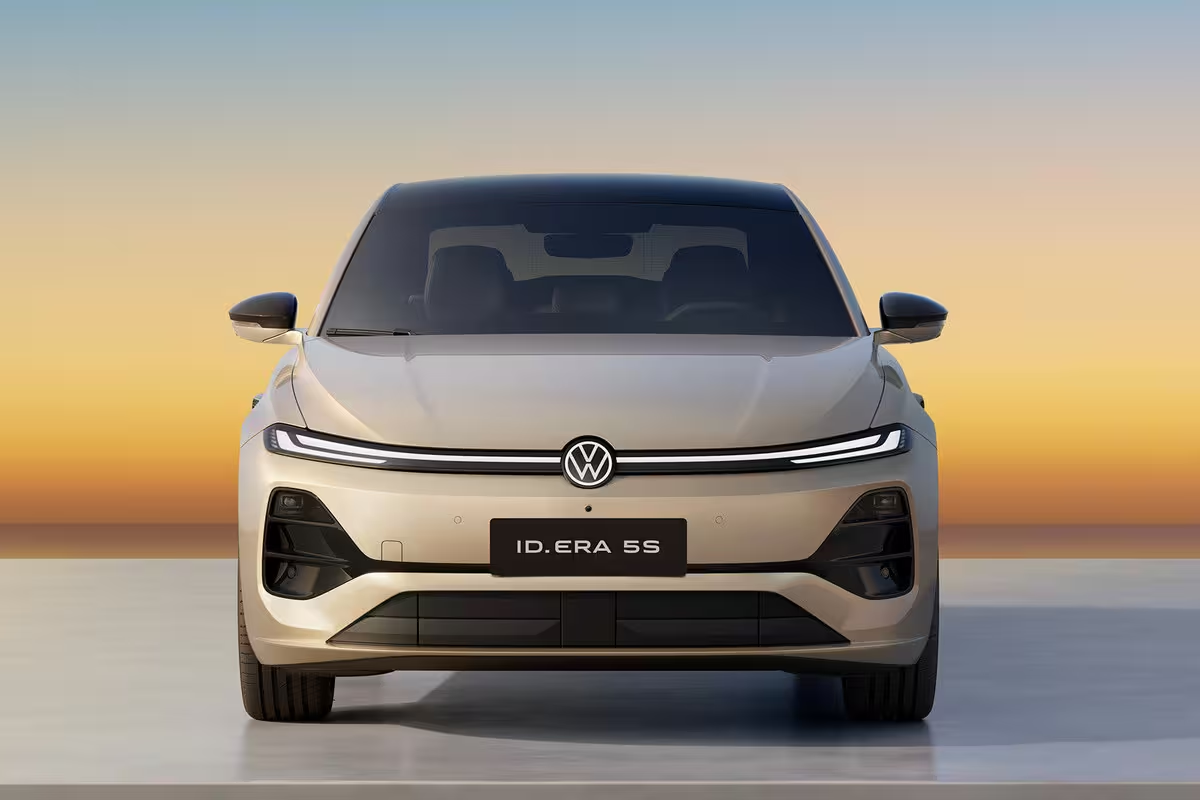
A company spokesperson framed the move as a survival measure: "We understand workers' concerns, but to remain competitive we must reduce administrative complexity and focus on new technologies. We will narrow our investment portfolio and simplify corporate structures. Yes, we will have to cut excess production capacity."
Stakeholders and the decision process
The supervisory board includes representatives of the owning families, labor unions and the state of Lower Saxony. That mix of stakeholders—with often conflicting priorities—makes reaching a final decision politically and operationally complex.
Market context and what it means for drivers
For consumers and car enthusiasts, the short-term impact may be limited to slower model refresh cycles or scaled-back investment in certain segments. In the medium term, VW’s push to reallocate capital toward electric vehicle platforms, software and efficiency could accelerate product changes—fewer ICE variants, more EV and digital features.
Quote to note: "This is about simplifying for the future," industry observers say. "Volkswagen must adapt to a market that rewards scale, software and lower-cost EV manufacturing."
Whether the plan will gain acceptance at the supervisory board — and how labor agreements and regional politics will shape the outcome — remains uncertain. For now, Volkswagen stands at a strategic crossroads that could reshape one of the world’s largest carmakers.


Leave a Comment
Comments
No comments yet. Be the first.