
4 Minutes
Someone slipped into the lobby. Not a prank. Not a protest. A person walked into Anthropic’s building and declared a CEO would be killed. Five days earlier, someone had tried to bomb Sam Altman’s house. This is not the rhetoric of comment threads anymore — it’s the eerie migration of online fury into physical risk.
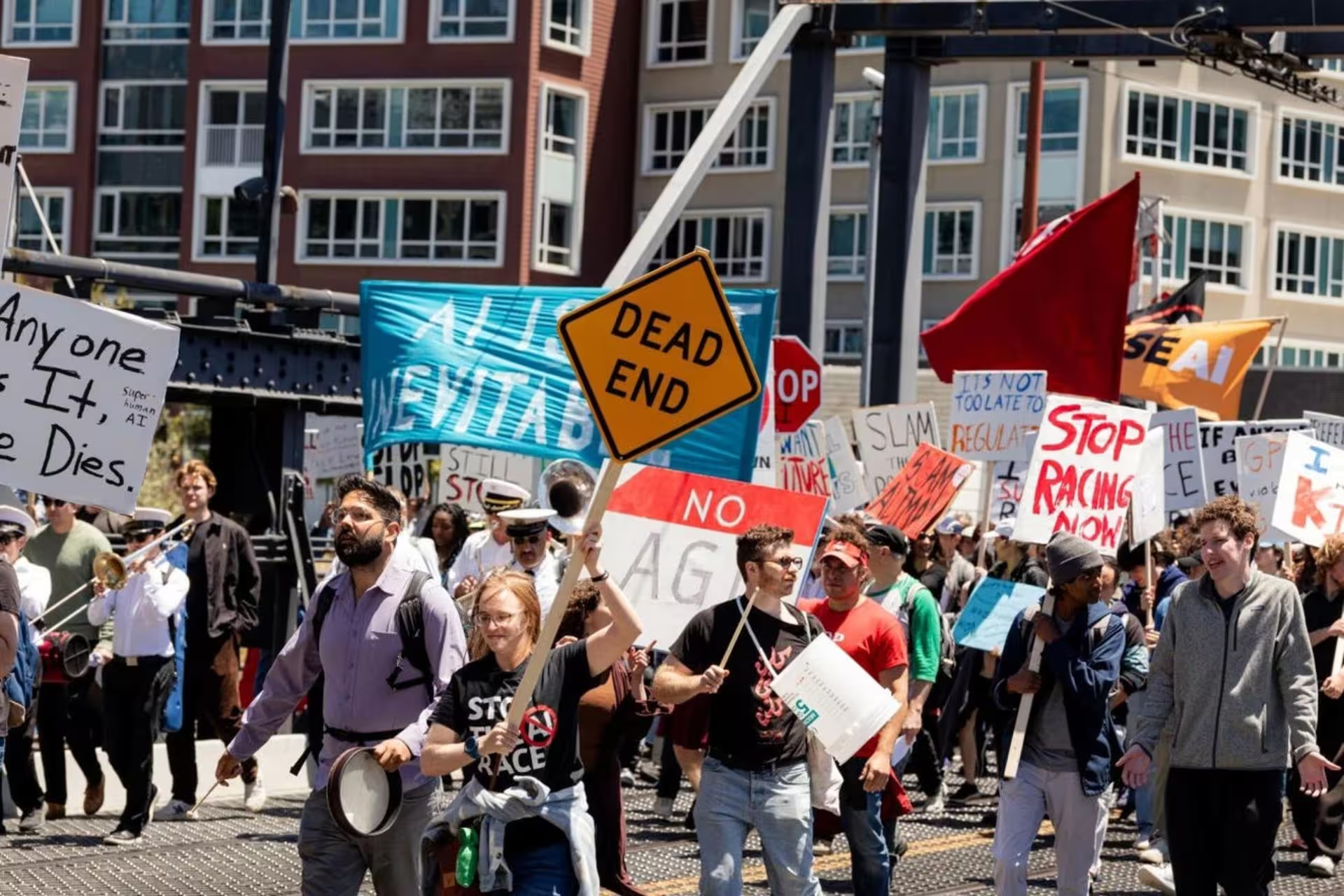
The Wall Street Journal has traced a string of incidents that reads like a thriller: death threats, ominous manifestos, a suspected attempted bombing, and strangers applying for jobs with the explicit intent to intimidate staff. Targets include high-profile AI companies and even smaller firms that insure AI projects. The common thread is the same: public anger over AI’s perceived threat to jobs and society has hardened into real-world menace.
Why has the tenor changed so fast? Because anxiety about automation stops being abstract when it touches livelihoods, communities, and homes. People hit the send button on a threatening message and then — sometimes — they cross the line. In one case, a suspect arrested near Altman’s home was charged with attempted murder and arson; investigators say they found a statement encouraging attacks on AI leaders and investors. In another, a person who applied to Anthropic under an alias threatened employees’ children. Still another, an Oklahoma man frustrated about a refund, warned of armed retaliation after failing to reach a human customer-service agent.
Digital harassment has surged too. Security researchers report a roughly sevenfold increase in online threats against AI executives and data centers between late winter and spring. Hack-and-hurt techniques. Doxxing. Coordinated harassment campaigns. The intimidation affects companies of every size, from household names to boutique startups that suddenly find themselves in the same crosshairs.

Nico Lacqua, CEO of a small AI-insurance startup called Corgi, put it bluntly: "We’re thicker-skinned now." After vandals trashed the company’s bus, Lacqua says he had no choice but to boost security at a company café in San Francisco. That’s the new normal: engineers and executives factoring guards, cameras, and private security firms into budgets that once focused almost entirely on R&D and cloud spend.
The money follows the fear. In 2025 roughly 38 percent of S&P 500 tech firms disclosed spending on executive protection, a marked rise from four years earlier. Palantir increased security outlays by about 150 percent in a single year, bringing its bill close to $3 million. Oracle’s security budget rose about 85 percent to $5.6 million, with a large portion dedicated to protecting Larry Ellison’s residence. Salesforce’s protective costs also climbed toward $4 million. These aren’t vanity numbers; they are insurance against threats that could end lives or shutter operations.
It’s tempting to reduce this to a numbers story about budgets and arrests, but there’s a cultural angle that’s harder to count. When communities feel threatened by technological change, discourse can radicalize quickly. Alex Karp, Palantir’s CEO, framed it starkly at a conference: when people are told their jobs will disappear, violence can follow. It’s a blunt assessment, and it points to a wider failing — a gap between how tech leaders communicate the future and how everyday people experience it.
Companies are trying to close that gap. They’re rethinking not only security perimeters but how to engage concerned workers, neighbors, and regulators. Some are expanding transparency programs, others are increasing local hiring and community outreach. None of these is a silver bullet. Trust, once eroded, is slow to rebuild.
The current moment makes clear that debates about AI are no longer confined to academic papers or op-eds; they play out at front doors and data-center gates. If the industry hopes to change the tone, it needs to match technical progress with clear social commitments — and fast. Otherwise, the internet’s fury will keep finding the street.


Leave a Comment
Comments (2)
Is this even true? feels like a few bad actors are being used to paint all tech as violent. But threats are real, sure. How do we hold ppl accountable without overpolicing?
Wow this is nuts... online anger actually spilling into real life. Guards and cameras now budget items. If that keeps up ppl will stop trusting tech, and then what?