
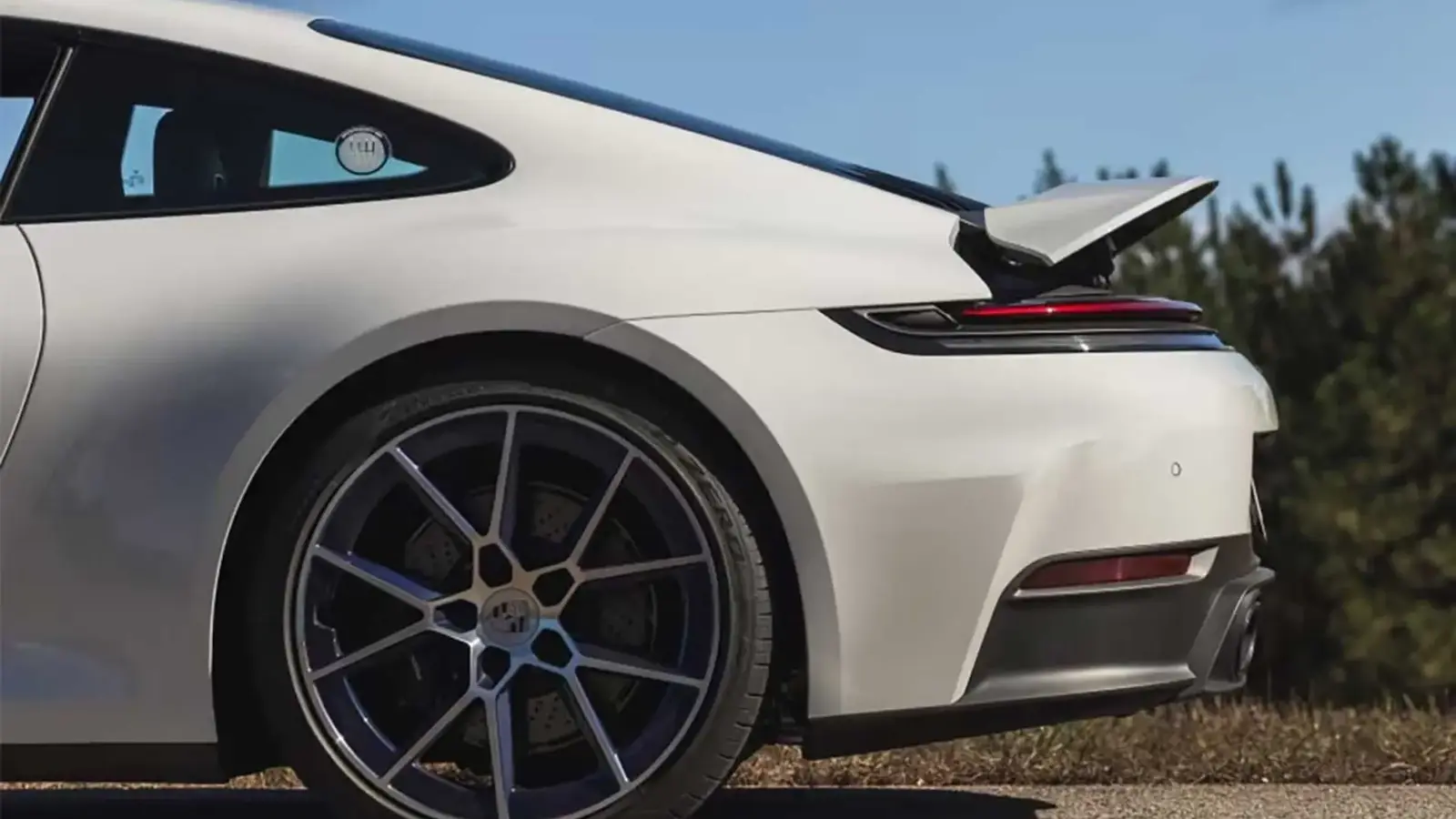
Porsche's sticky solution to wheelspin
Porsche has filed a patent for a novel system that sprays a sticky chemical onto tires to dramatically improve traction and launch performance. The idea is simple in concept: increase tire grip on demand so more of the engine's power turns into forward acceleration instead of smoke and wheelspin.
Why it matters for high-performance cars
Getting power to the pavement is one of the biggest challenges for high-horsepower cars. Makers traditionally rely on wider tires, advanced traction-control systems or all-wheel drive to combat spin. Those solutions work, but they add weight, complexity, or packaging compromises. A targeted spray-on adhesive promises significant gains in 0-60 times and launch reliability without permanent mechanical changes.
How Porsche's system would work
According to the patent, the setup uses a dedicated applicator — described like a comb or squeegee — to distribute a sticky fluid evenly across the tire tread. The car's adaptive suspension could lift the driven wheels slightly and spin them so the entire tread is coated before a standing start or launch. Sensors would monitor road and tire conditions to control timing, compound choice, and amount, enabling on-the-fly adjustments even through corners.

Key proposed features:
- Even distribution via a special applicator to avoid dry spots
- Adaptive suspension to rotate and coat the full tread face
- Multiple compound options for different temperatures and surfaces
- Sensor integration for real-time activation and safety checks
Not a brand-new idea — but more sophisticated
Using sticky substances to boost traction has a motorsport pedigree. Drag strips have long used adhesives such as PJ1 TrackBite since the 1970s to enhance launch grip. General Motors even tested a 'liquid tire chain' concept for winter driving years ago, though it didn't last. Porsche's design, however, is far more advanced, integrating sensors, suspension control, and variable chemistries for broader use cases.
Practical hurdles and safety concerns
Despite the performance promise, there are major real-world obstacles. Spraying chemicals on public roads could be illegal and environmentally problematic, especially if the solution is hydrophobic and makes surfaces dangerously slippery in the rain. Race tracks may object too — particularly venues that host motorcycle events where contamination can be catastrophic.

Pros and cons at a glance:
- Pros: Faster launches, improved 0-60 and lap times, minimal hardware changes
- Cons: Legal and environmental issues, track acceptance, potential safety hazards in wet conditions
For car enthusiasts this concept reads like performance theater — part clever engineering, part controversial. It might be impractical for everyday driving, but one can easily imagine a factory performance car or sanctioned drag-only model benefitting from a controlled, track-only implementation. And yes, many will joke that a system like this belongs on a Dodge Challenger Demon — but Porsche's take is doing it with sensors, suspension and patents rather than just brute force.


Leave a Comment
Comments
No comments yet. Be the first.