
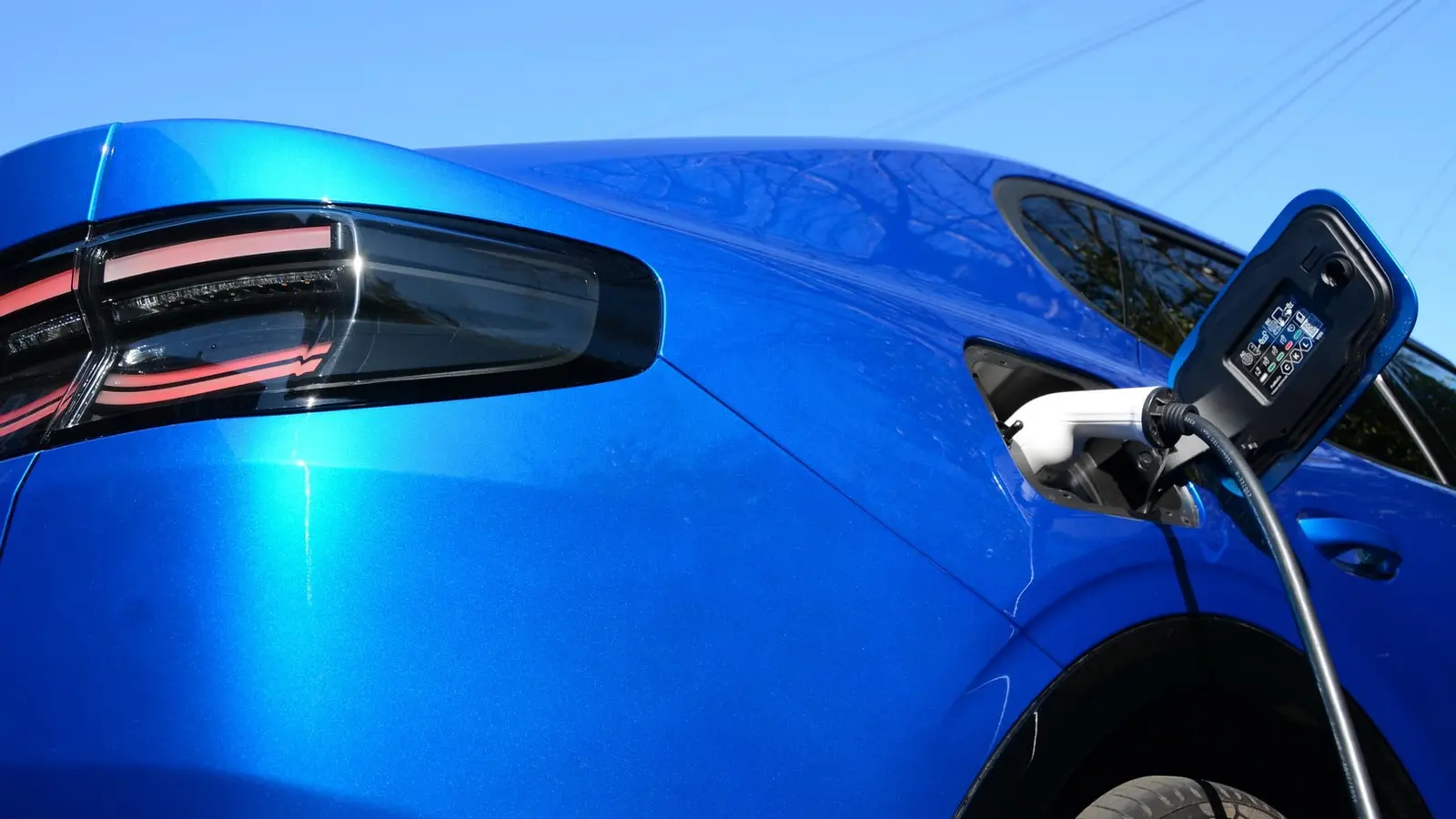
What’s changing for EV owners?
From April 2028 the UK will introduce a new pay-per-mile charge for electric cars and plug-in hybrids, a policy aimed at making EV owners contribute directly to road upkeep. Dubbed the Electric Vehicle Excise Duty (eVED), the levy replaces the implicit contribution that fossil-fuel drivers make through fuel duty.
Under the plan, battery-electric vehicles (BEVs) will be charged 3 pence per mile (roughly $0.04 / €0.04), while plug-in hybrid electric vehicles (PHEVs) will pay 1.5 pence per mile (about $0.02 / €0.02). These rates will be indexed to inflation and reviewed annually.

How much will drivers actually pay?
Drivers who travel under the national average—about 9,300 miles a year—could see their annual running costs rise by roughly $350 (€300) when you add the mileage fee to existing taxes. Crucially, the eVED is an additional cost on top of the existing Vehicle Excise Duty (VED), which the government expects to remain in place.
The Treasury has estimated the first-year revenue at around £1.1 billion (about $1.5 billion). Motorists will be given flexibility on payment: a single annual settlement or monthly instalments. Everyone must provide an estimated annual mileage up front; actual miles will be reconciled at year-end so excess use incurs a top-up charge and lower-than-expected use creates a credit.
Why the government says this is fair
Officials argue the move levels the playing field: fossil-fuel drivers already contribute via fuel duty at the pump, while EVs—despite causing congestion and road wear—haven't paid an equivalent charge. The policy is framed as a revenue-neutral way to maintain road funding as petrol and diesel revenues decline.

"All road users should pay their share for roads and congestion," an official summary states, reflecting the principle behind eVED.
Industry reaction and practical issues

Not everyone is convinced. Critics point to a few major concerns:
- Administrative burden: Fleet operators and leasing companies warn of a complex compliance overhead for managing estimated mileage across hundreds or thousands of vehicles.
- Penalty for early adopters: Buyers who switched to EVs years ago could feel unfairly targeted, having purchased vehicles under different tax expectations.
- Household budgeting: Estimating mileage months in advance can create cashflow uncertainty for families whose driving patterns vary.
The British Vehicle Rental and Leasing Association (BVRLA) has cautioned that the scheme could introduce extra costs and paperwork for companies running large electric fleets, and that small misestimates could cascade into accounting headaches.
How other countries are approaching mileage charges
The UK is not alone. Governments in New Zealand, Iceland and multiple US states are experimenting with road-user charges. New Zealand introduced a per-kilometre charge for light EVs in April 2024, charging roughly $48 per 1,000 km (621 miles). In Europe, countries like France already collect large sums via energy excise duties, and other nations are monitoring the UK rollout closely.

What this means for buyers and the EV market
For car buyers, the eVED changes the total cost-of-ownership equation and could influence the resale market and leasing rates. Manufacturers and dealers may need to be more transparent about expected running costs, and consumers should factor eVED into comparisons between EV, hybrid and internal-combustion options.
Practical tips for drivers:
- Track mileage precisely with your car’s telematics or a dedicated app.
- Consider leasing or subscription models that bundle administrative handling.
- Re-evaluate total cost of ownership (TCO) rather than focusing only on purchase price or fuel/charge savings.
Bottom line
The UK’s pay-per-mile EV tax is designed to capture a steady stream of revenue as petrol and diesel taxes decline. While it addresses a genuine funding gap for road maintenance, the scheme raises fairness and administrative questions—especially for businesses and early EV adopters. If the policy meets its financial targets, expect other governments watching the results to consider similar road-user charges.
For drivers and fleet managers, the immediate priorities are understanding how estimated-mileage reconciliations will work, preparing systems to track real usage, and reassessing the economics of electric ownership in light of the new eVED charge.

Leave a Comment
Comments (2)
Makes sense to fund roads, but estimating annual miles months ahead? No thanks. Families and small biz will struggle with cashflow and reconciling credits, sigh.
So they add 3p/mile on top of VED? Seriously punishing early adopters, and the admin nightmare for fleets… privacy issues too. If that's real then ugh.