
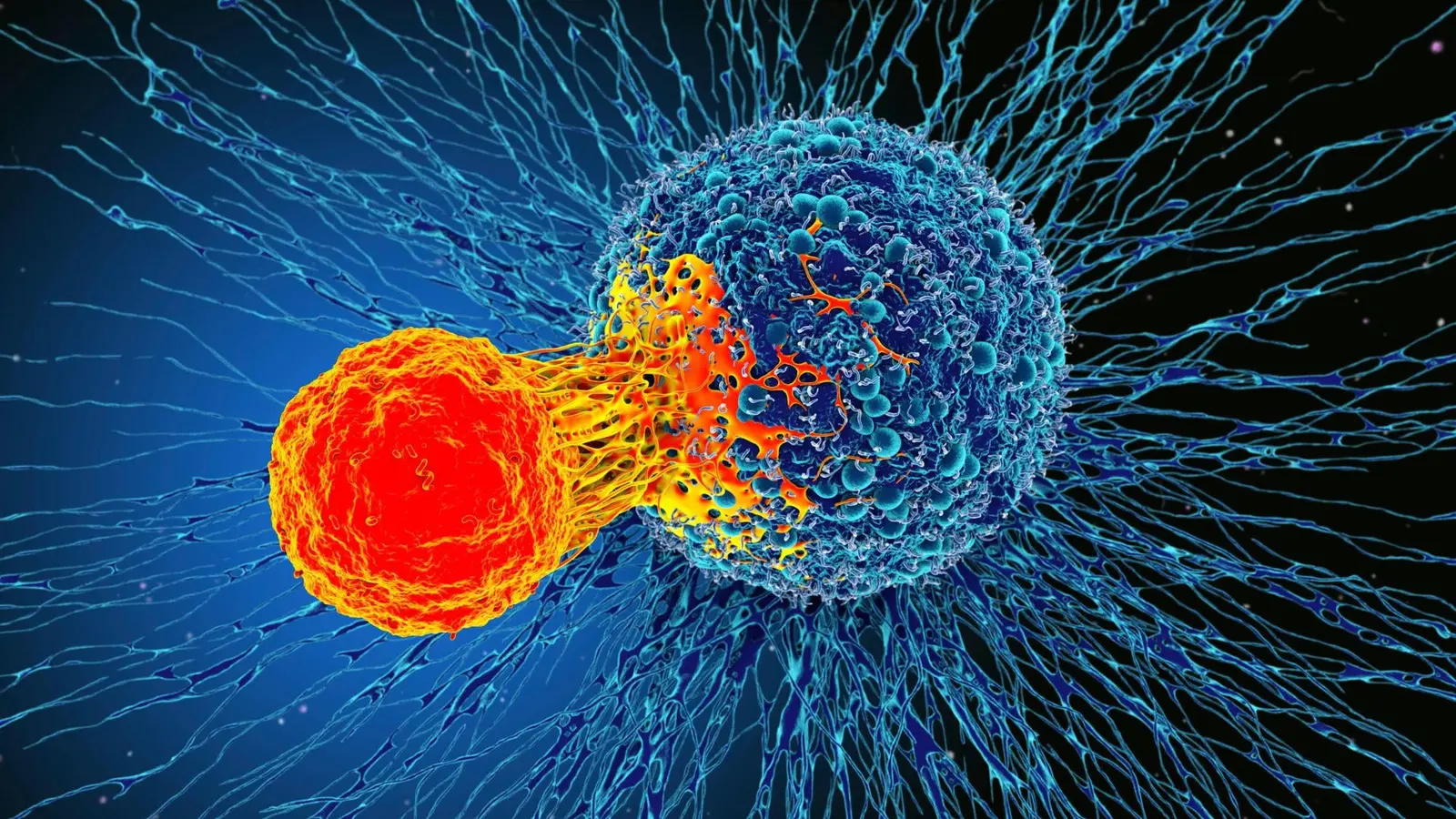
Imagine a coat of sugar so dense it turns a cell nearly invisible to the immune system. That’s not science fiction. It’s the glycocalyx — a carbohydrate-rich cloak that some tumors thicken to hide from patrolling immune cells.
Researchers at Sanford Burnham Prebys and collaborators across North America published new work in Science Advances showing this sugary armor is not purely the cancer cell’s doing. Physical pressure, nutrient mix, and blood-sugar levels in the tumor’s neighborhood shape how thick and sticky that coat becomes. In short: context matters.

Kevin Tharp, the lead author, arrived at the idea after noticing how mechanical stress alters mitochondrial behavior. Tumors, unlike healthy tissue, are often stiffer. Cells squeezed in that rigid environment shift their metabolism. Tharp and his team asked a simple but important question: could the same forces that change a cell’s internal fuels also change the sugars it displays on the surface?
They set up experiments that mixed and matched two variables: the physical stiffness of the surrounding environment and the nutrient composition bathing the cells. Some cultures mimicked the hard, compressed conditions of primary tumors. Others were softer, closer to healthy tissue. The team also compared old-fashioned lab medium to a newer formulation that mirrors human blood plasma more faithfully, and they tested normal versus high glucose to model hyperglycemia.
The results were striking. Cells grown in tumor-like stiffness and in the physiologically realistic medium responded to excess glucose by thickening their glycocalyx. In conventional lab media, that glucose-triggered growth of the sugar layer was far less pronounced. Protein production shifted. Metabolite pools changed. The cell surface transformed.

This figure shows the results of blocking a protein called heat shock factor 1. Using scanning angle interference microscopy, the scientists showed that inhibiting this protein prevented the thickening of the outer protective layer that cancer cells use to trick the immune system. When the protein is not blocked, cancer cells’ cloaking costumes grow thicker in response to excess glucose or hyperglycemia.
Delving deeper, the scientists traced these surface changes to glycoconjugates — proteins and lipids decorated with carbohydrate chains. High glucose supplied raw material for building those chains, but it was the combination of nutrient realism and mechanical cues that determined which glycoconjugates appeared and how abundant they were.
One protein stood out in this cascade: heat shock factor 1, or HSF1. Best known for helping cells cope with heat and stress, HSF1 was more abundant under hyperglycemia and seemed to steer the production of specific glycoconjugates. When the team blocked HSF1, the sugar coat failed to thicken even in high-glucose, tumor-like conditions. Advanced imaging approaches, including scanning angle interference microscopy, captured that change in three dimensions: the cloak went down once HSF1 was inhibited.
Crucially, thickening of the glycocalyx translated into real biological consequences. In models that included immune cells, cancer cells in hyperglycemic, stiff conditions escaped immune attack more effectively — but only when HSF1 was active. Remove or inhibit HSF1 and immune cells could recognize and clear more tumor cells.
Targeting HSF1 could strip the sugar armor and restore immune recognition.
Beyond the lab-bench mechanics, this study offers a plausible link between two epidemiological observations that clinicians have long wrestled with: patients with high blood sugar — whether from metabolic syndrome, type 2 diabetes, or diet — face worse cancer outcomes, and tumors often resist immunotherapy. If elevated glucose helps tumors thicken their glycocalyx and HSF1 enables that process, then metabolic health becomes part of the immunotherapy conversation.
There’s also a drug-discovery angle. Therapies that blunt HSF1 activity, or that alter the tumor microenvironment’s mechanical or nutrient landscape, might make tumors more visible to the immune system. That could amplify current immunotherapies or open new combination approaches aimed at metastatic disease, where immune escape is most deadly.

Science seldom hands simple answers. But this work narrows a web of connections — mitochondria, mechanics, sugar chemistry, and immune recognition — into a testable strategy. The next step is to see whether targeting this sugar shield in patients can tilt the balance back in favor of immune clearance.

Leave a Comment
Comments (2)
Is this causal or just correlation? tumors stiff + high sugar sounds plausible, but do patients actually show HSF1-driven cloaks? idk, need clinical data
wow that glycocalyx thing is wild - tumors literally suiting up in sugar. if microenvironment tweaks it, metabolic health matters big time. mind blown, kinda hopeful tho