
Amazon and Nvidia just turned a partnership into something resembling a strategic alliance. The two companies announced this week that AWS will add two million more Nvidia GPUs to its data centers, a move that underlines how cloud scale and accelerator demand have become inseparable.
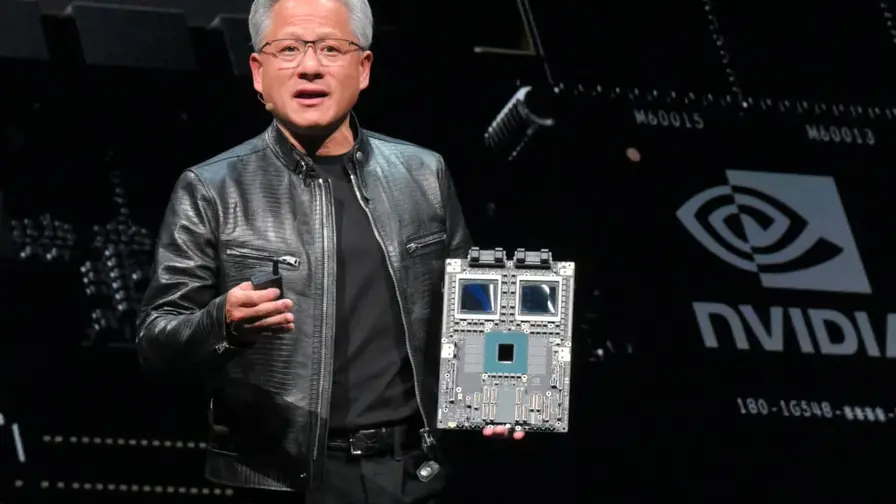
These aren’t regular graphics chips. The order covers Nvidia’s latest AI accelerators — Blackwell Ultra along with Rubin and Rubin Ultra variants — engineered specifically for the heavy lifting of training and running large AI models. Shipments are scheduled for 2027 and 2028, giving AWS a long runway to expand its AI infrastructure as workloads only get more demanding.
The timing matters. Nvidia disclosed the update during its quarterly earnings call, barely five months after Amazon agreed to deploy over one million of the company’s chips starting this year. Since then, Nvidia says demand has outpaced internal forecasts by a wide margin. Nobody is talking public dollar figures for this newest purchase. Still, given per-unit costs for high-end GPUs, industry estimates peg the deal in the tens of billions of dollars.

What’s driving that appetite? Simple: a surge of compute-hungry workloads. Startups racing to build foundation models. Enterprises moving from pilot projects to production. AI research labs pushing model sizes and training cycles. Even governments that need bespoke AI systems. All of them are consuming GPU cycles at unprecedented rates.
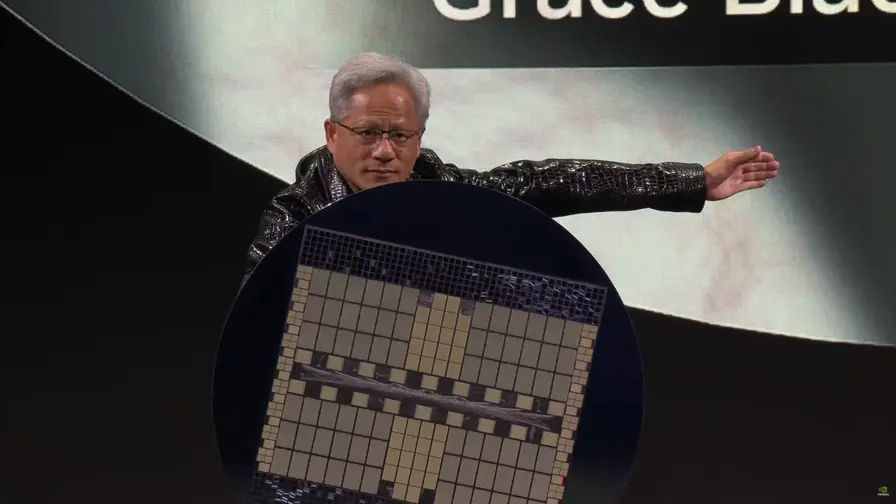
And yet Amazon isn’t abandoning its own silicon ambitions. AWS continues to develop and promote its custom chips — Trainium for deep learning training and Graviton for CPU workloads based on the Arm architecture. AWS has even signaled willingness to market Trainium to third parties, positioning it as a direct competitor to Nvidia’s training hardware. At the same time Amazon says its custom-chip business is scaling fast: the company reported an annualized revenue run-rate around $25 billion in its latest update, supported by commitments it describes as totaling roughly $225 billion from customers including firms like Anthropic and OpenAI.
So why buy millions of Nvidia GPUs if Amazon has its own silicon? Because scale and specialization are not mutually exclusive. Trainium and Graviton optimize certain workloads and deliver cost efficiency. Nvidia’s GPUs remain the industry standard for the broadest, most compute-intensive model classes. In short: diversify the stack. Use the right tool for each job.
The deal also reaches beyond pure cloud compute. Amazon plans to integrate Nvidia’s physical-AI ecosystem into its warehouses and enterprise offerings — from the Omniverse simulation platform to robotics middleware (Isaac) and Jetson edge compute modules. On the software and model side, AWS services like Bedrock and SageMaker will host Nvidia’s open model family, Nemotron, making it easier for customers to deploy large models inside AWS environments.
There’s an operational logic to the move. Robotics fleets need tightly integrated simulation, perception models and edge accelerators. Enterprises want pre-integrated model stacks that run reliably on cloud infrastructure. By pairing AWS’s scale and go-to-market reach with Nvidia’s model-accelerator ecosystem, both firms accelerate adoption across industries that are only beginning to tap into what modern AI can do.
This deal also signals how competitive and interdependent the AI hardware market has become. Chip design, software toolchains, model catalogues and data-center ops are all linked. Big cloud providers can build their own silicon, but they still rely on specialized accelerators and the software ecosystems that support them. For customers, the result is more choice — and more complexity in deciding where and how to run expensive AI workloads.
Expect more layered partnerships like this going forward: strategic purchases that buy capacity, ecosystem agreements that buy integration, and product road maps that hedge against shifting demand. For anyone watching where AI infrastructure is heading, the headline is blunt and clear — the era of commodity compute is over. The race now is for bespoke scale, and both AWS and Nvidia are placing very large bets.

Leave a Comment
Comments
No comments yet. Be the first.