
Think gamepads are all the same? Meet one that quietly pushes the envelope.
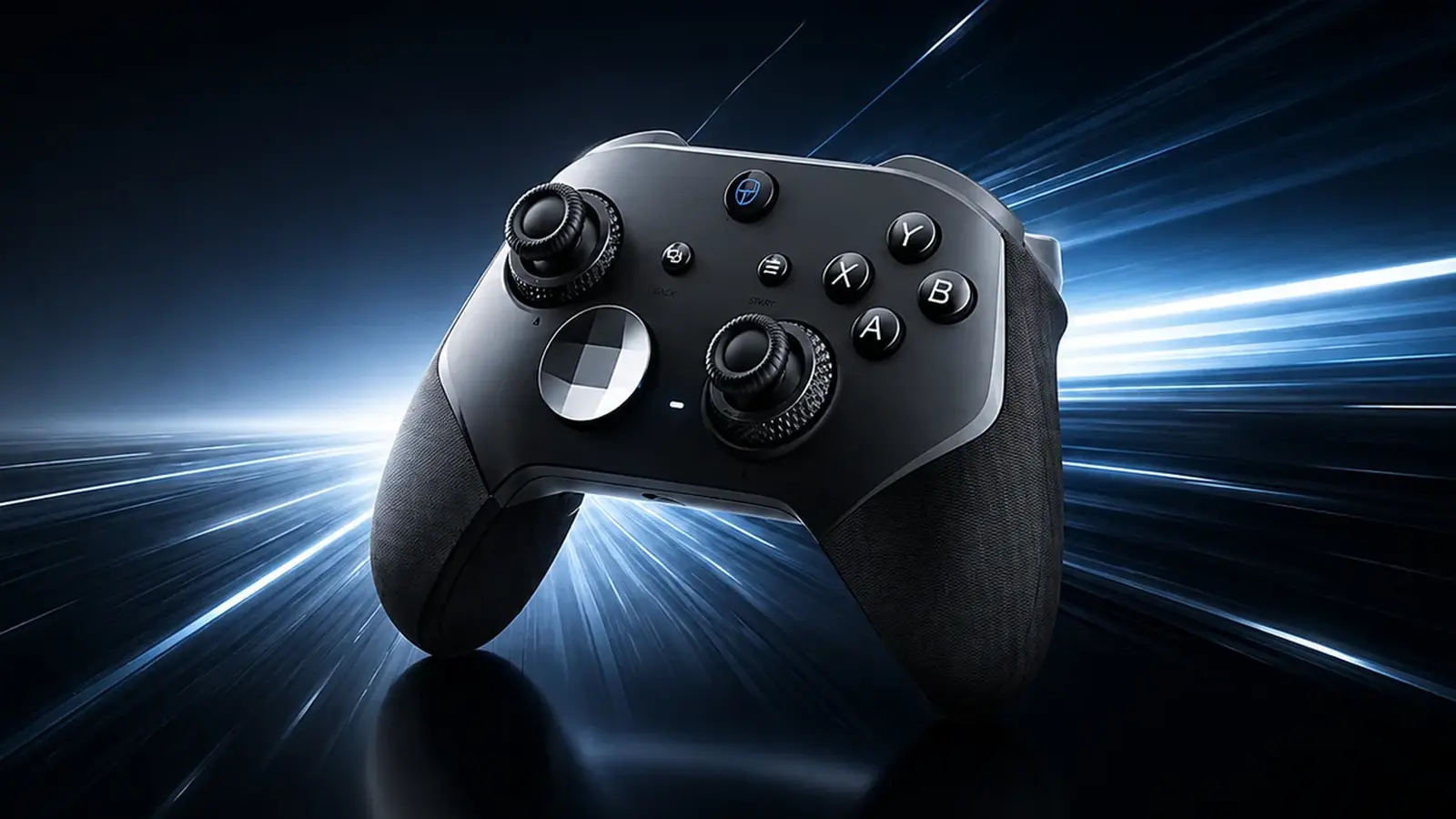
Thunderobot has introduced the Blade 60 in China, a controller that makes responsiveness its headline act. It ships at 449 yuan (about $67), with an introductory price of 399 yuan (roughly $59). The pitch is simple: make inputs faster and more tunable, for PC and Switch players who care about every millisecond.
Connections include wired USB, a dedicated 2.4GHz wireless receiver, and Bluetooth. Both the wired and 2.4GHz options support an 8KHz polling rate, a spec usually reserved for high-end mice and pro-level peripherals. In practice, that means the controller can report stick and button states up to 8,000 times per second — a clearest path to lower input latency.

Thumbstick design is where the Blade 60 shows its mechanical ambition. It uses TMR joysticks with adjustable tension and a direct bus link to the main board. The sticks are 12-bit, giving 4,096 discrete position steps for finer analog precision. Want a loose, nimble feel? Go light. Prefer a firmer, more deliberate resistance? Tension can be dialed up like tuning a racing wheel's pedal stiffness.
Triggers are built around a two-mode physical switch on the back. One mode uses Hall-effect sensing for smooth, linear travel — ideal for driving sims and nuanced throttle control. Flip the switch and the triggers switch to micro-switch mode, shortening travel to a 2mm actuation for lightning-fast responses in shooters. Two very different feels, one hardware toggle.

Face buttons employ optical micro-switches that rely on infrared instead of metal contacts, a design choice intended to eliminate double-click issues and wear-related failures. Thunderobot rates these buttons for 10 million presses. The D-pad is a floating omnidirectional design with two caps supplied: a classic cross and a dish-shaped option for different play styles.
On the back you get six programmable mechanical buttons, plus two extra shoulder bumpers and four rear paddles. Mapping is handled through Thunderobot's PC software, with macros and multiple profiles storable to the controller's onboard memory so you can switch setups without a PC tether.
Power and feel matter too. The Blade 60 packs a 1,200mAh battery, laser-etched rubber grips front and rear for a firmer hold, and H-bridge motors in both the grips and triggers for adjustable vibration profiles. A six-axis gyroscope handles motion inputs, rounding out a modern feature set for immersive or competitive play.

Compatibility covers PC and the Nintendo Switch, and Thunderobot says the controller is designed with the upcoming Switch 2 in mind, including remote wake-up via the Home button. For players chasing the smallest advantage, that forward-looking compatibility could make the Blade 60 a sensible buy.
It’s not a revolution, but it’s close: a well-specified, modular controller built around speed and customizability. If you care about input fidelity, this one deserves a closer look — and for those who like portable retro hardware, we recently reviewed the Ayaneo Konkr Pocket Advance for $89 if you’re balancing budget handhelds with precision controllers.


Leave a Comment
Comments
No comments yet. Be the first.