
Published 05 November 2026 — Global DRAM revenue rose 369% year-on-year in Q3 2026, driven by strong demand for memory used in AI accelerators and data centers. Average selling price reached $1.9 per gigabit (i.e. 1/8th of a gigabyte), according to Counterpoint Research's Global Memory Tracker 2026 Q3.
Market share and product shifts
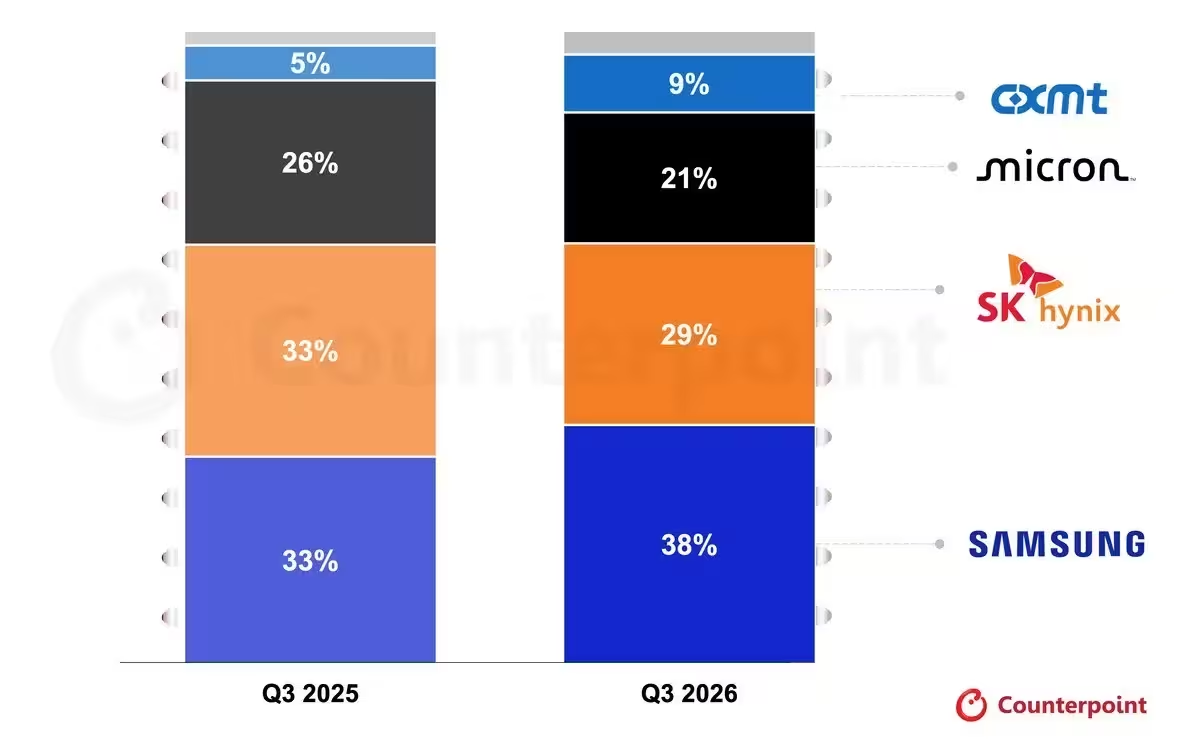
South Korea emerged as the largest regional beneficiary. Samsung held a 38% share of the DRAM market, SK hynix 29%, and US-based Micron 21%. China’s CXMT accounted for 9% of the market. Counterpoint notes that SK hynix’s revenue increased by more than 40% quarter-on-quarter, but Samsung is currently performing better overall. CXMT expanded its revenue versus Q3 of last year while losing one percentage point of share compared with Q2 2026.
Counterpoint also points to a technology transition that affects those positions. SK hynix dominated HBM3E sales earlier, but demand is shifting toward HBM4, where Samsung currently has the lead. CXMT plans to begin mass production of HBM3E next year and is therefore behind the leaders on that front.
Memory types, demand and prices
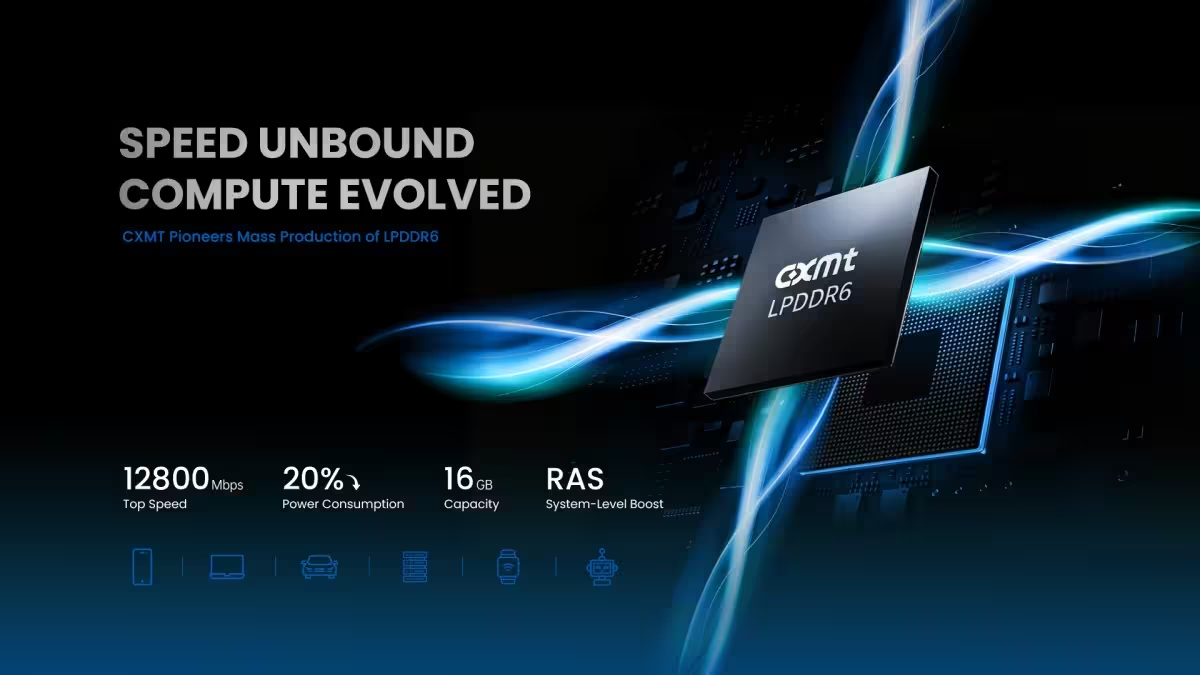
Different forms of AI place different demands on memory. Counterpoint reports that the rise of agentic AI has driven demand for DDR and LPDDR, which serve as system RAM (unlike HBM, which is typically used on AI accelerator cards). Year-on-year demand for DDR rose by 500% and for LPDDR by 400%. CXMT was the first to begin mass producing LPDDR6, and some Xiaomi 18 Fold units use LPDDR6 for their 16GB configurations while 12GB units use LPDDR5X. Counterpoint specifies that CXMT’s LPDDR6 is used in some Xiaomi 18 Fold units.
HBM remains the most profitable DRAM segment: revenue from HBM nearly doubled compared with the year-ago quarter, even as DDR and LPDDR revenues are increasing at a faster rate. The pace of DRAM price rises began to slow in Q3 compared with the first half of 2026, but prices remain elevated and are expected to stay high in the near term.
MS Hwang, Research Director at Counterpoint Research, said, “Memory prices should stay strong next year. HBM prices, which lagged commodity DRAM this year, are now catching up. Long-term agreements (LTAs) are supporting prices and supply will stay tight because major new fabs will not start production until 2028.”


Leave a Comment
Comments
No comments yet. Be the first.