
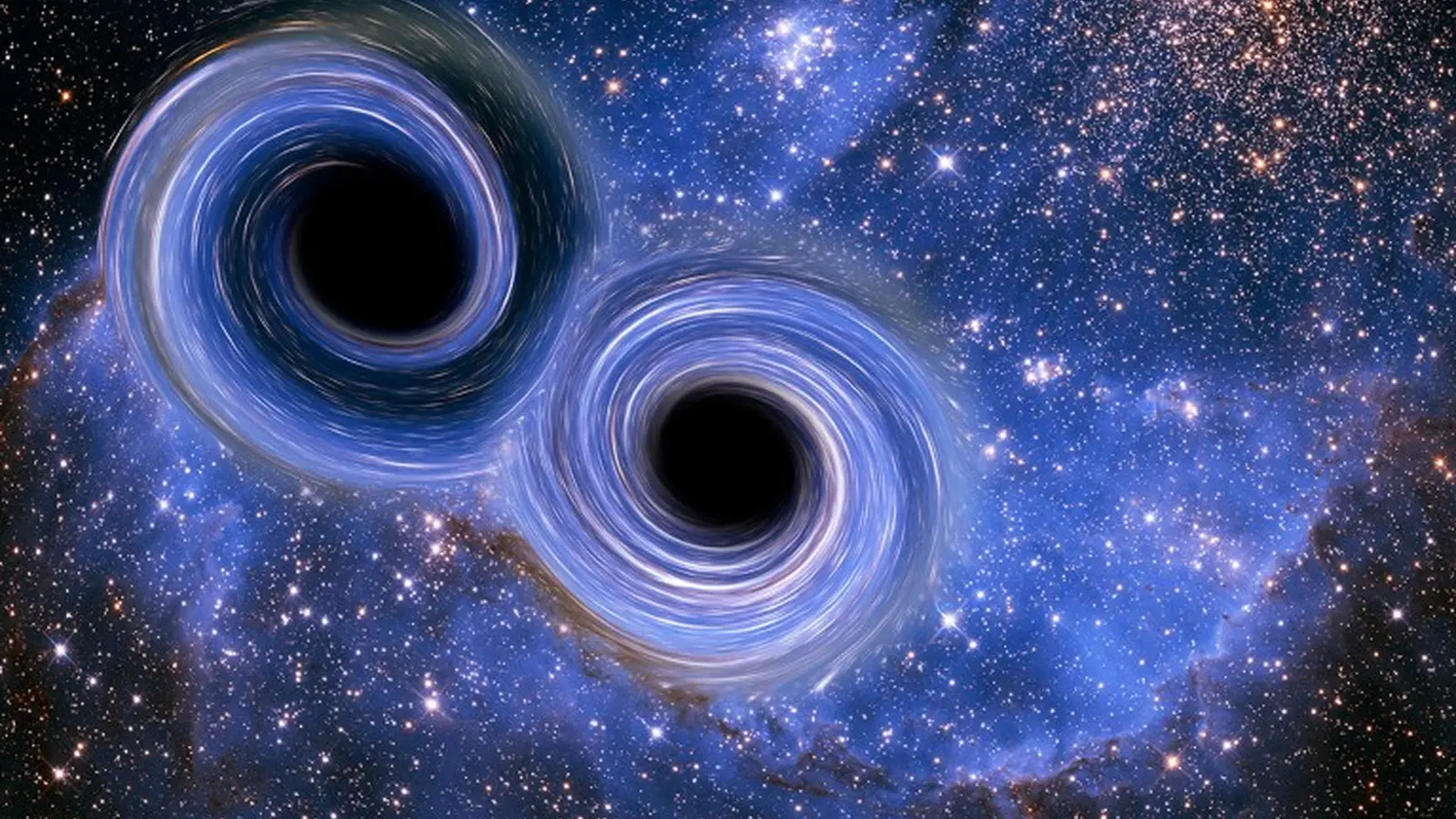
They shine like impossible lanterns from the Universe's infancy. Two blazing quasars, each powered by a supermassive black hole, have been spotted just 900 million years after the Big Bang—objects so massive they strain current theories of early growth.
One member of the pair packs roughly 1.5 billion times the Sun's mass. Its partner weighs in at about 400 million solar masses. Together they form the most distant compact quasar duo yet identified, cataloged as J1602+4228AB and given the Hawaiian name Nāpōwawāʻenakaulua. The two nuclei sit only about 18,100 light-years apart, roughly a fifth of the Milky Way's diameter. Close neighbors, by cosmic standards.
How did such titans assemble so quickly? That question hangs over every paragraph of this discovery. In the first billion years, galaxies were still finding their shapes, dark matter scaffolds were assembling, and gas was pouring into emerging structures. Collisions and mergers can funnel fuel toward central black holes, prompting furious growth. But even with those mechanisms, producing a billion-solar-mass object in under a billion years is a tall order. Producing two—side by side—pushes the problem into new territory.
The finding emerged from the Aether survey, a James Webb Space Telescope program that combed through about 200 early quasars, nearly half of those known from that epoch. Webb's Near-Infrared Spectrograph integral field unit revealed what looked like a faint companion near quasar J1602+4228A. Ground-based follow-up with the Gemini North telescope on Maunakea then resolved the pair cleanly, in just two nights of excellent seeing. Sharp skies. Fast work.
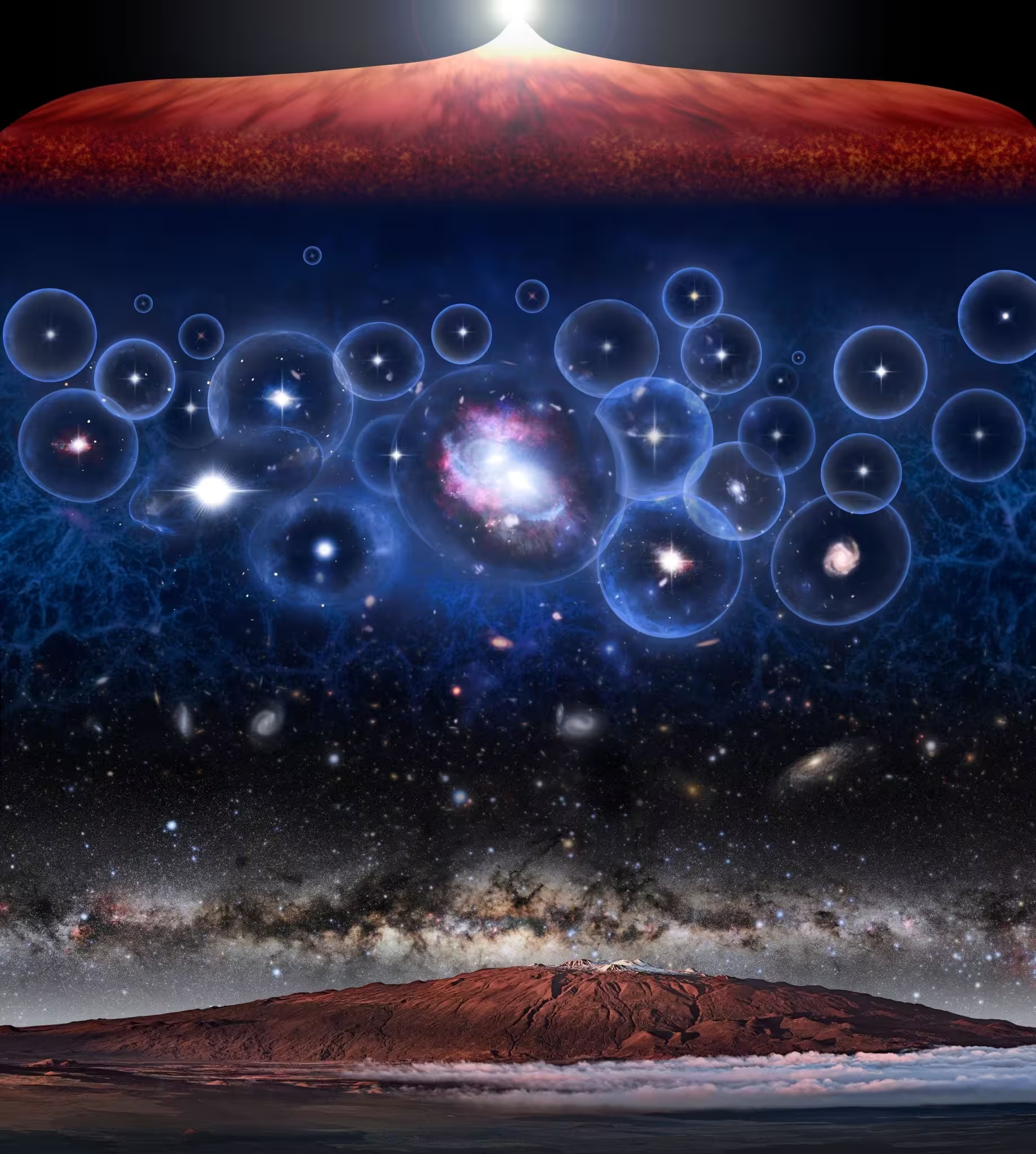
Quasars are not stars. They are the bright, high-energy signposts of gas spiraling into supermassive black holes. As material falls inward it heats and glows, sometimes outshining the galaxy itself. But that luminous phase is typically short-lived on cosmological timescales. Catching two neighboring black holes both active and so luminous at cosmic dawn is like finding two bonfires burning on a foggy shore at once—unusual and revealing.
Only three quasar pairs have been identified from that earliest epoch. Why so rare? Partly because we simply lack the resolution to separate faint, tightly spaced sources across such distances. Partly because the quasar phase flickers on and off. And partly because the environments that nurture rapid black hole growth may themselves be rare—exceptionally dense pockets of the young cosmos where interactions and gas-rich mergers were common.
Researchers suggest Nāpōwawāʻenakaulua may mark one of those extraordinary neighborhoods. If so, it becomes a natural laboratory for testing how the first massive galaxies and their central black holes assembled, and whether direct galaxy interactions were the dominant growth channel in the early Universe.
There is no tidy answer yet. The discovery tightens the constraints on models of seed black holes, accretion physics, and the role of environment. It also underscores the power of combining Webb's infrared sensitivity with ground-based telescopes capable of fine spatial resolution. Observations like these force theorists to refine scenarios that once seemed plausible, and they force observers to look deeper and wider.
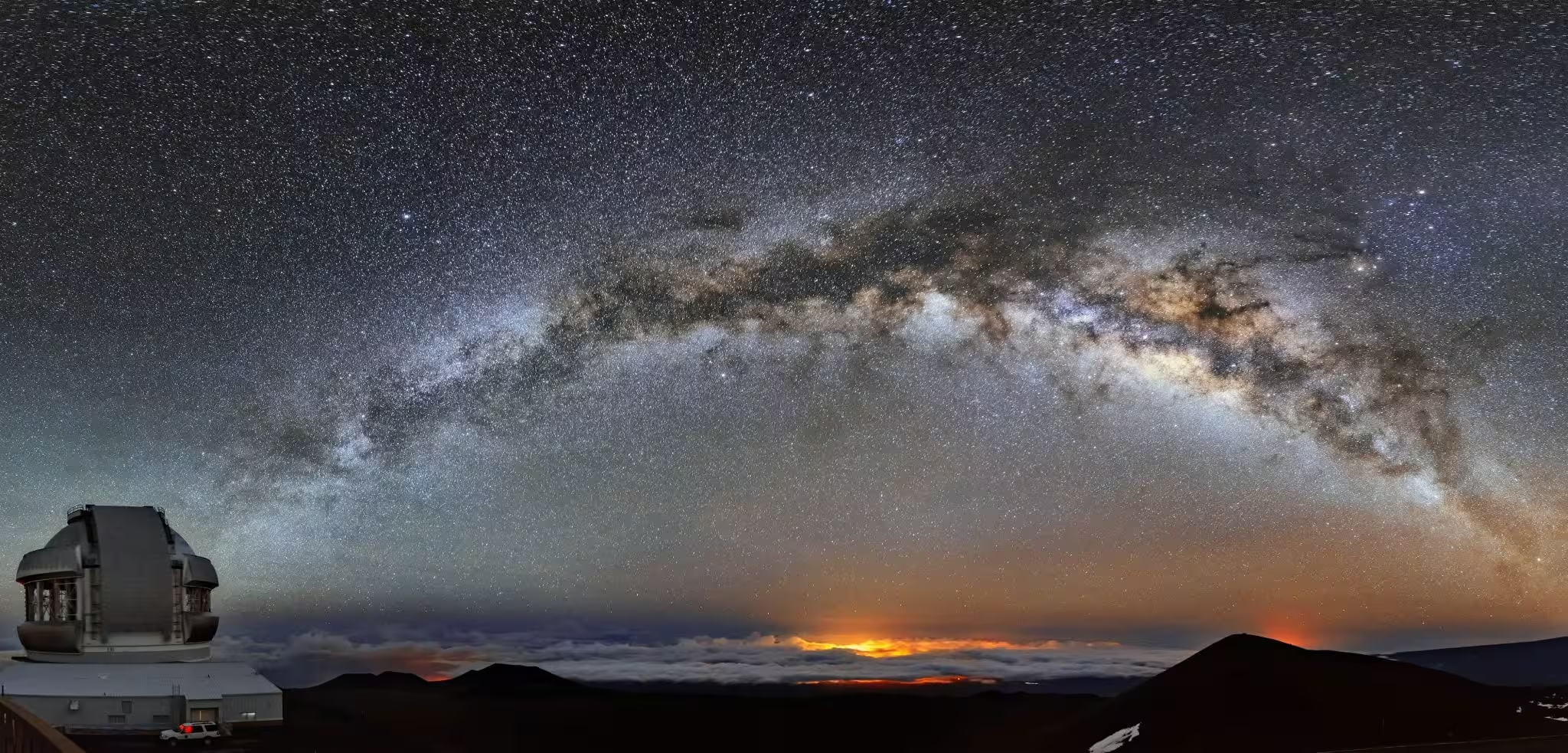
The Hawaiian name, chosen through a collaboration that connects language and astronomy, translates roughly to two celestial bodies of fathomless powerful darkness in the brilliance of heat reincarnating energy into the Universe. It is an apt image: darkness making light, energy forged in the earliest chapters of cosmic history.
More observations are already planned. Scientists will map the surrounding matter, search for signs of ongoing mergers, and follow spectral fingerprints that hint at how these black holes fed. The Universe keeps handing us surprises. Will the next one rewrite another chapter of how the first giants arose?


Leave a Comment
Comments
No comments yet. Be the first.