
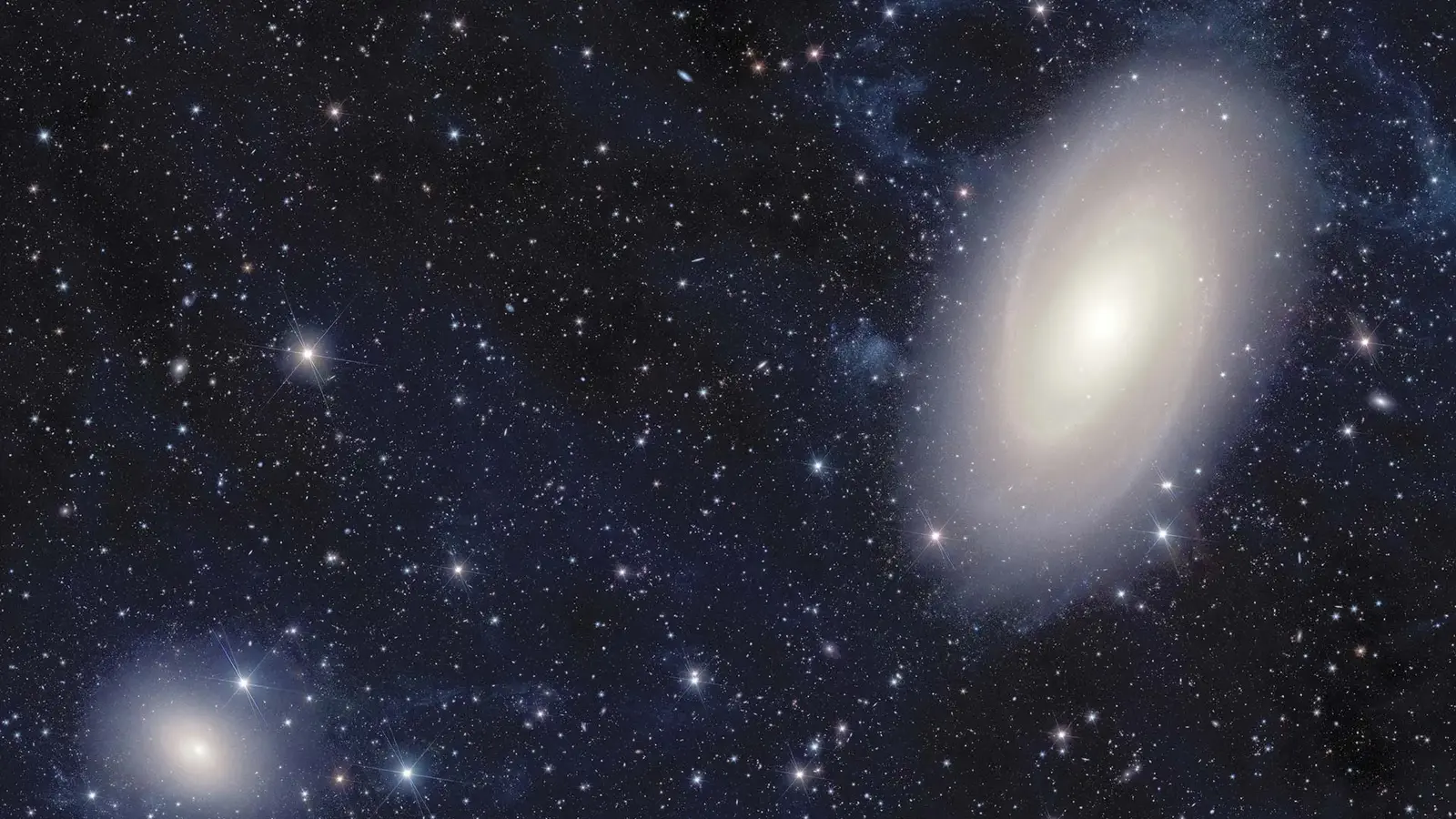
Think of the sky as a vast, layered archive. Euclid has started to peel back those pages.
Launched in July 2023 by the European Space Agency, the Euclid space telescope is drawing what may become the most detailed three-dimensional map of the observable universe. Using a visible-light camera with roughly 600 megapixels of resolution, Euclid has imaged both nearby and distant objects across swaths of the sky, and the agency has just released the first large preview of that survey.
Euclid has detected nearly one billion celestial objects, including more than 900 million galaxies and some 60 million quasar candidates.
Behind those headline numbers is an astonishing data haul: the new release adds up to roughly 1.7 million gigabytes. That torrent of pixels, spectra and metadata is not an end in itself. It is a resource for astronomers hunting the universe's hidden scaffolding, dark matter, and the mysterious driver of cosmic acceleration known as dark energy.
One of Euclid's most powerful techniques is gravitational lensing. When light from a distant galaxy or quasar passes near a massive foreground structure, gravity bends and magnifies that light. The effect can stretch background objects into arcs or rings. Those distortions are subtle in the weak-lensing regime and dramatic in the strong-lensing cases. Euclid is spotting both.
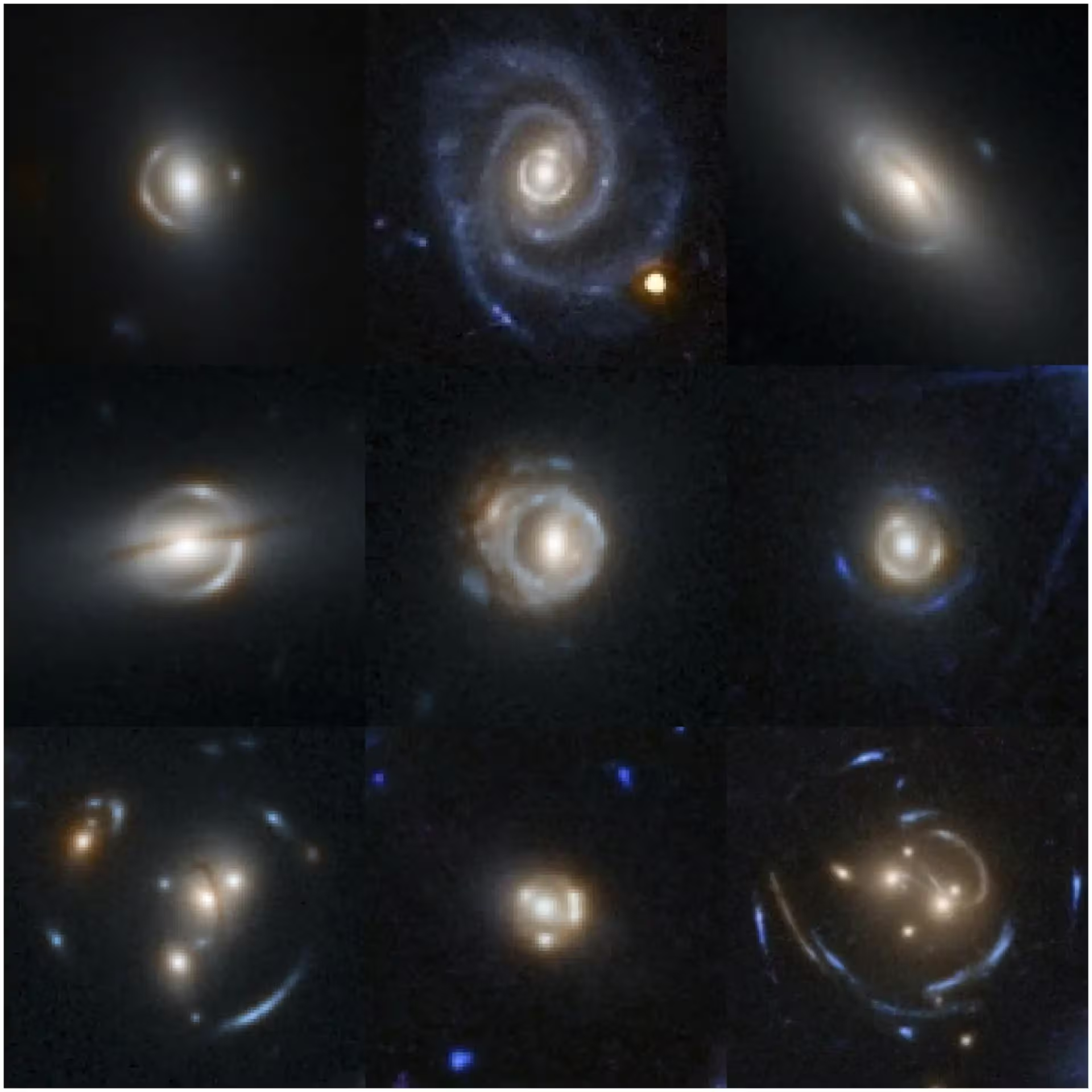
So far the telescope has identified about 15,000 promising candidates for strong gravitational lenses. Why does that matter? Because lensing is nature's own scale: it lets astronomers measure the distribution of mass, including the invisible dark matter, without relying on the brightness of objects.

Scott Gaudi, an astronomer at Ohio State who examined the dataset, called the release incredible and emphasized that measuring lensing distortions demands the kind of crisp, space-based imaging Euclid provides. From the ground, atmospheric turbulence blurs the fine details needed to map those tiny warps in light.
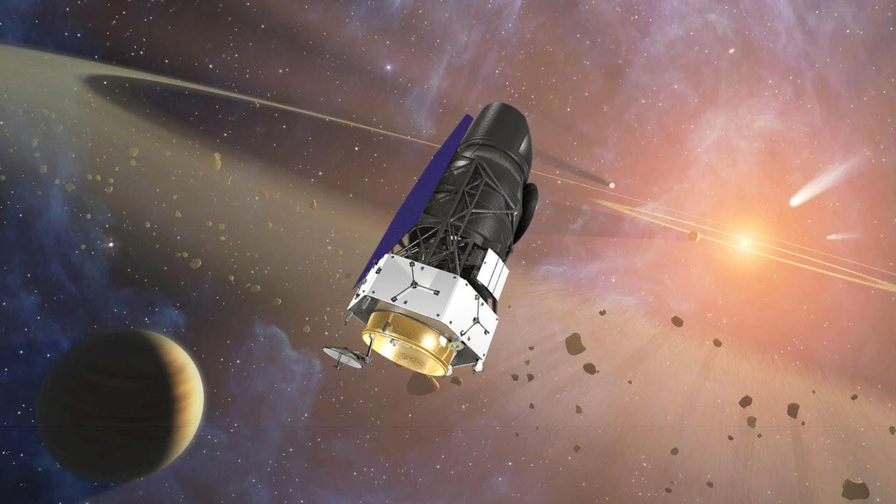
Euclid is not working alone. The Nancy Grace Roman Space Telescope will probe similar phenomena but through infrared eyes and a different observing strategy. Where Euclid aims for breadth, Roman will often revisit the same fields with varied filters and roll angles, producing complementary, higher-fidelity checks on Euclid's large-scale statistics. Together they form a complementary partnership, not a redundancy.
The new dataset also sheds light on galaxy clusters, the nodes of the cosmic web. By charting how galaxies clump, astronomers can trace the growth of structure from the early universe to now. Euclid's wide coverage opens a window onto ancient clusters that were previously inaccessible, enabling studies of how these cosmic giants assembled their mass over billions of years.
Among the images released is a striking view of the central region of Messier 81, rendered with Euclid's visible camera. Such snapshots are more than pretty pictures; they are cross-checks for the survey pipeline and anchors for studies that will combine Euclid imaging with other telescopes' data.
Despite the size of this release, the agency calls it a preview. A fuller, processed suite of products, including calibrated weak-lensing measures and galaxy clustering catalogs, is scheduled for mid-2027 as part of Euclid's formal first data release, DR1. Those richer datasets will underpin the first wave of papers probing the nature of dark energy and addressing lingering puzzles like the Hubble tension.
Euclid's approach is straightforward in ambition and subtle in execution. Image enormous swaths of sky with exceptional resolution, identify and classify objects, measure shapes and redshifts, and then let statistical patterns reveal the universe's hidden physics. It is tedious work, pixel by pixel, but the payoff could be transformative.
For the global astronomy community, this preview is an invitation. New lenses to model. New clusters to study. New arcs and rings to turn into mass maps. And for anyone watching the broader quest to understand the cosmos, Euclid's unfolding map promises discoveries that will reverberate through cosmology for years to come.

Leave a Comment
Comments (1)
wow, Euclid is like an x-ray for the cosmos 😮 almost a billion galaxies?? mind blown. pixel by pixel work but maybe historic, can't wait