
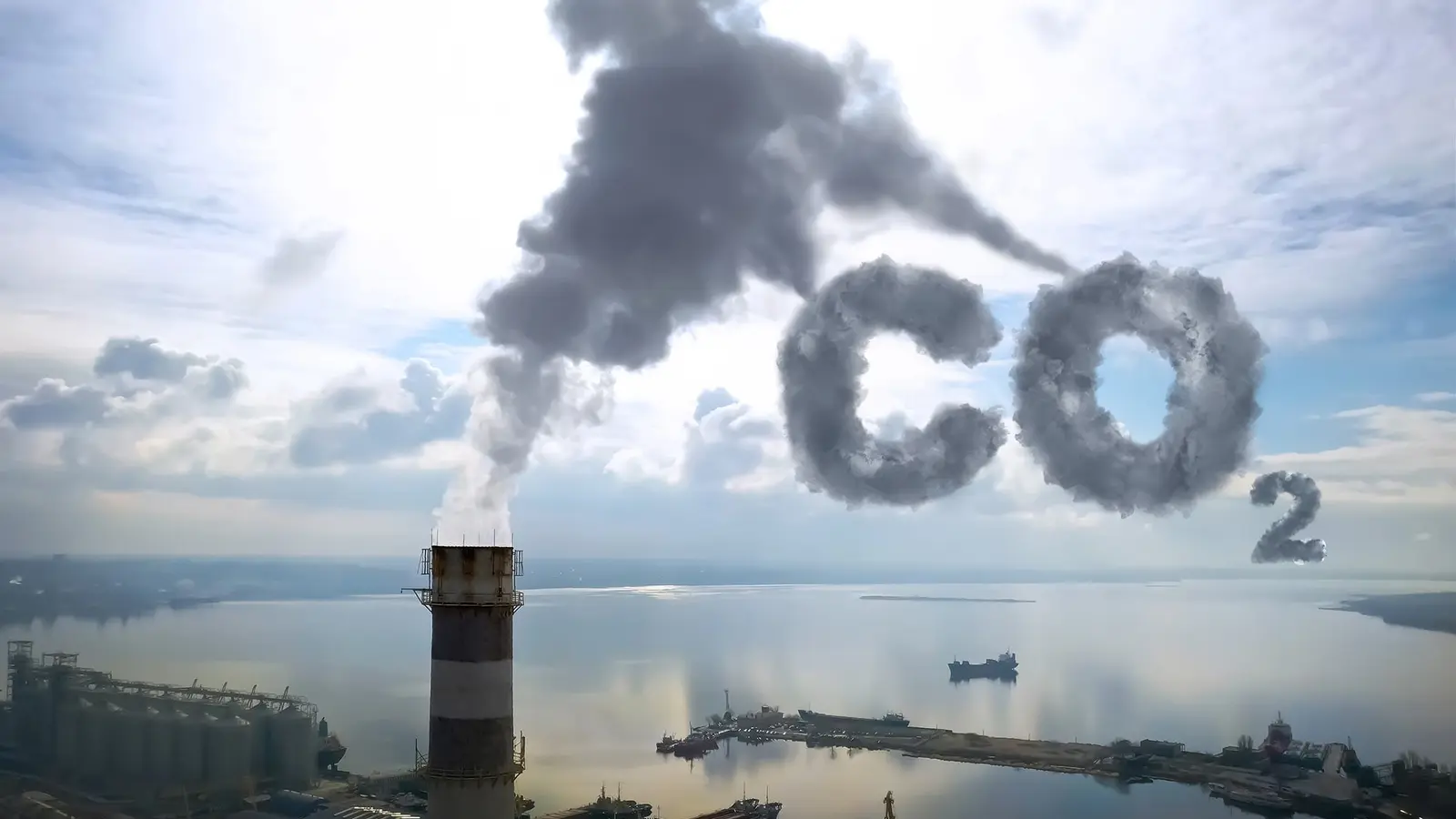
Picture an hourglass with sand slipping away — but the sand is measured in carbon. New analysis from the Global Carbon Project makes the image painfully literal: at present emission rates, the remaining CO2 budget for staying below 1.5°C is tiny — under four years.
The study finds a small dip in fossil-fuel CO2 this year to about 38.2 billion metric tons, driven in part by shifting oil supplies and expanding clean technologies. That drop, however, is being overwhelmed by increased releases from land-use changes such as deforestation and peat fires, pushing total global CO2 emissions toward roughly 43.3 billion metric tons for 2026.
Why the modest fall in fossil emissions? Oil looks set to deliver most of it. Prices and supply disruptions tied to the Iran conflict have trimmed oil consumption, nudging oil-related CO2 down nearly 2%. Natural gas emissions edge lower, while coal ticks up slightly. International aviation and shipping show small declines too, linked partly to reduced activity in parts of the Middle East. Short-term geopolitics can bend the curve; they do not fix the climate.
Clean energy is the structural story behind the more hopeful signals. Solar panels, wind farms and electric vehicles are now meeting — or avoiding — roughly two-thirds of the rise in global energy demand. Alone, wind and solar are projected to prevent about 4.6 billion metric tons of CO2 in 2026, up from 4.1 billion last year and vanishingly small in 2010. China sits at the center of that shift: it produces nearly a third of global fossil emissions, yet accounts for roughly half of the emissions avoided worldwide thanks to renewables and EVs.

National trajectories diverge. The United States and the European Union are each set to cut emissions by around one percent, while Japan edges downward as well. India moves the other way, with emissions growing faster than its decade-long average. An accompanying analysis shows a surprising development: in 59 countries emissions in 2025 were lower than in 2019 even as economies grew — a sign that clean technologies can decouple growth from carbon, if scaled quickly enough.
But nature fights back. Emissions from land-use change are forecast to reach about 5.1 billion metric tons in 2026, pushed higher by peat and forest fires in Southeast Asia and by continued deforestation in several countries. Drier conditions associated with El Niño increase fire risk, and most peat blazes are started by human activity. At the same time, forests, soils and oceans continue to absorb vast amounts of CO2, and land sinks have shown signs of recovery after weakening during the recent El Niño — yet a new strong El Niño could erode that progress.
Only about 150 billion metric tons of CO2 remain before we exhaust the budget for 1.5°C — a window that, at current rates, closes in less than four years. Atmospheric CO2 concentrations are on track to reach roughly 427.7 parts per million in 2026, more than 50% above preindustrial levels.
Removing carbon from the air matters, but current efforts barely dent the scale of the problem. Reforestation and afforestation offset a portion of emissions from deforestation; China, the EU and the U.S. lead the gains from forest restoration. Still, global removals by engineered technologies remain tiny — orders of magnitude smaller than what’s being emitted — underscoring that cuts at source plus scaled-up natural and engineered removals are both necessary.
Is a sustained global peak in emissions within reach? The pace of growth has slowed: annual increases averaged 0.3% over the past decade, down from 1.7% the decade before. Continued rapid deployment of solar, wind, batteries and EVs could prevent a large share of emissions tied to future energy demand — researchers estimate these technologies might avoid 64%–79% of that rise through 2028. Yet only a small fraction of the world’s passenger fleet is electric today. The math is unambiguous: sustained, accelerated clean-energy rollout — not geopolitical disruption or temporary market blips — is required to turn a one-year dip into a durable decline, and the window to act is painfully narrow.


Leave a Comment
Comments (1)
wow 1.5C in under 4 years?? That hit me hard. Renewables work, but fires and deforestation cancel out gains, ugh