
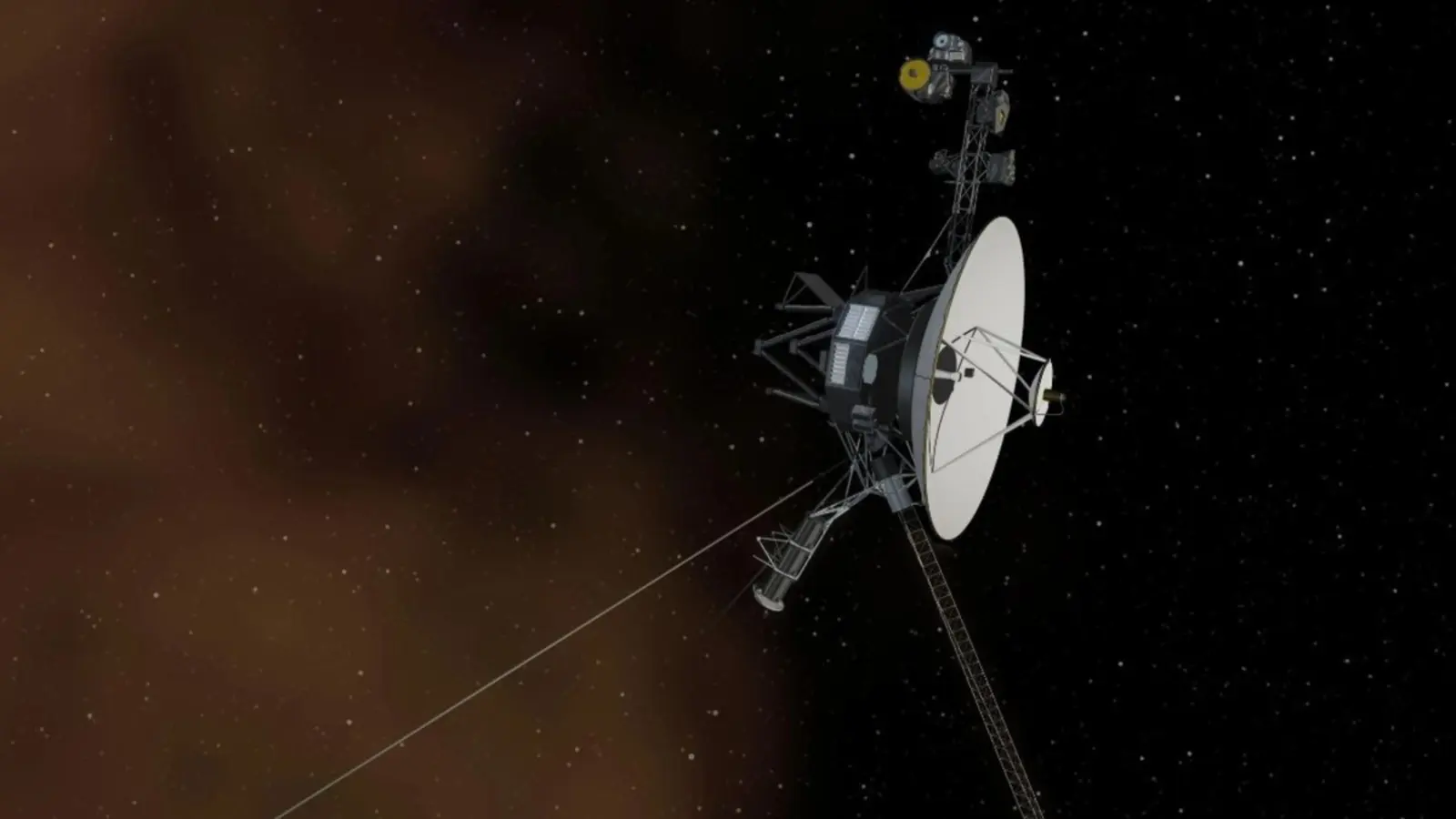
Tomorrow night, a human-made object will be one full day of light away from Earth. Small, stubborn, and traveling at tens of thousands of kilometers per hour, Voyager 1 will cross the 1 light-day mark on 18 November 2026 at 10:16 UTC (2:16 AM PST), sitting roughly 25.9 billion kilometers from the planet it left in 1977.
That number sounds abstract until you remember what it means for people talking to a machine on the edge of the Sun's reach. Send a command in the morning and expect an answer only the following morning. Two-way conversations stretch into a patient exchange. Timing matters now in ways it never did for neighborhood spacecraft.
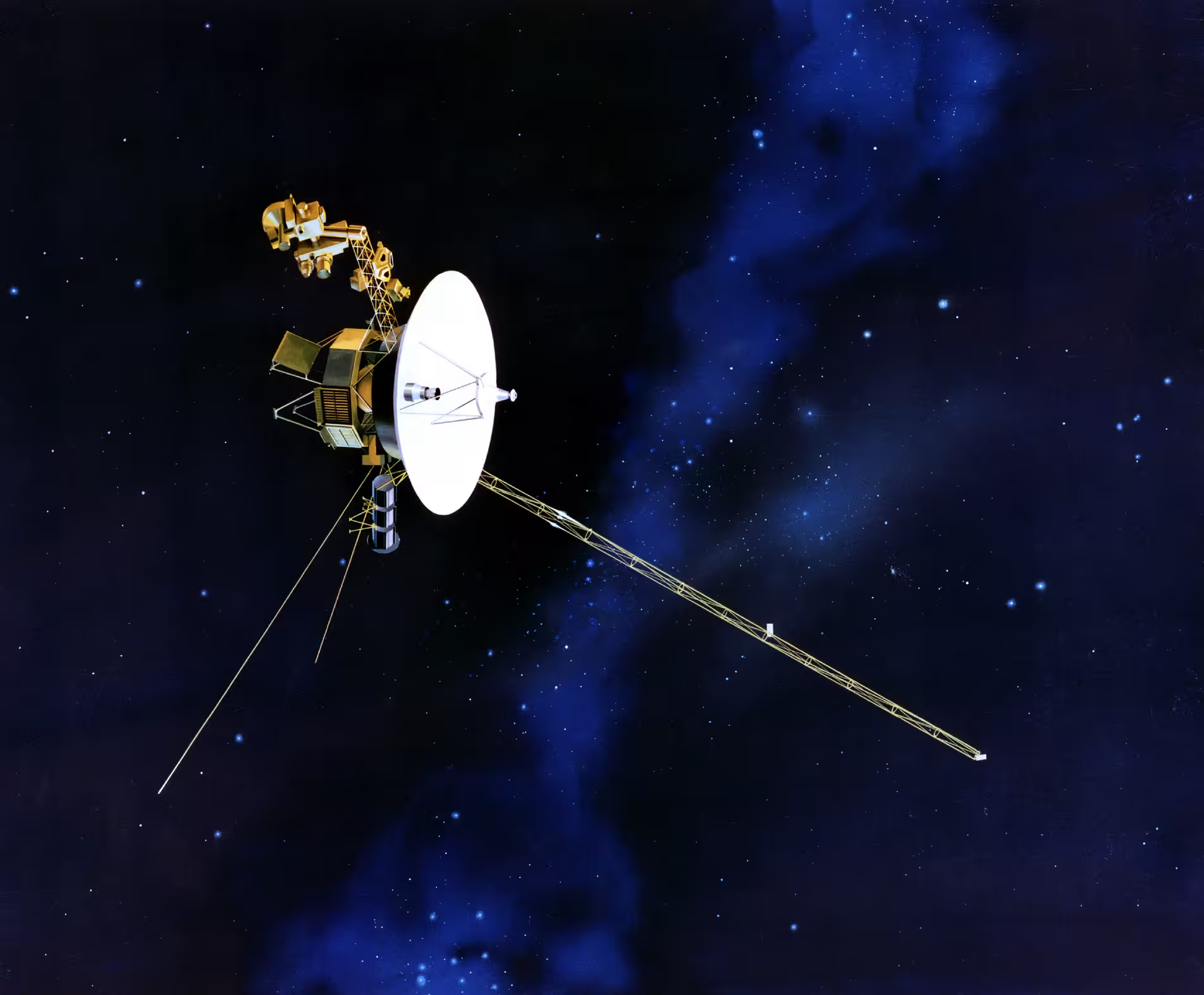
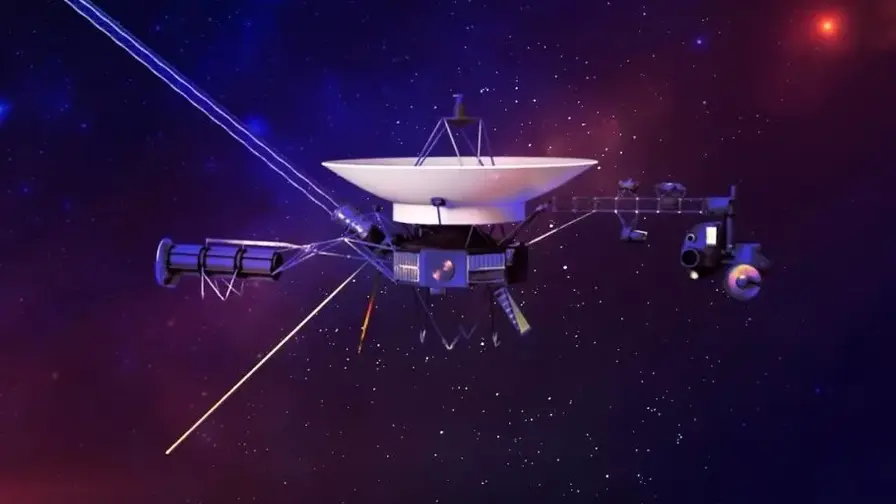
Voyager 1 will be the first human-made object to reach this distance from Earth. The probe has been moving outward at about 61,100 kilometers per hour, roughly 38,000 miles per hour, ever since its gravity-assisted escape from the giant planets. It was designed to visit Jupiter and Saturn. It did that brilliantly, then kept going — through the heliosphere and into interstellar space, where only its twin, Voyager 2, has walked beside it.
Why celebrate a distance? Because milestones like this are measures of endurance and of the strange, slow intimacy between Earth and its mechanical emissaries. For nearly five decades Voyager 1 has been sampling the faint electric murmurs and magnetic whispers between the stars. Its instruments once hummed with many tasks; now a handful remain alive. Mission controllers have been shutting down systems one by one as the radioisotope thermoelectric generator wanes. Today the magnetometer and the plasma wave receiver do most of the listening.
NASA wants the public to mark the moment. On the evening of Tuesday, 17 November, anyone can aim a phone or a flashlight skyward and blink a tiny message in Morse code: V G R. A simple app on a phone can turn the display into a flasher, or you can tap out the dots and dashes by hand. It is a human-sized gesture — small lights, big distance.
The story behind Voyager's instruments and messages is part science, part human daring and part sentimental cargo. The two Voyagers gave humanity its first close views of the giant planets and their moons, and Voyager 2 later visited Uranus and Neptune. Beyond visible images, the probes carry something more symbolic: the Golden Records, gold-plated discs etched with sounds, images, and greetings from Earth. They contain music, natural sounds, scientific information and a map pointing back to our world — a cosmic postcard intended for any intelligence that might one day intercept it.
There is an optimism folded into those choices. The record carries the voice of a president and the work of many curators who thought not only of data but also of hope. Voyager 1 may fall silent in the years ahead as its power supply slips below the threshold needed to run even the last detectors. Engineers expect to receive useful data into the early 2030s, perhaps longer if systems behave kindly.
And yet turning off instruments will not erase what Voyager has already done. The probe has rewritten expectations about how far and how long a single mission can last. It has extended humanity's reach into a medium we are only beginning to understand. It has also given the public a chance to participate in a ritual the size of a blink.
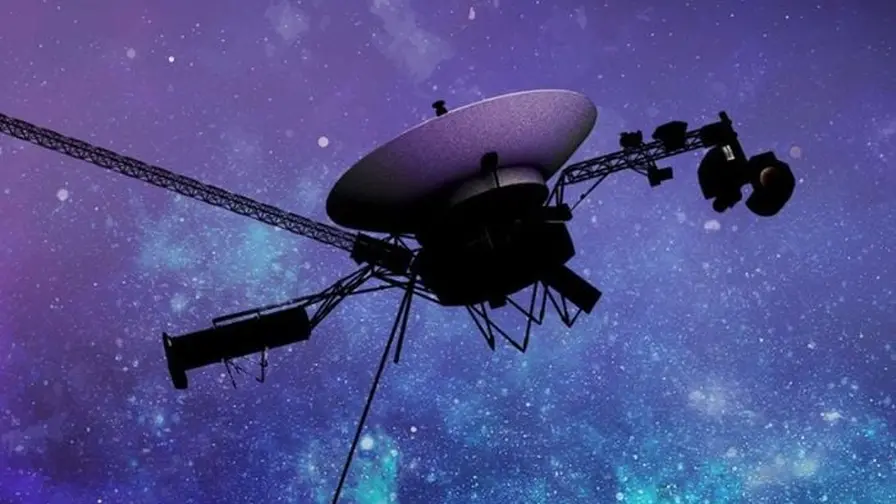
If you plan to look up on the night of the 17th, aim your light. Tap out V G R. Send a quiet signal into the dark and remember that a tiny object the size of a car is out there, still relaying the distant pulse of its travels. Who knows which future eyes might eventually notice the trail we left behind?

Leave a Comment
Comments (1)
wow, goosebumps. a car-sized relic 25.9 billion km away and still talking back? mind blown. send a tiny blink tonight, i'll be watching. if it goes silent, we'll still have the record, but ugh…