
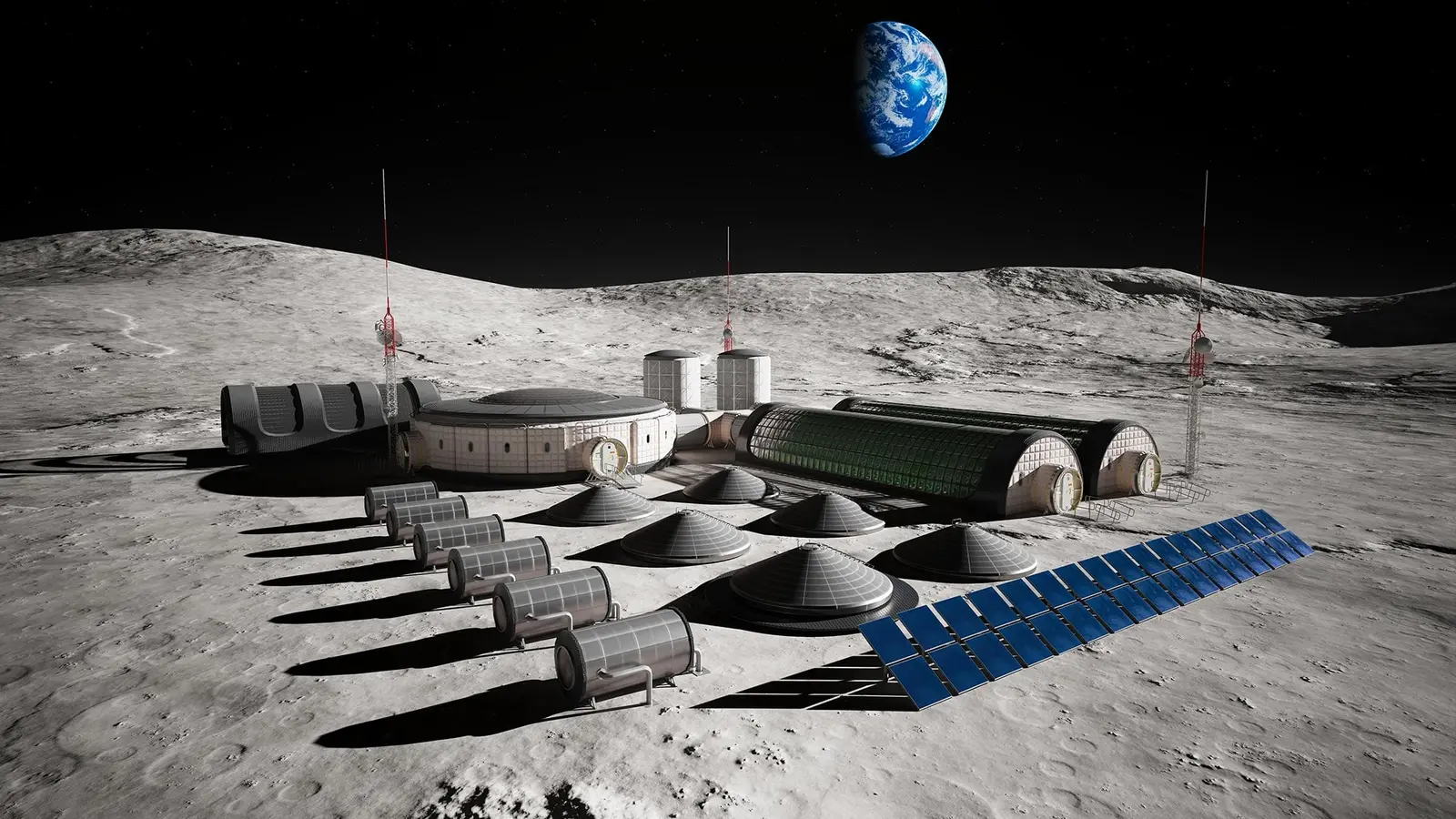
Imagine a future construction site where astronauts snap together hab modules the way a child assembles a playset — only the pieces are carved from the Moon itself. That vision moved a step closer to reality when researchers at the University of Arkansas showed you can 3D-print interlocking blocks from simulated lunar soil without hauling binders from Earth.
They started with lunar regolith simulant known as LHS-1, a commercially produced powder that mimics the jagged, glassy particles sampled by the Apollo missions. Instead of adding glues or chemical binders, the team used laser powder bed fusion: a thin spread of powder is selectively heated so particles sinter — essentially weld together — layer by layer. The trick: the regolith fused to itself under a relatively modest light source, producing small, stackable bricks shaped like crosses and H pieces that slot together much like LEGO components.
It sounds simple. It's not. Lunar soil is radically different from Earth dirt. No organics. No clumping humus. It is the product of billions of years of micrometeorite bombardment, leaving sharp-edged grains and tiny glass shards. Those characteristics give regolith both promise and trouble for manufacturing: it flows like sand yet behaves unpredictably under heat.
The Arkansas experiment, reported in NPJ Advanced Manufacturing, is notable because previous additive-manufacturing work relied on binders shipped from Earth to stabilize printed shapes. Eliminating those additives could drastically cut mass and cost for future missions. Less payload. Fewer supply chains. Greater autonomy for lunar outposts.
Still, the bricks are not ready to hold up a habitat roof. When sintered alone, the simulated regolith produced parts that were more porous and mechanically weaker than binder-enhanced objects. The team could print self-supporting geometries, but not yet components built to withstand heavy loads or the stresses of a real lunar base. In short: the pieces interlock, but they aren’t yet load-bearing in the way engineers need.
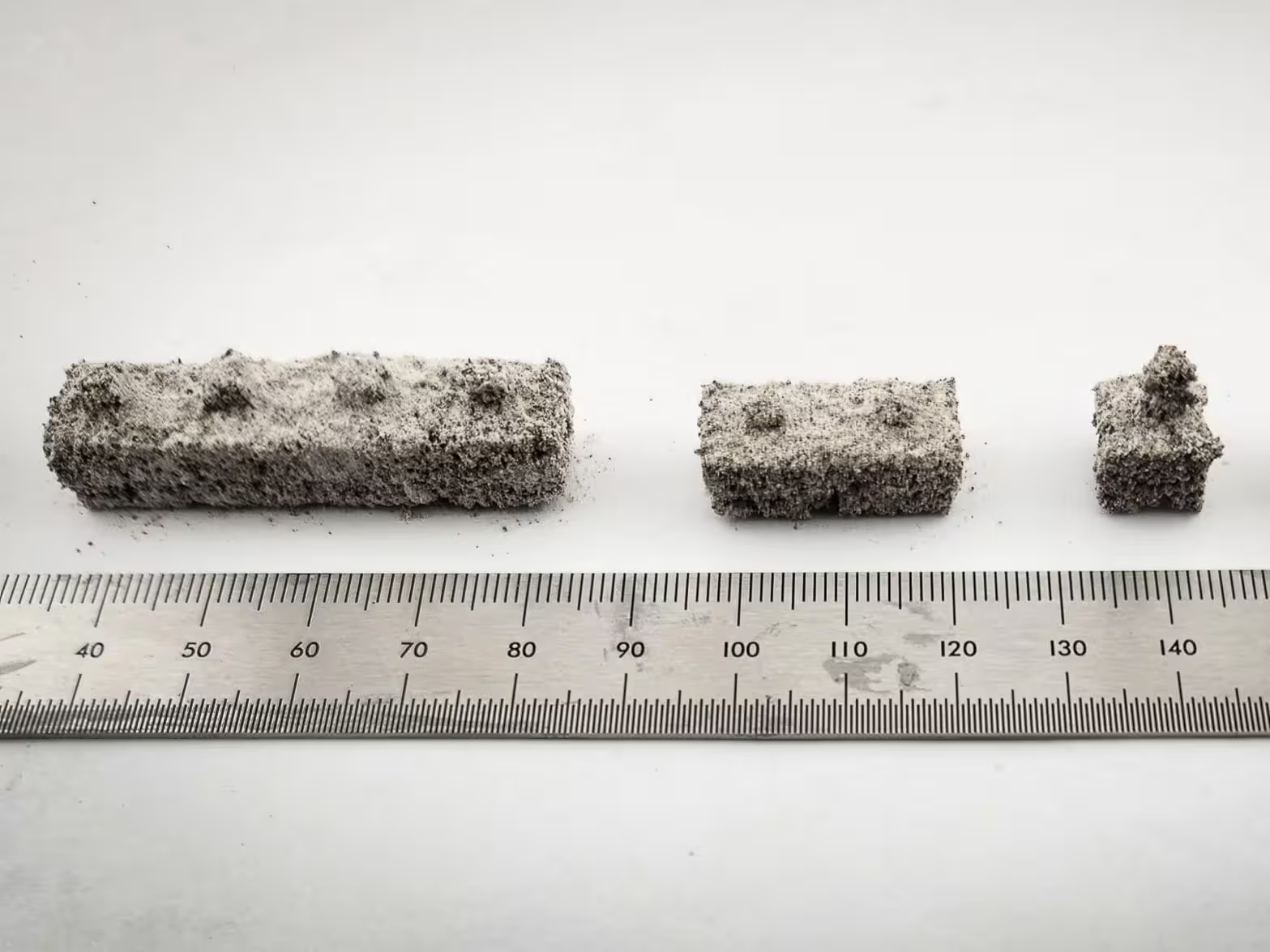
A 3D printer was used to create stackable bricks of pure lunar dust.
There are other unknowns too. How will this printing method behave in vacuum and low gravity? Will the lack of atmosphere change heat transfer during sintering, or will electrostatic forces and the Moon’s microgravity alter powder flow and layer adhesion? The researchers say these are open questions that require tests in lunar-like environments before their technique can be scaled toward habitats, runways, or shielding.
Beyond the materials science, the project is a human story. The paper’s first author, Cole McCallum, began the work as an undergraduate in mechanical engineering and physics. Mentored by assistant professor Wan Shou, he learned to navigate the messy, iterative process of research: experiments that fail, tweaks that work, and the value of learning fast. McCallum has since won a Lafayette Fellowship and moved on to study aerospace engineering at ISAE-SUPAERO in Toulouse, but he credits the hands-on printing work with giving him an early advantage in solving real engineering problems.
Why does any of this matter? Because on-site manufacturing — called in-situ resource utilization — is the single most flexible lever for sustainable exploration. If habitats, tools, and spare parts can be manufactured from regolith, mission planners can reimagine logistics, extend stays, and design bolder science campaigns. Structures made from local material also help shield crews from radiation and micrometeorites, a practical advantage beyond the savings in launch mass.
The Arkansas team’s achievement is incremental rather than revolutionary. It proves a concept: pure regolith can be sintered into interlocking parts using a low-power light source. The next chapters will involve boosting strength, testing in space-like conditions, and scaling from centimeter-sized bricks to meter-scale modules. Each step will require creative engineering: altering microstructure, heat profiles, or geometry to reduce porosity and increase toughness.
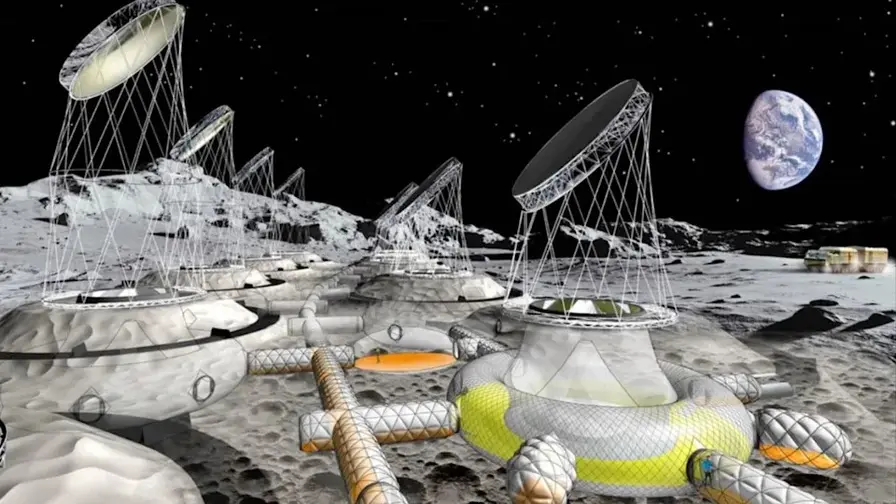
So consider the image again. Not a patch of imported steel and foam, but a habitat assembled from native stone — a lunar metropolis grown from the dust beneath our boots. The path between laboratory demos and a livable lunar base is long. But with every experiment that turns regolith into hardware, the Moon's surface looks less like an obstacle and more like a ready supply closet waiting to be unlocked.


Leave a Comment
Comments
No comments yet. Be the first.