
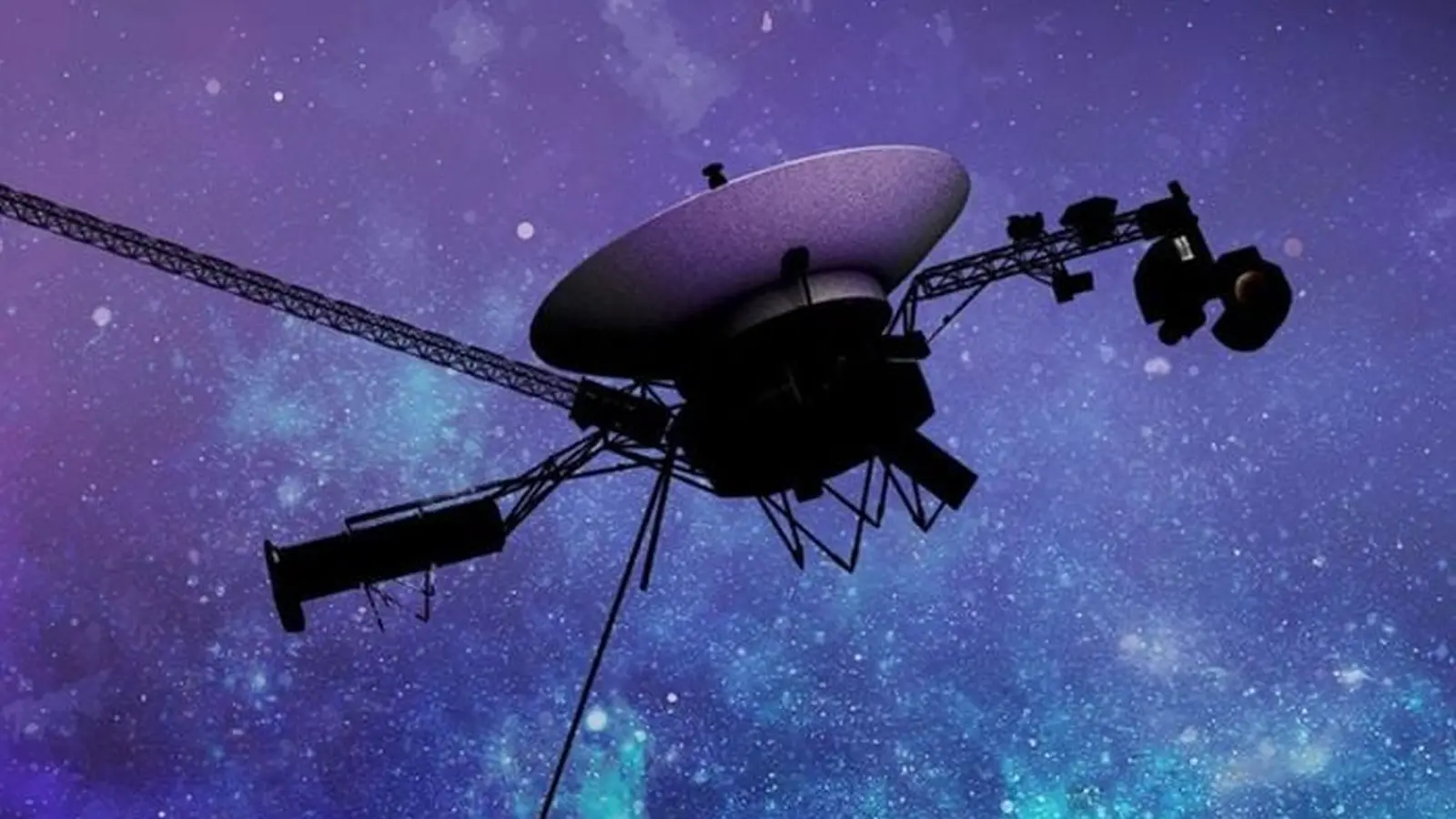
Half a century into its quiet trek beyond the planets, Voyager 2 is learning to live on a diet of watts. Small changes. Big consequences.
Engineers at NASA’s Jet Propulsion Laboratory orchestrated a carefully timed operation nicknamed the 'Big Bang' to trim the spacecraft’s electricity use. They shut down multiple power-hungry systems at once and switched certain functions to lower-draw alternatives. It sounds blunt. It was surgical. All the while the team had to guard the spacecraft’s warmth so electronics would not freeze or fail.
Voyager 2, like its twin Voyager 1, runs on a radioisotope thermoelectric generator — a device that converts heat from decaying plutonium into electricity. That heat is steadily dwindling. The result is predictable: roughly four watts lost every year. Four watts might seem trivial at home. In deep space, where every amp matters, it is a countdown clock for instruments and telemetry.

Over the past few years the mission team has been forced to retire instruments that were no longer essential. Since 2024 two sensors on each probe were powered down, and more had been retired after the planetary flybys decades ago. Without the recent power reconfiguration, another instrument on Voyager 2 would have had to go quiet before the end of 2026. Instead, the conserved energy is expected to keep the spacecraft’s three remaining instruments returning data for at least one more year. The Big Bang maneuver buys at least another year of science from Voyager 2.
There is a practical reason to act now: the farther a probe drifts, the harder it becomes to correct problems and the longer commands take to arrive. Voyager 1 sits even farther out than Voyager 2, and JPL plans to perform the same swap there in the months ahead.
Small engineering choices are stretching a golden-age mission a little longer, keeping a human-made messenger alive in the thin plasma between the stars — and giving scientists one more season of interstellar data to pore over.

Leave a Comment
Comments
No comments yet. Be the first.