

Imagine a busy hospital corridor: voices raised, a stretcher rolling past, and the quiet question lodged in the margins — what role did substances play in bringing these people here? A large new analysis from King's College London doesn't settle that question, but it throws a sharp spotlight on a worrying connection between cannabis use and violence.
Researchers pooled data from 63 studies encompassing more than 265,000 people to examine links between cannabis use and both perpetration and victimization. They separated the general population from people using psychiatric services and used the World Health Organization's broad definition of violence — physical, sexual, and psychological harm, whether inside intimate relationships or outside them. The team also distinguished between self-reported violent acts and incidents that led to criminal convictions.
The headline figure is stark. Cannabis users were roughly twice as likely to commit acts of violence compared with non-users. For people receiving psychiatric care, the association climbed to about two and a half times the risk. When the outcome was a criminal conviction for violence, the risk among cannabis users rose further — roughly three to four times higher in the studies that measured convictions.
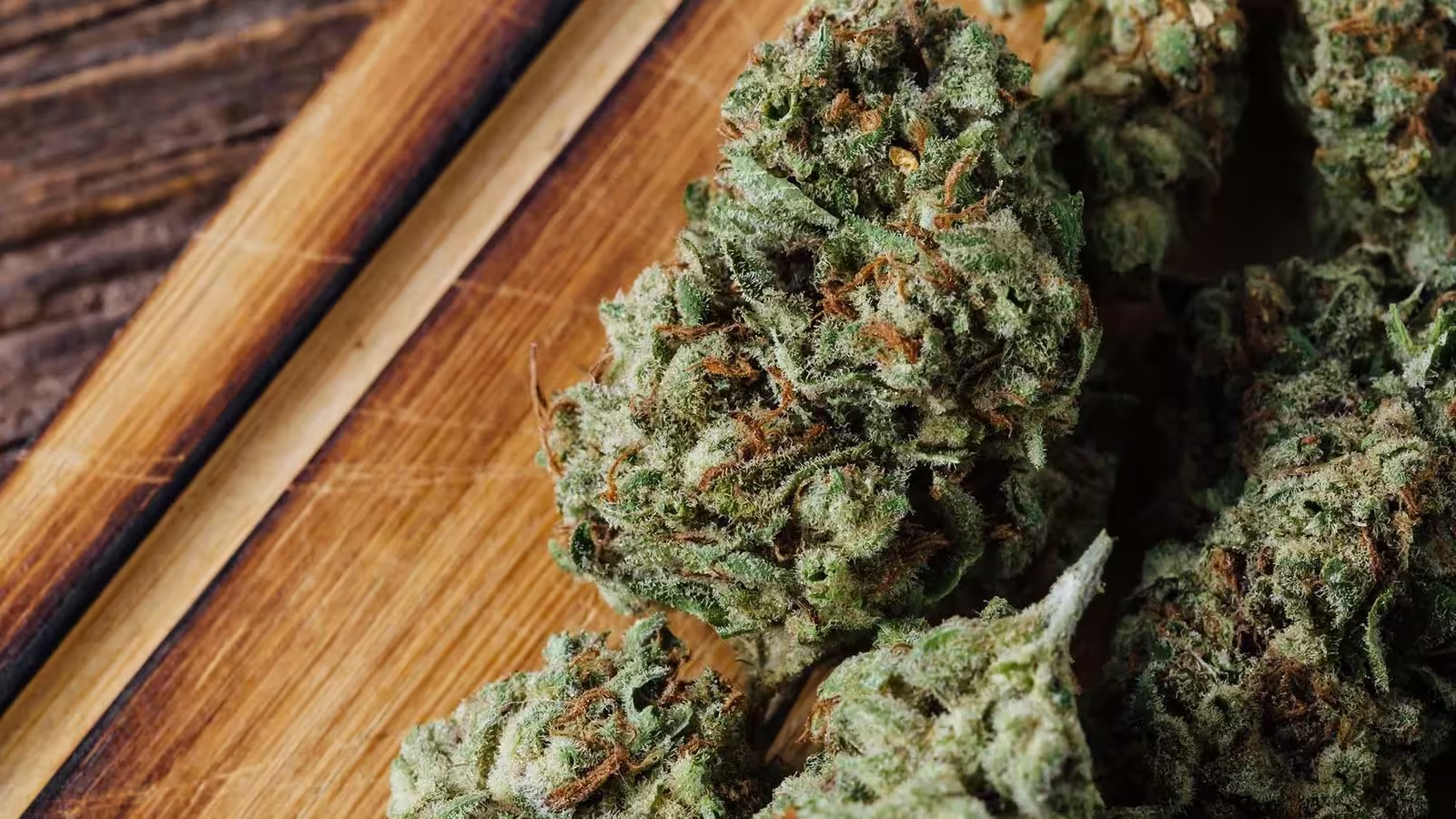
The core takeaway: cannabis use was associated with higher odds of both committing violence and being victimized. Victimization was about one and a half times more likely among cannabis users, and that link appeared stronger for women than for men.
Not every study painted the same picture. Longitudinal research that followed people over time also found an association, but it was generally weaker than what cross-sectional snapshots suggested. That pattern matters. It hints that the relationship between cannabis and violence is complex and may be tangled up with other life circumstances.
Which brings us to the thorny issue of cause and effect. The analysis shows correlation, not proof of causation. Cannabis use often co-occurs with social adversity, mental-health challenges, substance use patterns, and other risk factors that can increase both violent behavior and the chance of becoming a victim. In plain terms: both cannabis use and violence might be downstream effects of the same underlying problems.
The paper is careful to flag its limits. Few of the included studies measured how often or how much people used cannabis, and only a small subset examined criminal convictions. Most studies predate the wide availability of today’s higher-potency cannabis products, so the association could change as the potency landscape shifts. Researchers note it’s plausible that stronger cannabis could amplify the links observed.
So what should clinicians, policymakers, and the public take from this? The findings give professionals firmer ground to discuss potential harms associated with heavy cannabis use, especially with patients already struggling with mental-health issues. But blunt labels and blanket stigma will not help. Nuanced conversations that consider use patterns, social context, and co-occurring risks are essential.
More rigorous, prospective studies are needed — ones that track dose, frequency, product potency, and broader life conditions. Only then can we begin to untangle whether cannabis itself contributes to violent behavior, or whether it is a marker for deeper social and psychological vulnerabilities. As cannabis becomes more potent and its use more widespread, researchers, clinicians, and communities will need to answer that question in ways that protect both public health and human dignity.
The study appears in the journal Psychological Medicine.


Leave a Comment
Comments
No comments yet. Be the first.