

A quiet kitchen. A crowded café. The same plain slice of white-wheat bread can travel a very different metabolic path depending on who shares the table with you.
Researchers have long suspected that our social lives do more than lift our mood; they may change the chemistry of our bodies. A new paper in Science Advances puts numbers behind that hunch. In tightly controlled experiments, volunteers ate roughly 100 grams of white-wheat bread and then had their blood glucose tracked for two hours. When people ate with a close companion, their blood sugar spiked less and fell back to baseline faster than when they ate alone.
One hundred eight participants. The same carbohydrate. Two hours of continuous monitoring. Clear differences. Short sentences. Big implications. The team, led by Shir Atzil at the Hebrew University of Jerusalem, frames these results under the banner of 'social physiology' — a way to think about physiology as something that is, at least in part, shaped by our relationships.
Blood sugar isn't just about what you put on your plate; it's about who you sit across from.
Why would presence matter when food and calories are fixed? The authors suggest several mechanisms. Social presence appears to lower arousal and the metabolic cost of maintaining internal balance. In parallel experiments, the same group found that people's bodies responded more efficiently to cold exposure when a partner was nearby, and stress-induced physiological reactions (sweating, heart-rate changes) were smaller and resolved faster with another person present — even when no physical contact occurred.
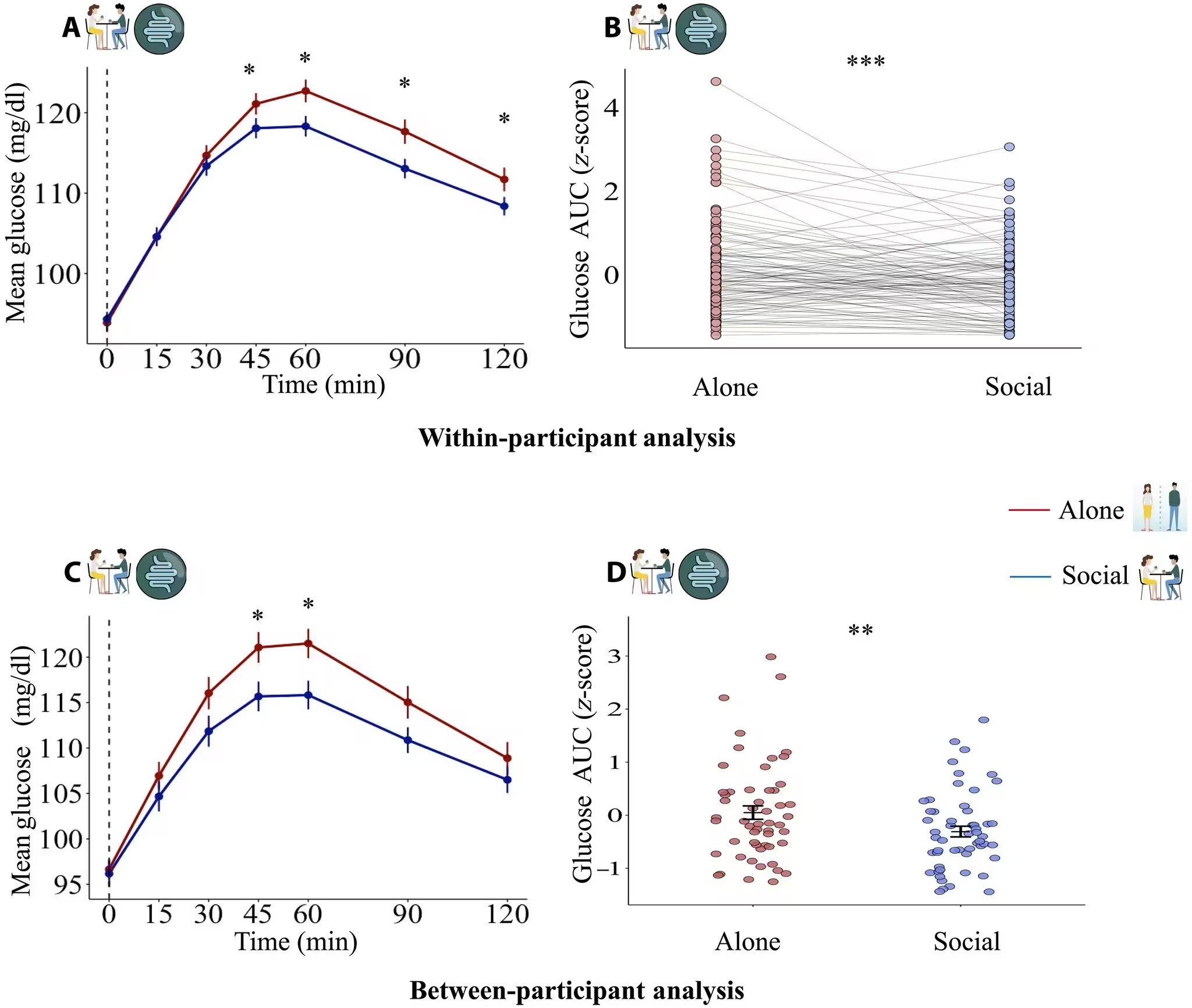
After the same carbohydrate meal, participants' blood sugar rose less when they ate with a close companion (blue) than when they ate alone (red). The top graphs compare the same people in both settings; the bottom graphs compare separate groups. The plots on the right show the total blood sugar response over two hours.
The team didn't stop at adults. They also tested mother–infant pairs and a range of social pairings, and ran a cold-exposure study with 116 volunteers. Across these designs, the pattern persisted: companionship blunted physiological reactivity and sped recovery. Touch amplified the effect, but proximity alone still had measurable benefits.

This work sits alongside animal studies showing that isolation can disrupt insulin signaling and metabolic function in creatures from mice to primates. In humans, decades of epidemiology have linked loneliness with worse glycemic control and a higher incidence of type 2 diabetes. The new experiments move beyond association to show a direct, short-term metabolic advantage to being socially connected.
Evolutionary logic creeps in here. If forming bonds reduces the energy your body spends on regulation, cooperation becomes more than a social nicety — it is a survival strategy encoded in physiology. We have long thought of bodies as closed systems. These results argue for a different picture: bodies that run differently when they are literally in company.
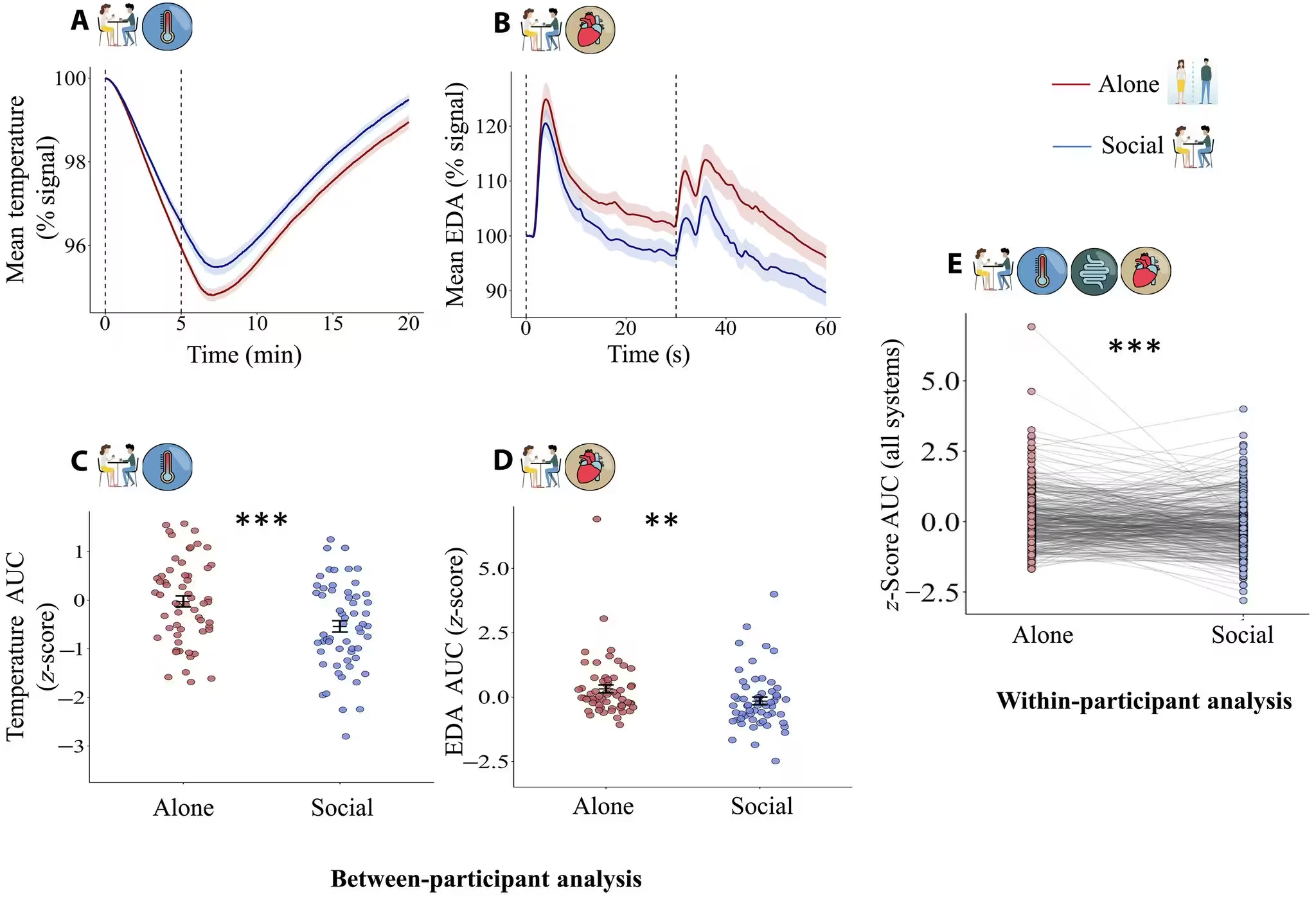
During cold exposure and a stress test, participants showed smaller physiological responses when a companion was present (blue) than when they were alone (red).
There are limits to what the experiments say. They measure acute responses to specific challenges: a carbohydrate load, cold stress, a short anxiety-provoking task. What they cannot, on their own, map out is how decades of solitary dining or strong social ties shape long-term disease risk. But broad population studies give a worrying backdrop: social isolation correlates with higher rates of metabolic disorders, cardiovascular disease, impaired immunity, slower wound healing, and even mortality. Conversely, people with stronger social networks tend to be healthier and live longer.
Think of it this way: two identical meals, two different narratives. One is eaten in quiet isolation, signaling the body to brace and allocate energy to self-regulation. The other is eaten with a trusted companion, and the body spends less energy firefighting internal fluctuations. Small shifts, repeated over years, could accumulate into major differences in health.
Practical takeaway? Share a meal when you can. Not as a panacea. Not as a replacement for medical advice. But as a modest, evidence-backed nudge toward metabolic resilience. The study adds a physiological chapter to what clinicians and counselors have long observed: relationships matter, sometimes all the way down to the molecules in our blood.
The research raises an open question worth keeping: if companionship helps in the short term, can deliberate social interventions become part of metabolic disease prevention? Scientists are only beginning to map the biology of togetherness — and the map looks promising.


Leave a Comment
Comments (1)
wow, that blew my mind... same slice of bread, different spike? if that's real, i wanna eat with friends more. small habits, big effects