

Limit your eating to ten hours a day and watch the scale move—just a little. That is the surprising, quietly optimistic result from a controlled trial at Johns Hopkins Medicine: participants on a 10-hour daily eating window lost a modest amount of weight even though their calorie intake was kept the same as those eating across 16 hours.
Researchers wanted to disentangle two things that often happen together in fasting studies: shorter eating windows and fewer calories. So they fed volunteers prepared meals designed to hold body weight steady. Everyone received the same adapted DASH diet—heart-healthy, low in red meat, added sugars and excess salt—and portions were tailored so no one should have gained or lost weight simply from eating less.
Still, after 12 weeks the group confined to a roughly 8 a.m. to 6 p.m. schedule lost a median of 2.7% of body weight. The comparison group, who ate over a 16-hour span, lost 2.5%. Close. Meaningful? Some would say modest. But important? Possibly, because the difference was not driven by calorie cuts.
So what changed? Behavior, mostly. Participants in the 10-hour arm reported stronger restraint around food, fewer stress-driven eating episodes, and lower overall susceptibility to hunger on the Three-Factor Eating Questionnaire. In plain terms: timing nudged how people thought about and approached meals. The clocks mattered.
The team looked for deeper biological effects. Blood tests measured appetite hormones—ghrelin and leptin—and markers tied to inflammation, including C-reactive protein, cortisol, and sRAGE. The readings were comparable between groups. No clear hormonal advantage. No dramatic anti-inflammatory signal. In short: no body-wide metabolic miracle revealed by timing alone.
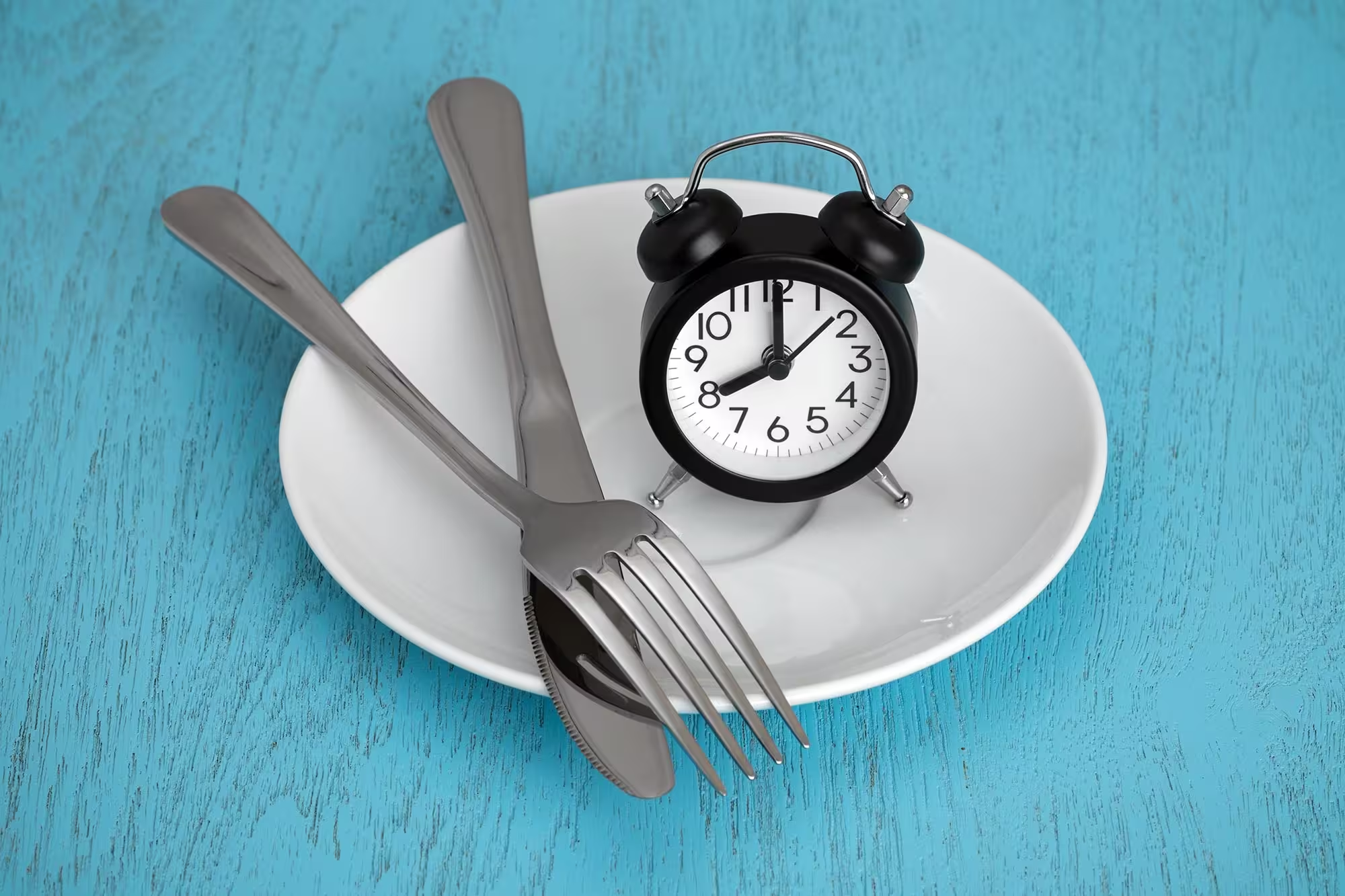
Only 39 adults took part—19 in the 10-hour arm and 20 in the 16-hour arm—and most were women and Black, ages 18 to 69. That narrow sample limits sweeping claims, but it also highlights a real-world population often underrepresented in clinical nutrition research.
Why does this matter? More than 100 million adults in the U.S. live with obesity, and roughly the same number face prediabetes. Both conditions raise the risk of heart disease, stroke and other complications. Time-restricted eating and other intermittent-fasting regimens have gained popularity because they emphasize when to eat rather than what or how much—an appealing simplicity. This study suggests that timing can reshape habits and produce modest weight loss without calorie counting, but it does not appear to confer additional metabolic benefits on its own.
The takeaway: a 10-hour eating window nudged better eating behavior and small weight loss, but it did not produce distinct hormonal or inflammatory improvements beyond that effect.
Lead author Daisy Duan, M.D., frames the question plainly: are the benefits of time-restricted eating just a product of eating less, or is there something about the clock that changes biology? By holding calories steady, this trial leans toward the former—behavioral shifts, not sweeping metabolic rewiring.
Next steps are already in view. The research team plans to test whether a 10-hour schedule helps people hold onto weight loss achieved through other means, including appetite-regulating drugs such as GLP-1 receptor agonists. Combining timing strategies with medications or behavioral therapy could be the pragmatic path forward.
So, should clinicians prescribe a 10-hour window? Maybe as a low-risk behavioral toolkit—especially for people who prefer structure over calorie math. It won't be a universal fix. But if timing can gently change habits, the clock might become another lever in the long, personalized work of managing weight and metabolic health.


Leave a Comment
Comments
No comments yet. Be the first.