
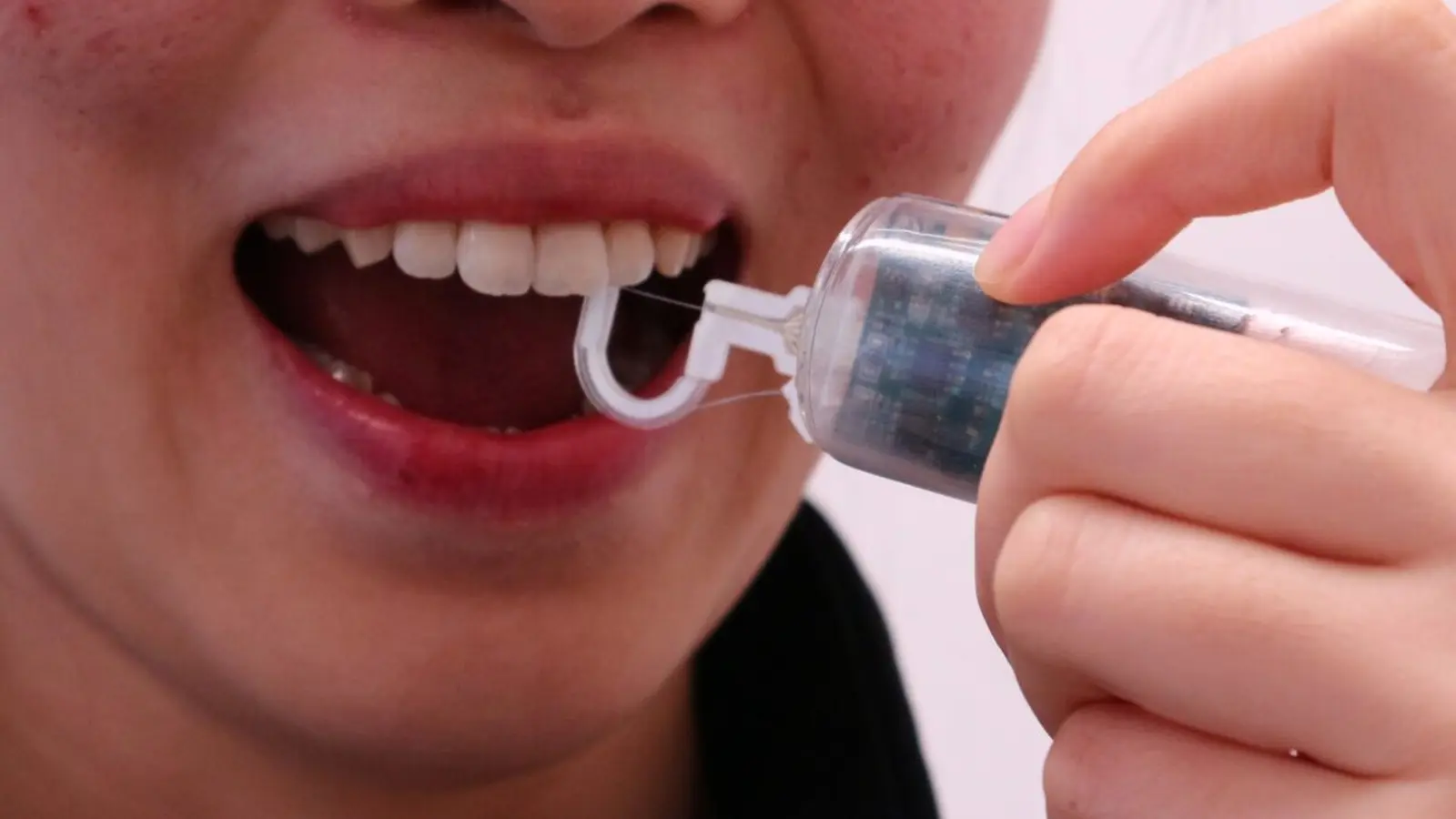
Most people think of flossing as a chore. What if it could be a health check too? That is the provocative idea behind a new device that scoops up the sticky fluid hiding in the grooves between your teeth and reads out metabolic signals long associated with systemic disease.
The innovation comes from a team at the Hong Kong University of Science and Technology, led by biotechnologist Hnin Yin Yin Nyein. They describe a floss-like tool that uses a tiny pulley and microfluidic channels to pull fluid into a sensing chamber. Within minutes the device measures glucose, uric acid, pH and hydrogen peroxide, then sends the data straight to a smartphone.
Why target that strange, hard-to-see liquid? Because it isn't just spit. It is gingival crevicular fluid, a thin film that pools where gum meets tooth. It bathes the periodontal tissues and exchanges proteins, metabolites and inflammatory molecules with the bloodstream. In short, GCF sits at the crossroads of oral inflammation and whole-body metabolism.
Scientists have tried to use GCF as a window into health for decades, but the fluid is scarce and tricky to collect. The HKUST team had a simple thought: flossing already disturbs this fluid. Harvest it while people do what they already do, and you get a sample without needles or clinic visits.
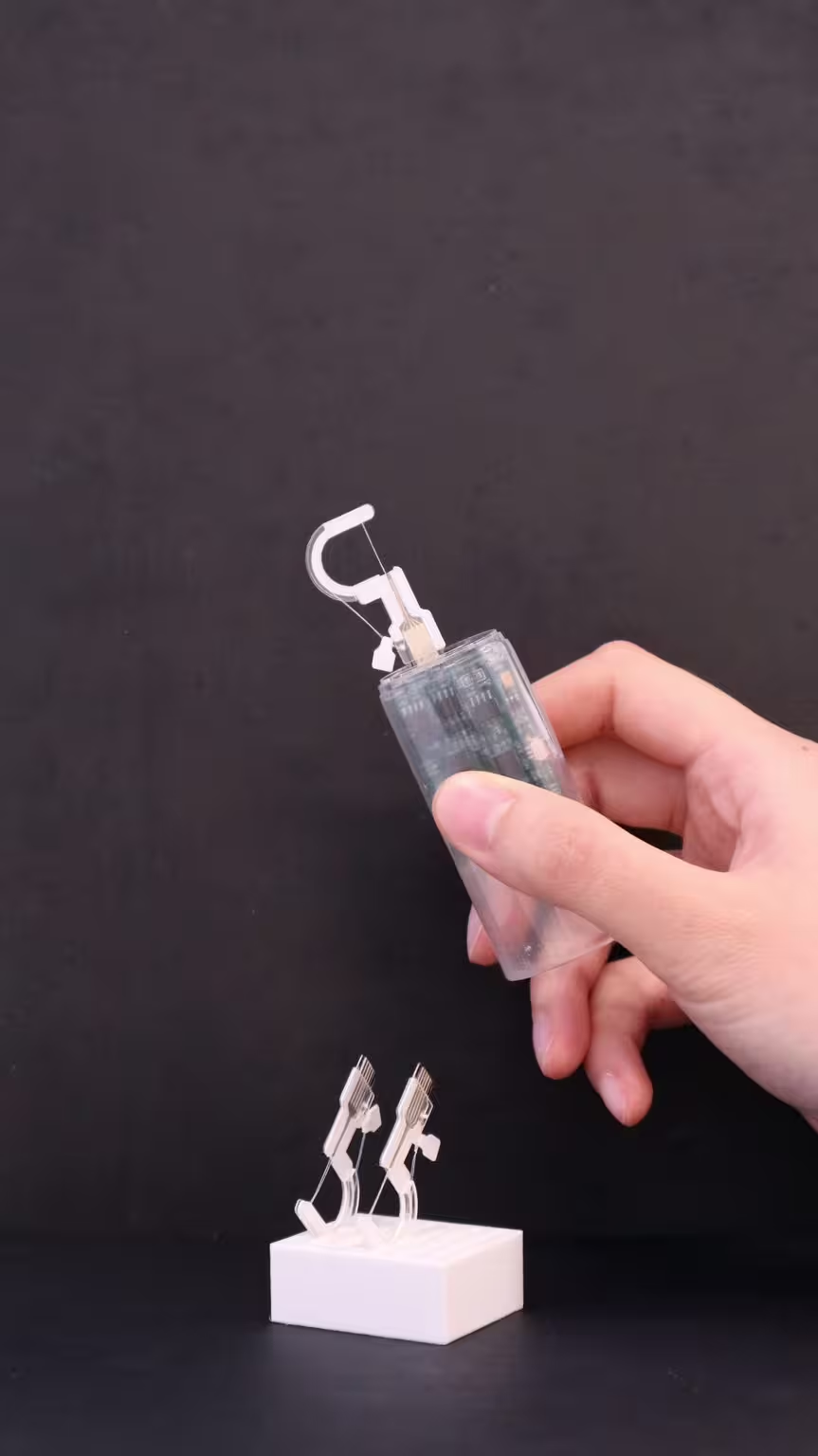
The initial trials, reported in Science Advances, were small but striking. Readouts from the floss-collected fluid tracked closely with blood tests for glucose and uric acid. People with diabetes and those with elevated uric acid produced distinct signatures compared with healthy participants. The device even used acidity and hydrogen peroxide measures to estimate gum-pocket depth, a key metric dentists use to identify periodontal disease.
This could turn a daily habit into a diagnostic act.
There are caveats. Almost half of the collected volume was saliva, and some samples showed traces of blood, which can muddy the measurements. Pure saliva, tested on its own, did not reliably reflect glucose levels. So the strong correlations likely depend on isolating GCF or accounting for contamination in the analysis.
The team is candid about the hurdles. The system needs refinement to separate fluids cleanly and to prove its value in larger, longer clinical trials. The key question is practical: will GCF-guided monitoring actually improve outcomes for people juggling diabetes and gum disease? The researchers want to find out.
This device sits at an appealing intersection: noninvasive sampling, real-time biosensing and routine behaviour. Imagine a future where a morning—and maybe nightly—flossing ritual updates your health dashboard, signaling when to see a clinician or tweak medication. The idea is not to replace blood tests altogether, but to make monitoring more frequent, less invasive and tightly linked to oral inflammation.
It is an elegant example of thinking small to address big problems. From biochemical clues in a sliver of fluid to actionable data on a phone, the work reframes an everyday hygiene habit as a potential portal to personalized care. The next step will be proving that portal leads somewhere meaningful.

Leave a Comment
Comments
No comments yet. Be the first.