

Executive summary
World Liberty Financial’s WLFI token plunged to roughly USD 0.016 on Nov. 28, marking a decline of about 95% from a September 2025 peak recorded in some price series. The crash triggered large-scale futures liquidations, prompted scrutiny of exchange risk-management and execution, and spotlighted the project’s USD1 stablecoin and on-chain treasury activity. This article unpacks the market events, the mechanics of perpetual futures and liquidations, on-chain movements tied to World Liberty, the status of the USD1 stablecoin and its reserves, governance and tokenomics questions, and the practical steps investors, exchanges and regulators will likely demand next.
Why WLFI’s collapse matters
The fall in WLFI’s price is more than a headline: it affects three distinct but connected pillars of the World Liberty Financial venture. First, the futures market mechanics on centralized venues determine whether leveraged traders were correctly liquidated and whether any auto-deleveraging (ADL) or execution anomalies occurred. Second, token-backed loans and lending positions use WLFI as collateral; a steep price drop changes lenders’ recovery prospects and borrowers’ liquidation risk. Third, USD1 — World Liberty’s dollar stablecoin — briefly traded below parity, raising questions about redemption pathways, reserves and issuer operations. Together these dynamics test market liquidity, protocol risk parameters and exchange controls across spot, derivatives and lending markets in a single stress event.
Timeline and immediate market signals
Spot and derivatives moves
Public price feeds show a sharp move in WLFI across several venues on Nov. 28. Time-stamped spot comparisons indicate a roughly 40% intraday drop on certain exchanges during the early hours of UTC. CoinGlass and other trackers reported nearly USD 17 million in futures liquidations over 24 hours, with a reported split that placed roughly 90% of liquidations by dollar value on the long side. Open interest also contracted sharply. Those numbers give a sense of scale but not the granular account-level mechanics needed to answer how specific trades closed on particular exchange platforms.
Exchange and issuer messaging
World Liberty posted that Binance had "automatically closed" perpetual futures positions overnight and that the closures affected both long and short positions, including user reports of profitable accounts showing losses after settlement. Binance replied it was "actively reviewing market activity and execution data" and invited users to customer support. Neither side provided a full forensic timeline in the first public statements, leaving traders, lenders and stablecoin users waiting for more detailed disclosures.
Understanding perpetual futures and liquidation mechanics
Perpetual contracts, mark price and liquidation
Perpetual futures are derivative contracts that mimic exposure to an underlying asset without a fixed maturity date. Exchanges require traders to post margin and maintain a maintenance margin level. When a position’s collateral falls below that threshold, the exchange can liquidate the position to prevent negative equity. Many exchanges use a mark price — an index-based reference designed to smooth the impact of isolated trades — to determine liquidation triggers and to protect users from bad fills. The last traded price, by contrast, records where a trade actually executed. Discrepancies among index, mark and execution prices can produce different realized outcomes for traders even within short intervals of volatile trading.
Auto-deleveraging (ADL) vs. margin liquidation vs. execution risk

There are several distinct mechanisms that can close or reduce futures positions. Margin liquidations occur when a position’s posted collateral is insufficient given mark price movements and the contract’s maintenance requirements. In extreme conditions, exchanges use insurance funds to cover losses; if those funds are insufficient, ADL may trigger, reallocating risk to opposing, profitable positions according to published priority rules. Separately, execution problems — thin order books, failed market orders, or latency when a large market order hits limited bids — can produce a notable gap between the observed spot price and the price at which a futures position actually closes. A credible exchange review needs to identify which mechanism applied, the exact pricing references used, and the account-level order, margin and settlement records.
What the public liquidation data tells us — and what it doesn’t
Third-party trackers like CoinGlass provide an aggregated view of liquidations and open interest across the market landscape. In the WLFI episode, CoinGlass reported approximately USD 16.89 million in futures liquidations in 24 hours, including USD 15.18 million on longs and USD 1.71 million on shorts. Open interest fell about 63% in the same snapshot. These figures indicate severe deleveraging, but they do not show where those liquidations occurred or whether exchange internal risk mechanisms — such as ADL — materially altered specific account outcomes. Open interest denominated in USD can also decline simply because the token’s dollar price fell; the nominal contract counts or token-denominated exposures give a clearer picture of how much notional positioning was removed.
Price peaks, troughs and the arithmetic of recovery
Which high matters?
The "95%" collapse figure referenced in many headlines depends on the choice of price series. DefiLlama’s WLFI series recorded a high near USD 0.3313 on Sept. 1, 2025, while other trackers like CoinGlass show a different peak. Counting from a USD 0.3313 high to a USD 0.016 low yields roughly a 95.2% decline. Other series that show a higher launch peak produce slightly larger percentage falls. Discrepancies arise from which venues and trading pairs a tracker includes and from handling of initial launch trades.
What a rebound would mean
The arithmetic shows how severe the drawdown is in dollar terms. From USD 0.016 to return to USD 0.3313 implies a nearly 1,971% increase — a dramatic requirement that frames what a realistic recovery might look like. A 20% rebound from the trough would leave the token far from its peak. For holders and lenders, percentage recovery from a low can sound impressive while replacing only a modest fraction of the original dollar-value loss.
On-chain movements: ether swap and reserve activity
On-chain evidence and interpretation
On-chain analysts identified a wallet attributed to World Liberty’s strategic reserve that swapped about 12,121 ether for stablecoins reported as approximately USD 17.58 million in USDC and USD 2.48 million in USD1, roughly USD 20.06 million total at face value. EmberCN estimated an average acquisition cost near USD 3,244 per ether, implying an unrealized loss if that acquisition price is accurate. Onchain tracing by other providers reported a withdrawal of roughly 12,600 ETH from a Dolomite-related Safe a few hours before WLFI’s main sell-off. These on-chain records document what assets moved, but not necessarily why they moved or whether those proceeds were used to repay loans.
Why timing and contract matching matter
A withdraw-and-swap sequence on-chain shows that the strategic reserve changed exposure from ETH to stablecoins, but it does not by itself prove how those stablecoins were used. To demonstrate that on-chain proceeds repaid a Dolomite loan, for example, observers would need to see a matching repayment call, or another action on the lending protocol that reduces the outstanding borrowing amount, linked to the same account. Labels help analysts correlate wallets with entities, but matching transfers to on-chain contract events is necessary to show causal links between asset sales and debt management.
Token-backed lending and Dolomite exposure
The April Dolomite loan and its sensitivity to price
An April borrowing reported by crypto.news showed a World Liberty wallet had pledged roughly 5 billion WLFI to borrow around USD 75 million in USDC and USD1. At that time WLFI price was higher; the November trough near USD 0.016 would reduce the simple quoted value of the 5 billion tokens from roughly USD 385 million to about USD 80 million. The mechanics of a borrowing mean that a fall in collateral price increases the loan-to-value (LTV) ratio and can push a position toward liquidation under the protocol’s rules. But the actual state of the borrowing account on Nov. 28 depends on repayments, additional collateral, and the protocol’s oracle pricing at the time.
Liquidation proceeds vs. quoted collateral value
A protocol’s reference price may value all collateral at a published market rate, but an actual liquidation depends on whether buyers exist at the quoted prices and on order book depth. Selling a large block into a thin market can realize materially less than the nominal quoted value. Thus lenders and liquidators must consider not only the headline price but also execution liquidity when estimating recoverable value.
Stablecoin USD1: parity, reserves and issuer responsibilities
What happened with USD1 on Nov. 28
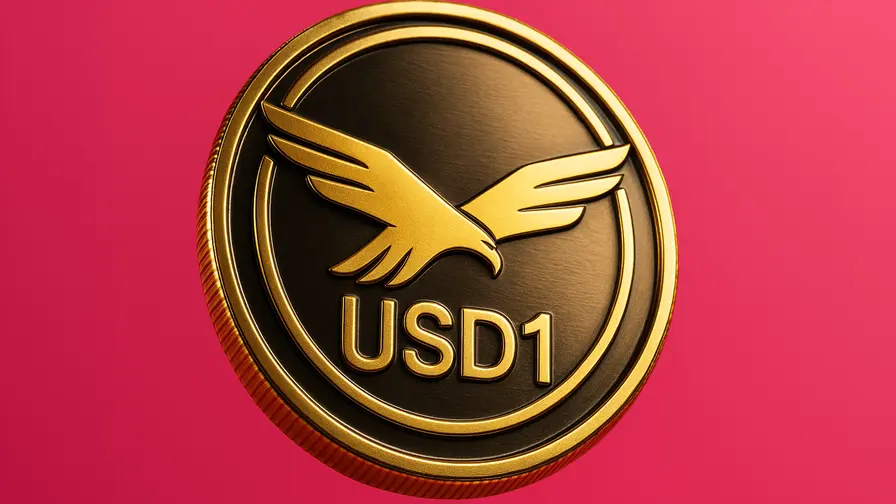
USD1 briefly traded as low as USD 0.9394 in one historical quote and later recovered near USD 0.9948 in another snapshot. This temporary discount reflects secondary market trading pressure and does not automatically imply the issuer failed to honor redemptions. However, it raises immediate questions about whether holders could access issuer redemption pathways during the dislocation and about the timeline and scale of any issuer-level minting, burning, or reserve changes during the move.
BitGo’s attestation and the timing issue
BitGo’s published reserve attestation dated Sept. 30, 2026, showed roughly USD 4.417 billion in redemption assets backing about 4.416 billion redeemable USD1 tokens at the time of that report. The attestation provides a snapshot for a specific date; it does not cover the November episode. If stablecoin holders or exchanges experienced a discount on Nov. 28, a contemporaneous statement from BitGo about redemptions and reserve movements during the period would give a clearer picture of issuer behavior when WLFI was under pressure.
World Liberty’s governance token status and tokenomics
Governance rights, staking and voting mechanics
WLFI is described as a governance token with staking and voting incentives. The project requires a 180-day minimum staking lock for rewards paid in USD1 and quantifies voting power and reward eligibility based on lock periods and participation. Governance provisions, staking locks and eligibility rules influence how much supply is transferable at a given time and which wallets are permitted to participate in votes or unlocks.
Vesting schedules, cliffs and the available float

The early token distribution proposed in April covered tens of billions of tokens with multi-year vesting and cliffs for founders, team members, advisers and early supporters. A published vote showed apparent support for those terms and deployed contracts with specified cliffs and linear release schedules through 2031 in some records. But votes and proposals are not the same as enacted transfers: observers must reconcile contractual on-chain vesting implementations, actual token movements, and any burns that were executed to know how many tokens were truly transferable at any given date.
Legal tensions and market effects: Justin Sun vs. World Liberty
Allegations, counterclaims and exchange actions
Tron founder Justin Sun publicly demanded delisting of WLFI and USD1 on Nov. 28 and alleged insider cash-outs and freezing of investor assets. These accusations echo legal disputes between Sun-affiliated entities and World Liberty that were already in U.S. courts: plaintiffs alleged blocked transfers and governance exclusions; World Liberty filed a defamation suit and pointed to disclosed restrictions and sanctions compliance controls. These legal battles add a governance and reputational layer to liquidity risk, creating reasons for exchanges to consider delisting or restricting deposit and trading options for affected wallets.
Precedents and exchange responses
HTX removed USD1 trading in June after World Liberty froze certain exchange-linked addresses, converting eligible USD1 balances to USDT. Flipster delisted specific WLFI and USD1 pairs in September with a clear effective time. Each exchange has its own risk appetite and compliance approach: delisting or pair suspension can protect users from transfer restrictions but also removes venues for price discovery and liquidity. A Binance decision, if it comes, will have its own scope and timing and could target futures, spot pairs, or deposit/withdrawal permissions in separate actions.
How exchanges and markets might respond
Immediate responses: review, notices and trade adjustments
Exchanges facing reports of contested liquidations typically open an internal review to reconcile order books, mark price calculations, account-level margin behavior and insurance fund activity. A transparent notice that identifies the contract, the incident window, the closing mechanism, and the reference prices used would help affected users reconcile their own ledgered balances with exchange records. Where discrepancies are found, an exchange may adjust realized settlements, restore balances, or apply discretionary relief depending on the contractual terms it publishes.
Longer-term adjustments: margins, pairs and deposit rules
Depending on findings, an exchange may alter contract margin terms, restrict new leveraged positions, limit or delist spot pairs, or impose deposit and withdrawal constraints on designated wallets. Each adjustment affects different user segments: futures traders lose a venue for leverage; spot traders find fewer order books and potentially wider spreads; stablecoin users may lose a gateway to convert USD1 quickly on a specific exchange if pairs are removed.
What would meaningfully resolve the open questions
Binance and futures settlement transparency
A detailed Binance disclosure that identifies the contract, the precise incident window, the mechanism used (liquidation, ADL or execution result), and the mark, index and execution prices employed would provide the clearest account of how positions closed. That granular information would let traders verify their claims and reconcile account-ledger outcomes against the exchange’s records.
World Liberty’s financing disclosure and on-chain reconciliation
World Liberty can help settle questions by publishing a dated summary showing outstanding token-backed borrowing balances, posted collateral, applicable risk thresholds, and recent repayments or additional collateral additions. Linking the ether swap proceeds to specific protocol actions — for example, a Dolomite repayment transaction hash — would reduce uncertainty about whether strategic reserves were deployed to repair loan health.
Issuer statements and reserve attestations for USD1
A contemporaneous reserve attestation or issuer statement from BitGo (or from the proposed bank if a transfer occurs) that covers Nov. 28 would clarify whether the issuer processed redemptions, whether redemption capacity was constrained, and how stablecoin supply changed during the sell-off. The supply and reserve timestamps must align with trading records to create a complete picture.
Investor and counterparty implications
For spot holders and traders
Spot holders face realized price risk when they sell; trading into a thin book can create outsized slippage. They should monitor liquidity across multiple venues and consider withdrawal and custody options if exchange actions restrict deposits or withdrawals. For those accepting WLFI as collateral, the token’s market depth and cross-pair liquidity determine how quickly and at what price a large position could be liquidated.
For futures traders and margin users
Futures traders must understand margin mechanics, mark price calculations and exchange ADL rules. Where margin accounts share collateral across positions, losses on one position can cascade into forced closes on others. Traders should maintain buffers beyond minimum maintenance requirements and monitor index and mark price computations frequently during volatile sessions.
For lenders and borrowing counterparties
Lenders should verify oracle sources, liquidation discounts and their ability to dispose of collateral across multiple venues. Borrowers using WLFI as collateral need a clear plan: add eligible collateral, repay principal to reduce LTV, or negotiate with the lender if permitted. Both sides should track the protocol’s recovered-price assumptions and whether the liquidators are likely to realize values near quoted reference prices.
Regulatory and systemic considerations
Stablecoin redemption integrity and accountability
Stablecoins occupy a regulatory and functional sweet spot in crypto finance because their utility depends on trust that they can be redeemed for a dollar-equivalent value. A fleeting discount on secondary markets raises questions about how quickly holders can reach issuer redemption channels, whether the issuer’s reserves are truly liquid and accessible, and how cross-chain token wrappers and bridged supply affect redemption pathways. Regulators and market participants increasingly expect up-to-date, auditable proof-of-reserves and transparent redemption processes.
Exchange risk-management and market structure
This episode highlights the critical role exchanges play in derivatives settlement and market stability. Properly designed mark price indices, robust insurance funds, clear ADL priority rules and fast cross-checking of order-book liquidity are essential to prevent unfair outcomes and to preserve market confidence. Regulators will increasingly scrutinize exchanges’ execution records, dispute-resolution processes and disclosures following episodes of concentrated liquidations.
Tokenomics and governance: what changes could ease future shocks?
Supply schedule transparency and lockup clarity
Making clear which token allocations are locked, which are staked, and which are transferable at specific dates reduces uncertainty about circulating supply. Publishing up-to-date dashboards with on-chain evidence of actual burns, executed vesting and current locked totals would help market participants form more accurate supply-and-demand models.
Staking incentives and voter eligibility
Programs that tie voting power and rewards to long-term locks can reduce short-term sell pressure from speculative holders, but they also complicate immediate liquidity. Projects should ensure their staking rules and governance mechanisms are clearly documented, time-stamped and matched to on-chain records. That clarity reassures users and reduces dispute potential when governance or vesting terms become germane during stress events.
Practical next steps for market participants
What traders should do now
- Check account statements and settlement receipts line-by-line against exchange notices and the public price history. If you believe an error occurred, gather timestamps, transaction hashes, screenshots and order IDs before contacting exchange support. - Diversify liquidity sources: hold spot balances across exchanges and consider using self-custody wallets for long-term holdings to reduce reliance on a single venue. - Reduce excess leverage and monitor collateral sharing across margin accounts.
What lenders and protocols should do now
- Reconcile oracle feeds and consider conservative adjustments to collateral eligibility and LTV parameters while markets settle. - Communicate clearly with borrowers, set repayment windows where possible, and disclose the consequences of failing to meet margin calls. - Publish a clear record of any liquidations: the block hashes, amount sold, and realized proceeds.

What stablecoin users and custodians should do now
- Confirm withdrawal and redemption capacities on your exchange or custody provider. - Track issuer attestations and ask for timely statements covering the period of the discount. - Assess cross-chain bridging risk: holding bridged tokens can complicate redemption timing because of delays and cross-chain transfer costs.
Scenario analyses: likely paths forward
Scenario 1 — Exchange explanation and limited systemic fallout
If Binance’s review shows standard margin liquidations aligned with published mark price and index calculations, and if no systemic failure of risk systems is found, affected traders may have to accept realized losses while spot liquidity stabilizes. Lenders and USD1 users could receive more certainty after World Liberty and BitGo publish dated reconciliations. Market confidence should gradually return if the main records align and there is no evidence of execution errors or manipulation.
Scenario 2 — Evidence of mis-execution or ADL anomalies
If the exchange identifies execution anomalies or ADL prioritization issues inconsistent with published rules, it may restore some balances, adjust settlement prices, or offer reimbursements in discrete cases. That outcome would favor traders who lodged complaints but would also prompt exchanges to refine transparency around mark price computation, ADL thresholds and dispute mediation.
Scenario 3 — Broader liquidity flight and delistings
If multiple major exchanges delist WLFI pairs or restrict USD1 deposits, liquidity could fragment and spreads widen. Spot prices may diverge across smaller books with thin depth. Stablecoin users might face higher conversion costs if the most convenient trading corridors close. In this environment, World Liberty would need to provide strong issuer and treasury transparency to restore market access and rebuild interlocutor confidence.
What a thoughtful recovery plan looks like
A credible recovery plan from World Liberty would include: a dated reconciliation of all token-backed borrowings and collateral positions, a disclosure tying the ether swap to specific lending contract actions (if relevant), an updated governance and vesting status report showing which allocations are transferable, and a coordinated reserve statement from the USD1 issuer for the incident window. Parallel, timely notices from exchanges about any contract-level settlements and the mechanisms used to close positions would complete the record and allow the market to move from uncertainty to price discovery based on verifiable inputs.
Lessons for the crypto market
Transparency and real-time evidence matter

Episodes like WLFI’s collapse underline how much market confidence depends on reconcilable public records. Exchanges need clear audit trails for settlement actions. Issuers need up-to-date attestations and redemption logs. Projects must map governance and vesting to on-chain reality. The investment community increasingly expects these disclosures as part of ordinary operations.
Liquidity and depth are the silent stabilizers
A quoted price is meaningful only to the extent buyers and sellers exist at that price. Large, sudden sales in tokens with shallow order books amplify realizable losses. Market participants should evaluate not only quoted market caps but also the depth across major pairs and the potential slippage for large orders.
Cross-product risk linkages complicate crisis management
Derivatives, lending markets and stablecoins are interconnected. Stress in an illiquid governance token can quickly affect leverage, collateral positions and secondary-market stablecoin pricing. Managing these cross-product linkages — by conservative margin settings, robust insurance funds, transparent redemption paths and clear custody practices — reduces systemic spillovers.
Concluding perspective
The WLFI collapse on Nov. 28 created a concentrated stress test across centralized exchanges, on-chain treasury management, token-backed borrowing and stablecoin redemption mechanics. While public trackers give a snapshot of liquidations and price action, resolving the open questions requires detailed, time-stamped disclosures from the exchange that executed the contested futures operations, the issuer and custodian of USD1, and World Liberty itself about its borrowing and reserve actions. Market participants should seek account-level evidence, matched on-chain contract events, and contemporaneous issuer attestation to fully understand losses and the health of the systems involved. Until those pieces are published and reconciled, traders, lenders and stablecoin users will operate with material uncertainty about execution integrity, collateral recovery values and issuer responsiveness.
Appendix — Key terms and how they applied to the WLFI episode
Perpetual futures
A derivative with no expiration date that mirrors spot exposure via funding rates, margin and mark price rules. WLFI perpetuals were central to the dispute about forced positions.
Mark price
An exchange-calculated reference price used to determine liquidation risk and to protect traders from price manipulation on an exchange’s spot book. Differences between mark and last traded prices can drive divergent realized outcomes.
Auto-deleveraging (ADL)
A mechanism that reduces or closes profitable opposing positions to cover losses when insurance funds are insufficient. ADL can cause profitable traders to see reductions in their exposure.
Open interest
The total notional value of outstanding futures contracts. A drop in open interest in USD terms can reflect both contract reductions and declines in token spot price.
Liquidation and realizable value
Liquidation is the protocol or exchange action to dispose of collateral to cover defaulted debt. Realizable value depends on available bids and the execution path; quoted reference prices can overstate immediate liquid executable proceeds in thin markets.
Stablecoin redemption
The process whereby holders exchange a stablecoin for fiat at the issuer’s stated rate. Secondary market prices can differ from issuer redemption rates due to exchange liquidity and temporary dislocations.
Further reading and live updates
For traders and researchers watching the WLFI situation, follow: exchange incident notices, the World Liberty governance and finance pages, BitGo attestation reports, on-chain tracing by forensic analysts, and market-data aggregators that show order-book depth across major pairs. Each source fills a piece of the puzzle: exchanges show execution and settlement; on-chain records show asset movements; issuers show reserve and redemption capacity; and trackers provide aggregated liquidation snapshots.
Final note

This article aims to synthesize public records and explain the mechanics that matter for traders, lenders and stablecoin users. It does not substitute for account-level reconciliation or professional legal and financial advice. A definitive resolution requires timed, auditable disclosures from the parties that control the relevant records: the exchange with futures ledgers, the on-chain contracts with lending data, and the stablecoin issuer or custodian with reserve attestations.

Leave a Comment
Comments
No comments yet. Be the first.