

2 Minutes
Intel’s next mobile platform, Panther Lake, promises a significant leap in performance-per-watt thanks to the company’s move to the 18A process. Early reports suggest up to 30% better power efficiency versus Lunar Lake and a big uplift in data-crunching performance — news that could reshape Intel’s position in PCs and mobile devices.
Performance gains that aim to turn heads
According to sources cited by Reuters, Panther Lake is targeted to deliver roughly 30% lower power consumption relative to Intel’s Lunar Lake chips. That’s paired with claims of up to a 50% increase in computational throughput for data-intensive workloads in certain scenarios. In plain terms: longer battery life for laptops and stronger handling of heavy tasks like content creation, AI inference, and complex multitasking.
Intel executives reportedly expect Panther Lake to arrive early in 2026. The reported efficiency and performance improvements come from combined improvements in both CPU and GPU blocks, along with the benefits of a more advanced manufacturing node.
Why the 18A node matters
Panther Lake marks Intel’s first consumer-focused design that leverages the 18A process. That node upgrade is more than a marketing milestone — it’s a technical lever that can reduce energy draw and raise transistor performance, which in turn lets mobile processors do more without burning through battery life.
For Intel, success with 18A is strategic. The company faces growing competition in the PC and mobile markets, and a solid execution on 18A could rebuild momentum for Intel's chip roadmap and support broader U.S. semiconductor goals.
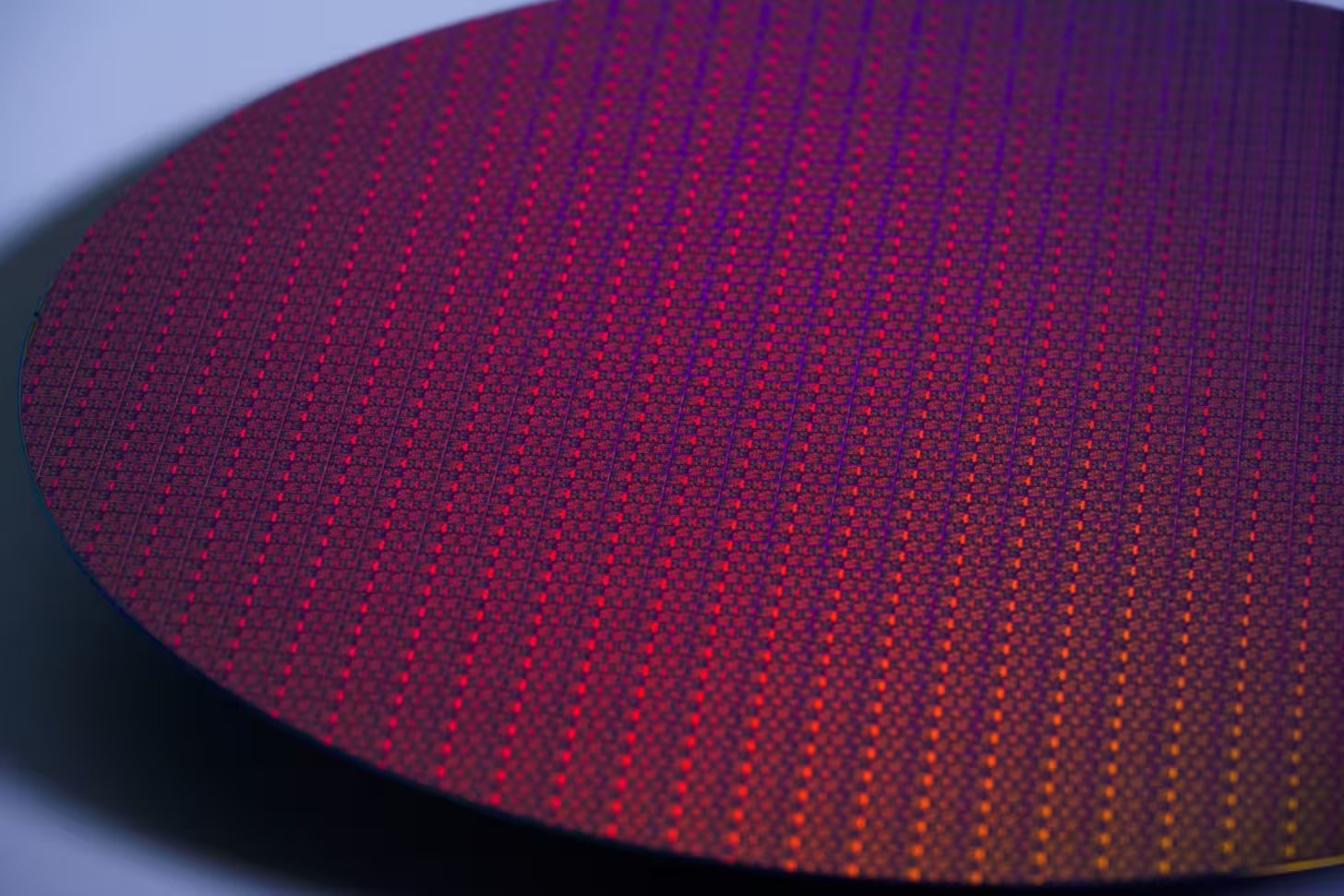
What the numbers suggest
- ~30% lower energy use vs Lunar Lake (reported).
- Up to ~50% higher compute performance in some data-heavy tasks (reported).
- Combined CPU and GPU gains expected to improve real-world responsiveness and battery life.
Timeline and next steps
More concrete details are expected to roll out following Intel’s Tech Tour, where insiders say the company will provide a first public overview of Panther Lake. Coverage is likely to expand over the coming months, including deeper spec breakdowns and benchmarks once engineering samples reach reviewers.
Intel’s roadmap also references future platforms such as Clearwater Forrest alongside Panther Lake — signaling that Team Blue is lining up several launches to regain footing in notebooks and thin-and-light systems.
Imagine a laptop that lasts noticeably longer on a charge while breezing through demanding workloads. If the early figures hold up in independent tests, Panther Lake could deliver exactly that — and it’s one reason tech watchers are paying close attention to Intel’s 18A-era designs.




.webp "Redmi 17C 5G: 6.9-inch Screen and 6,000mAh Power Lands")






Leave a Comment
Comments
No comments yet. Be the first.