

3 Minutes
Zcash rebounds to near-term peak as market turmoil eases
Zcash (ZEC), the privacy-focused, supply-capped layer-1 coin, staged a swift recovery after last Friday’s severe market plunge. The token reclaimed losses and climbed to a recent high of $291 on Saturday before pulling back to roughly $273 at the time of writing. The rebound restored nearly all value wiped out during the flash sell-off, positioning ZEC as one of the stronger performers amid the broader crypto sell-off.
What triggered the crash — and the rebound?
The sharp drop — a roughly 45% intraday plunge from about $273 to $150 — coincided with a pair of explosive social media posts from U.S. President Donald Trump. His messages announcing a proposed 100% tariff on Chinese imports and criticizing expanded export controls on rare earth minerals ignited fears of an intensifying global trade war. That reaction sent crypto markets into a liquidity spiral, producing more than $20 billion in liquidations within hours.
Despite the sudden shock, ZEC recovered faster than many major cryptocurrencies. While Ether (ETH) and other large-cap tokens remain down double digits from recent peaks — ETH was roughly 22% below its all-time high near $4,957, trading around $3,828 — Zcash’s shorter-term strength reflects renewed buyer interest in privacy coins and smaller-cap layer-1 projects.
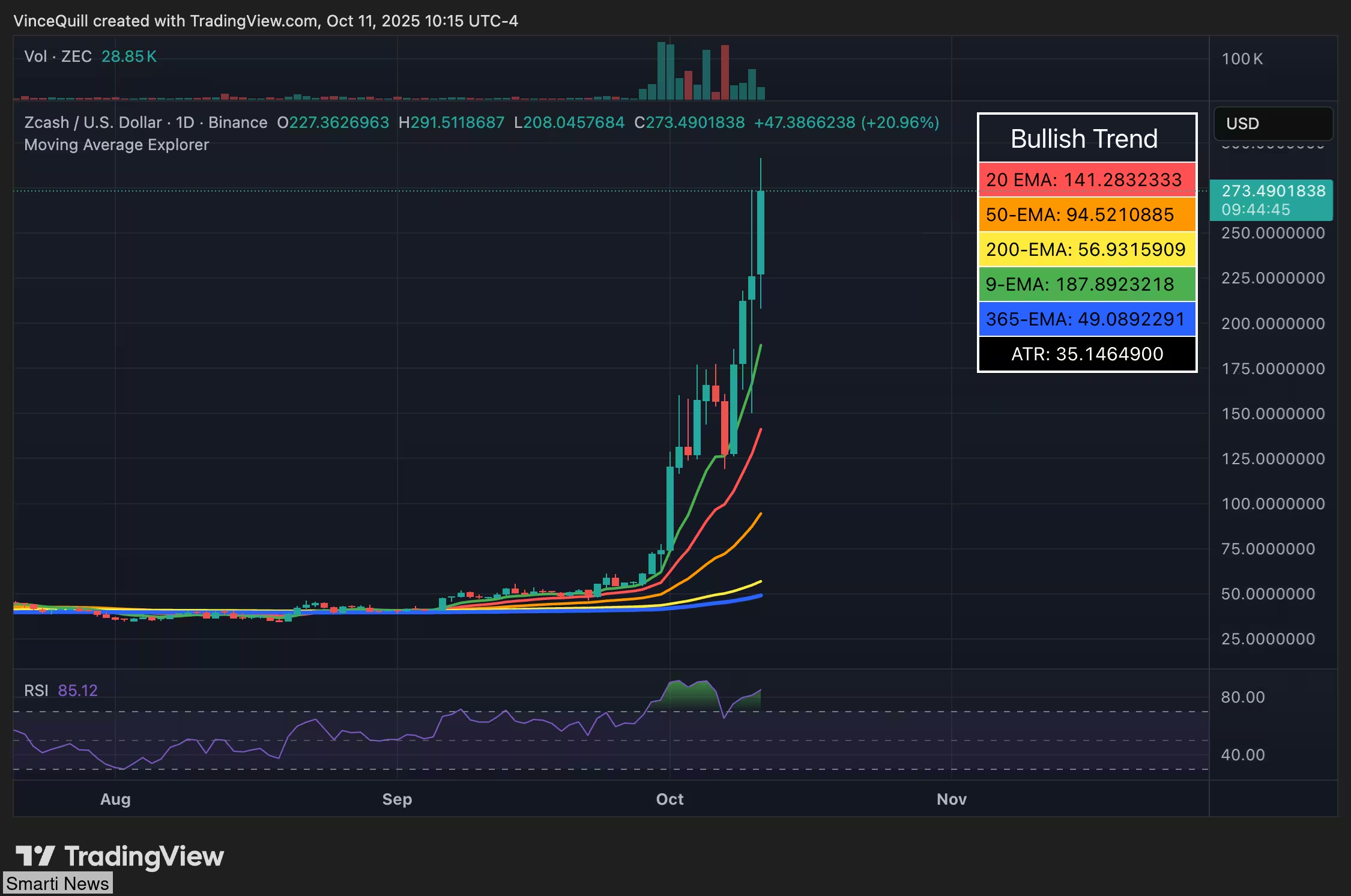
Zcash experienced a massive rally in October and is trading at pre-crash levels
October rally and market context
Zcash’s recovery capped off a powerful October rally. The token surged from about $74 on October 1 to $291 by Saturday — nearly a fourfold increase in under two weeks. That run-up attracted fresh speculative flows and positioned ZEC at pre-crash highs, making the subsequent volatility especially dramatic for leveraged traders.
Macro fallout: tariffs, rare earths and market sentiment
The market-wide reaction followed Trump’s comments on China’s expanded export controls for rare earth minerals — materials central to electric batteries, semiconductors, and many high-tech supply chains. Reuters reports that China accounts for more than 90% of global rare earth production and key components such as rare earth magnets. Fears that trade tensions could escalate, disrupt global supply chains, or derail multinational cooperation prompted a rapid risk-off move across equities, commodities, and cryptocurrencies.
President Trump later announced a proposed 100% tariff on all Chinese goods, set to take effect November 1, 2025, or earlier. The announcement revived memories of earlier trade disputes that erased trillions from capital markets and amplified short-term volatility in crypto.
Outlook for traders and investors
For traders, the episode underscores the crypto market’s sensitivity to macro headlines and the risks of high leverage in a thin liquidity environment. For longer-term investors, Zcash’s ability to regain pre-crash levels may indicate resilient demand for privacy-focused layer-1 tokens, though elevated geopolitical risk could keep swings frequent. Market participants should track on-chain metrics, order book depth, and macro developments — especially trade-policy announcements — to gauge the next moves for ZEC and other cryptocurrencies.














Leave a Comment
Comments
No comments yet. Be the first.