
3 Minutes
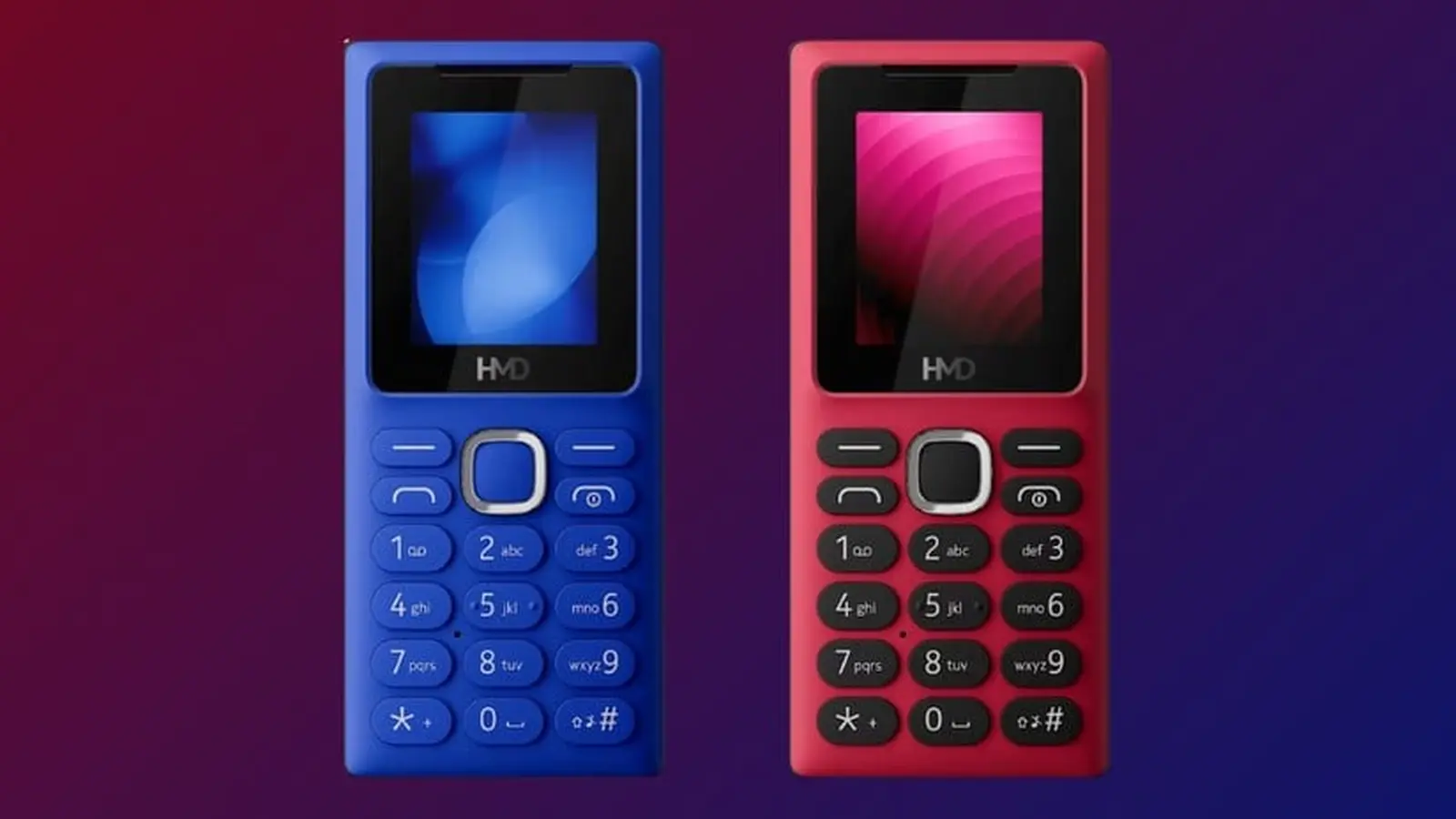
HMD Global quietly introduced three pared-back feature phones — the HMD 100, HMD 101 and HMD 102 — continuing its strategy of low-cost, ultra-basic handsets. But these new models remove several conveniences modern buyers expect, and the omissions matter more than they first appear.
A stripped-down lineup with familiar faces
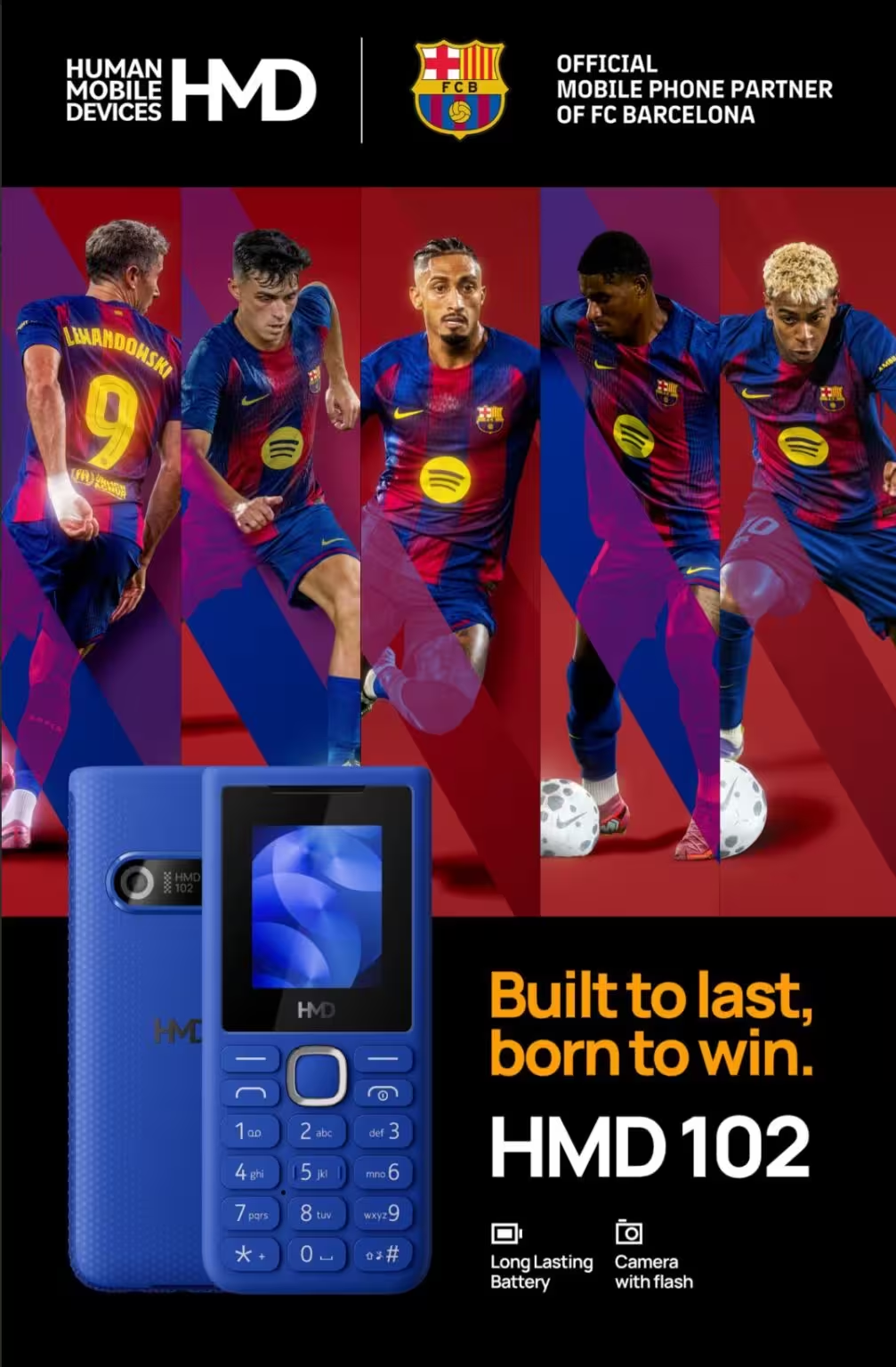
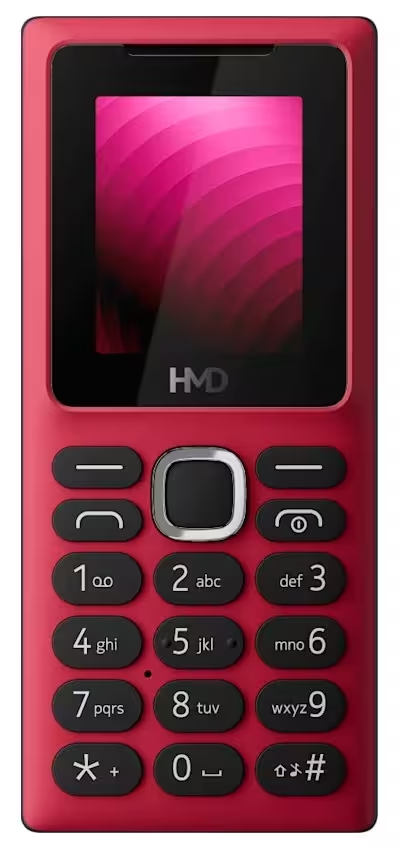
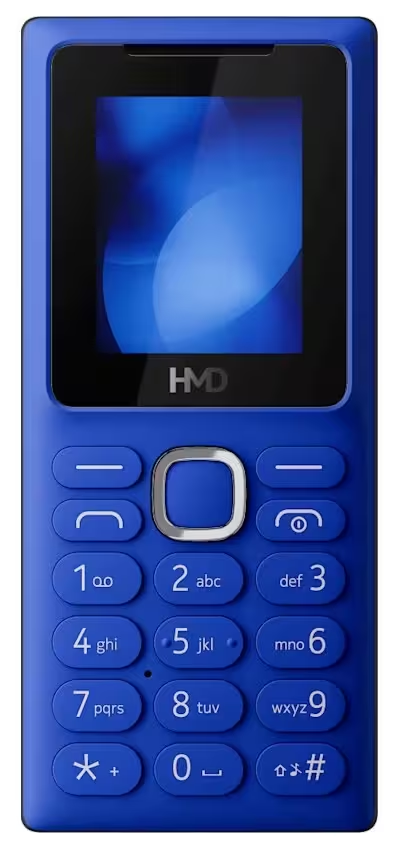
HMD CEO Jean-Francois Baril shared the news on LinkedIn, confirming the arrival of the HMD 100, 101 and 102. The new trio borrows design cues from earlier HMD feature phones, yet trims functions in stages: the HMD 102 is the best equipped, the HMD 101 removes the camera, and the HMD 100 appears to be the most minimal — dropping the MP3 player and, likely, a microSD slot.
What you get — and what you don’t
Here’s a quick breakdown of what separates the three:
- HMD 102: Includes an MP3 player plus a camera with LED flash — the most capable of the three.
- HMD 101: Mirrors the 102 but drops the camera.
- HMD 100: Appears to omit the MP3 player and possibly external storage, suggesting nearly no onboard storage.
Those are modest feature sets even for feature phones, but the omissions raise compatibility and convenience questions depending on where you live.
Why the missing 4G label matters
Notably, HMD’s announcement and the product pages do not emphasize 4G connectivity. That’s significant because many countries are sunsetting older 2G and 3G networks. A feature phone without 4G may still work in markets where legacy networks persist, but in regions that have moved on, these devices risk losing cellular connectivity sooner rather than later.
Ports, regional rules and dual-SIM options
The user guides published on HMD India list microUSB ports for these models. That’s an odd choice given that regulatory moves — for example, the European Union’s USB-C mandate for portable electronics — effectively require USB-C on new devices in some markets. HMD still sells closely related 4G versions for regions with stricter rules; those variants typically offer USB-C and dual-SIM support, letting users run two active lines.
 |  |
Where these phones fit — and who should buy them
Think of the HMD 100/101/102 as ultra-basic backups or temporary devices for countries where 2G/3G remain active. They could also serve users who prioritize extreme simplicity and long battery life over modern connectivity. But if you need reliable cellular access long-term, a 4G-capable model such as the HMD 101 4G, HMD 102 4G, HMD 105 4G or HMD 110 4G is a safer bet.
HMD’s user manuals are already up on HMD India’s site with separate pages for the 4G and non-4G variants — a clear sign HMD expects region-specific demand. Ultimately, these phones underline an awkward truth: minimal hardware can mean minimal future-proofing.

.webp "Redmi 17C 5G: 6.9-inch Screen and 6,000mAh Power Lands")
Leave a Comment
Comments
No comments yet. Be the first.