
3 Minutes
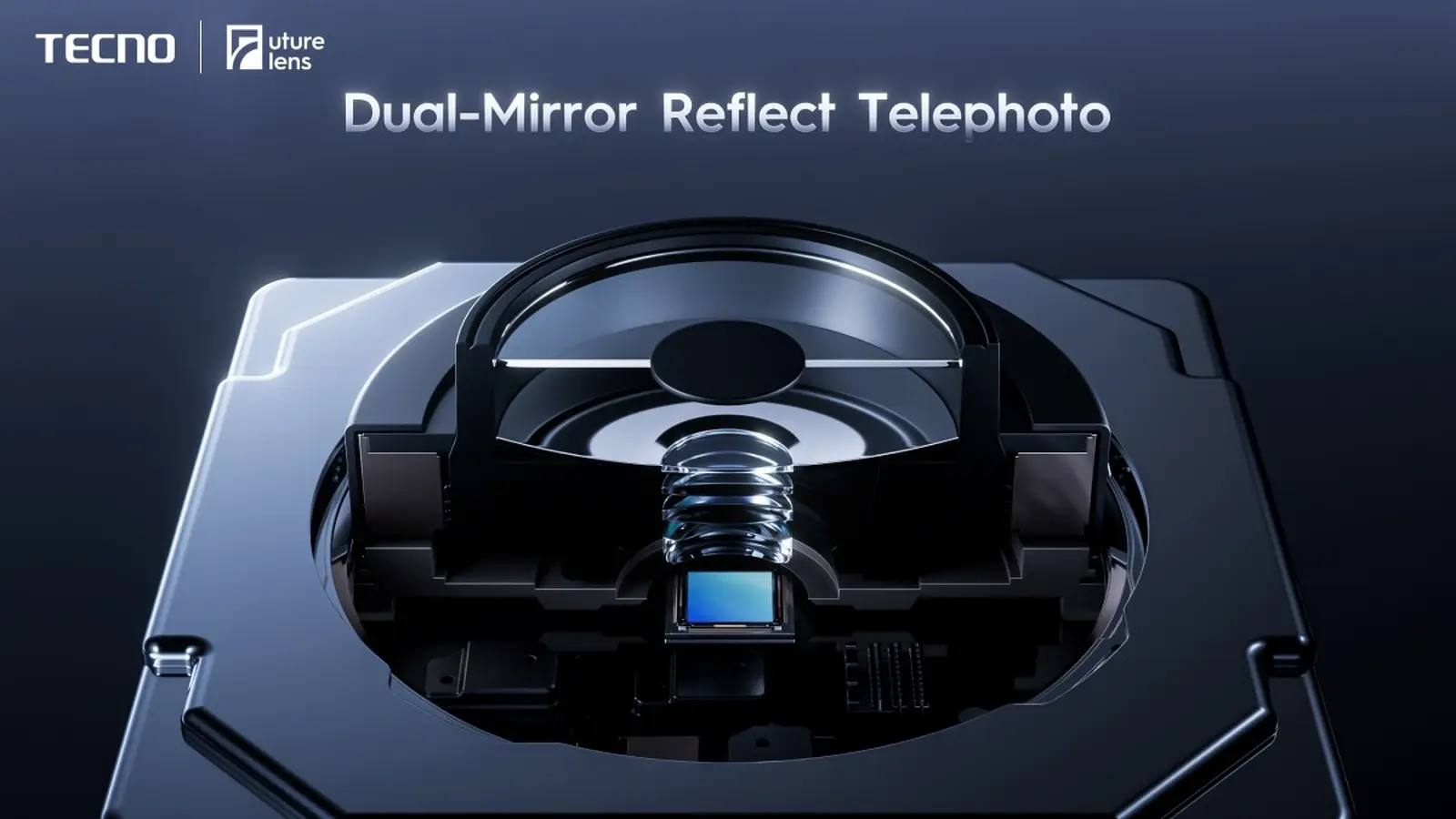
Tecno used its latest Future Lens event to unveil two ambitious telephoto concepts: the Freeform Continuum Telephoto and the Dual-Mirror Reflect Telephoto. Both aim to reshape smartphone zoom and optical design while pairing hardware advances with smarter computational imaging.
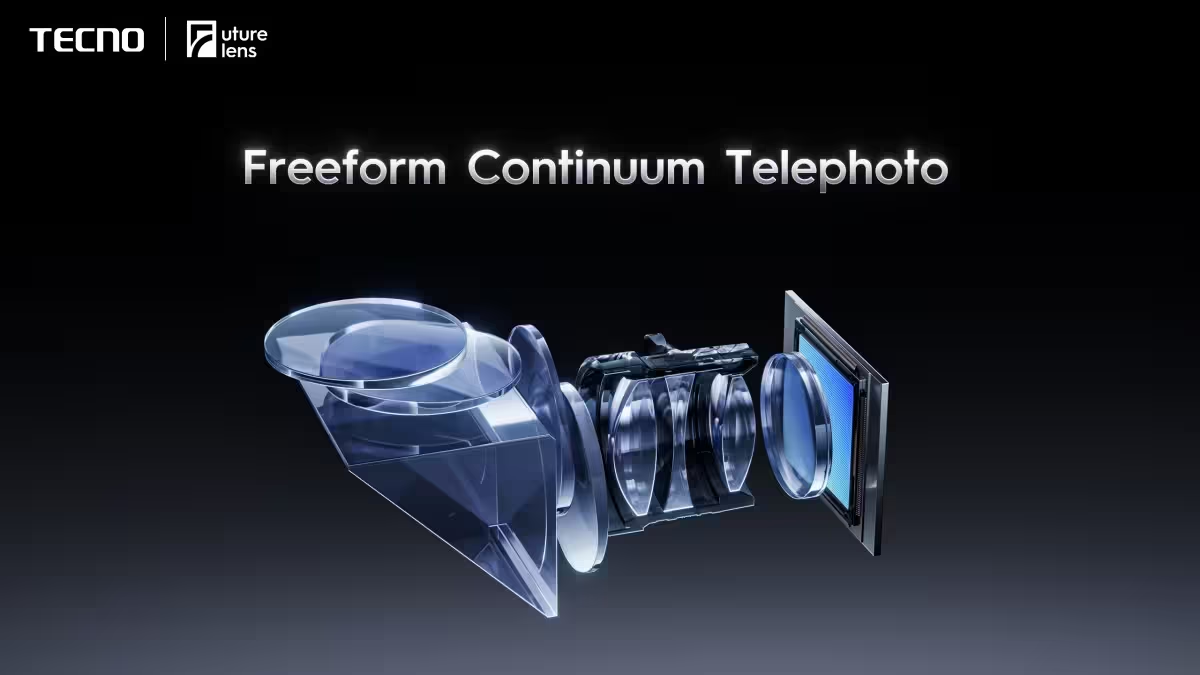
Freeform Continuum Telephoto: a single periscope that zooms smoothly
Imagine one periscope camera that covers everything from wide to long reach without switching modules. That is the promise of Tecno's Freeform Continuum Telephoto — a single periscope design offering a continuous 1x to 9x zoom range. Instead of bouncing between separate wide and telephoto sensors, this module acts as the main camera at 1x and then zooms optically up to 9x.
The benefits are immediate: no abrupt 'jump' when the phone switches cameras, fewer color shifts between sensors, and far better image quality at mid-zoom steps than standard digital zoom. In short, smoother transitions and more consistent tones across the zoom range. Tecno says the Freeform concept is the more complex of the two and remains under development, with commercialization expected to take at least a year.
Dual-Mirror Reflect Telephoto: compact mirror optics and distinctive bokeh
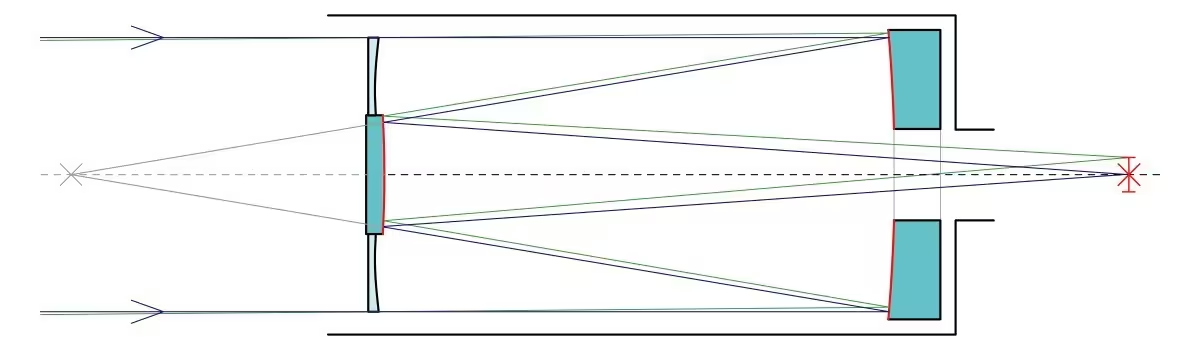
The Dual-Mirror Reflect Telephoto takes a different route. By using two mirrors to fold the optical path, Tecno has produced a telephoto module that's roughly 50% smaller than traditional lens-based equivalents. This catadioptric-style design is familiar in some DSLR and mirrorless mirror lenses: it packs long focal length into a compact, lightweight body.
One visual side effect is the donut-shaped bokeh — sometimes called 'iris blur' — which some photographers dislike and others prize for its unique character. The trade-off: the mirror-based module loses about 1 stop of light compared with lens-only solutions. Tecno says this technology is production-ready and could appear in phones as early as next year, pending user feedback from focus groups.
Timing, partners, and practical trade-offs
- Dual-Mirror Reflect: nearer-term, potentially in phones next year if approved.
- Freeform Continuum: more advanced, likely at least 12 months from commercialization.
- Manufacturing partners: Samsung and Largan are already selected to produce these modules.
Both approaches represent different engineering choices: the mirror route minimizes volume and weight, while the freeform periscope prioritizes optical continuity and color consistency. Each has trade-offs — from bokeh character to light loss — that Tecno is testing with users.
TIM: moving from capturing light to understanding scenes
Tecno is pairing these optics with its software stack, the Tecno Image Matrix (TIM). Described as an end-to-end, four-layer technology stack, TIM blends algorithms for capture, processing, and scene understanding. As Xiaohan Huang, Director of Tecno’s Image R&D Center, put it: 'We’re transitioning from simply capturing light to intelligently understanding scenes. Our systems now analyze composition intent, subject characteristics, and even emotional tone to deliver images that are both technically precise and emotionally resonant.'
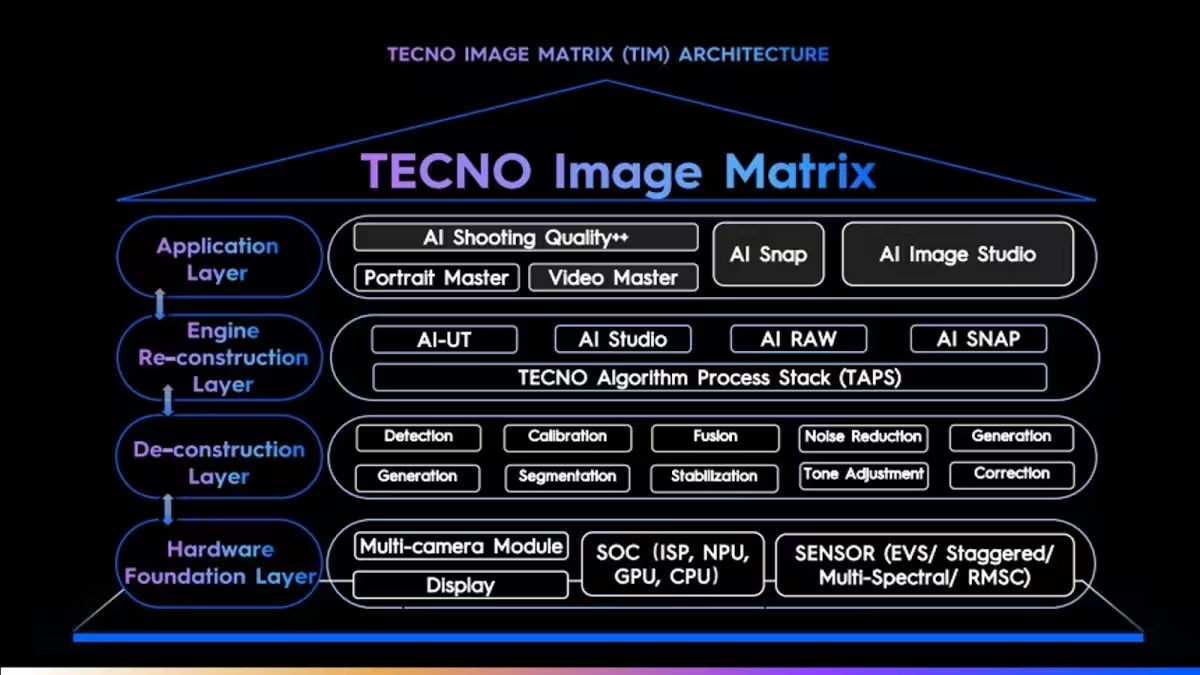
In practice, that means combining better hardware with smarter computational photography to produce images that look consistent across focal lengths and feel more deliberate in composition and mood. For smartphone photographers, this could mean fewer compromises between optical quality and compact design.
Whether you care most about seamless zoom, compact telephoto hardware, or creative bokeh, Tecno’s two approaches signal a willingness to experiment with optics and software together — and to challenge the old assumptions about how much a phone camera can do.


.webp "Redmi 17C 5G: 6.9-inch Screen and 6,000mAh Power Lands")


Leave a Comment
Comments
No comments yet. Be the first.