
3 Minutes
Apple has added the original iPhone SE to its obsolete devices list, a move that ends official repairs and parts support worldwide. If you still carry this compact 2016 model, here’s what changes and what to consider next.
Why Apple labeled the OG iPhone SE obsolete
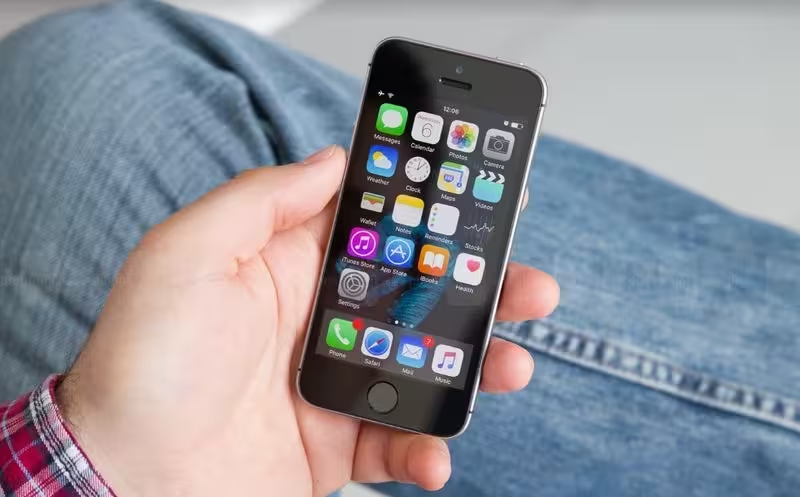
Launched in 2016 as a budget-focused answer to lower-cost Android phones, the first‑generation iPhone SE borrowed the iPhone 5s body: a 4‑inch display, flat sides and a physical home button with first‑gen Touch ID. Beneath that small frame sat Apple’s A9 chip — the same processor used in the iPhone 6s family — which made the SE a surprisingly powerful value option at the time.
Apple declares a product obsolete when more than seven years have passed since it was last distributed for sale. Before that, devices fall into a “vintage” category (between five and seven years out). Once obsolete, Apple Stores and Apple Authorized Service Providers (AASPs) stop offering any hardware service or selling replacement parts for that model.
What this means for iPhone SE owners
The practical consequences are straightforward but significant:
- Apple and AASPs can no longer perform repairs, including battery and screen replacements.
- Service providers are not able to order new parts for the device.
- Vintage devices may already be excluded from the latest iOS releases and security patches — obsolete models only worsen that risk.
- Using an unsupported phone increases exposure to security vulnerabilities in the browser, email apps and other networked services.
In short: if your OG iPhone SE still works, keep using it carefully. But expect dwindling repair options and rising security risk over time.
Upgrade paths and budget alternatives
If you’re ready to move on, Apple’s recent budget lineup replaces the older SE model with newer hardware and modern features. The iPhone 16e, for example, starts at $599 for 128GB and introduces Face ID to Apple’s lower‑cost tier. It also ships with 8GB of RAM and Apple Intelligence features preinstalled, bringing AI‑forward capabilities to a cheaper form factor. Rumors point to the iPhone 17e as the next step in that series.
Other upgrade options depend on priorities: look for refurbished recent‑generation iPhones if you want lower cost with better longevity, or pick the latest standard model if you want ongoing OS updates and support.
Which Apple devices are affected?
Apple’s lists include many legacy iPhones and iPads. Examples of models now designated obsolete include early iPhones such as the iPhone 3G, 3GS, 4, 4S, 5S, 5C, several iPhone 6/6 Plus/6s variants, and the original iPhone SE. Vintage models — those in the 5–7 year window — include iPhone 5, 6s (other capacities), iPhone 7 and 8 lines, iPhone X and XS series, and some iPhone 11 Pro Max configurations.
For a complete, up‑to‑date list of vintage and obsolete devices, check Apple’s official support pages. If your device appears there, plan ahead for repairs, data migration and a security‑minded upgrade.
Quick tips for owners of obsolete or vintage iPhones
- Back up your data now and regularly (iCloud or local backups).
- Avoid sensitive transactions on unpatched devices when possible.
- Consider third‑party repair shops for hardware fixes, but verify parts quality and warranty first.
- Look into refurbished newer models to balance cost and support lifespan.

.webp "Redmi 17C 5G: 6.9-inch Screen and 6,000mAh Power Lands")
Leave a Comment
Comments
No comments yet. Be the first.