
3 Minutes
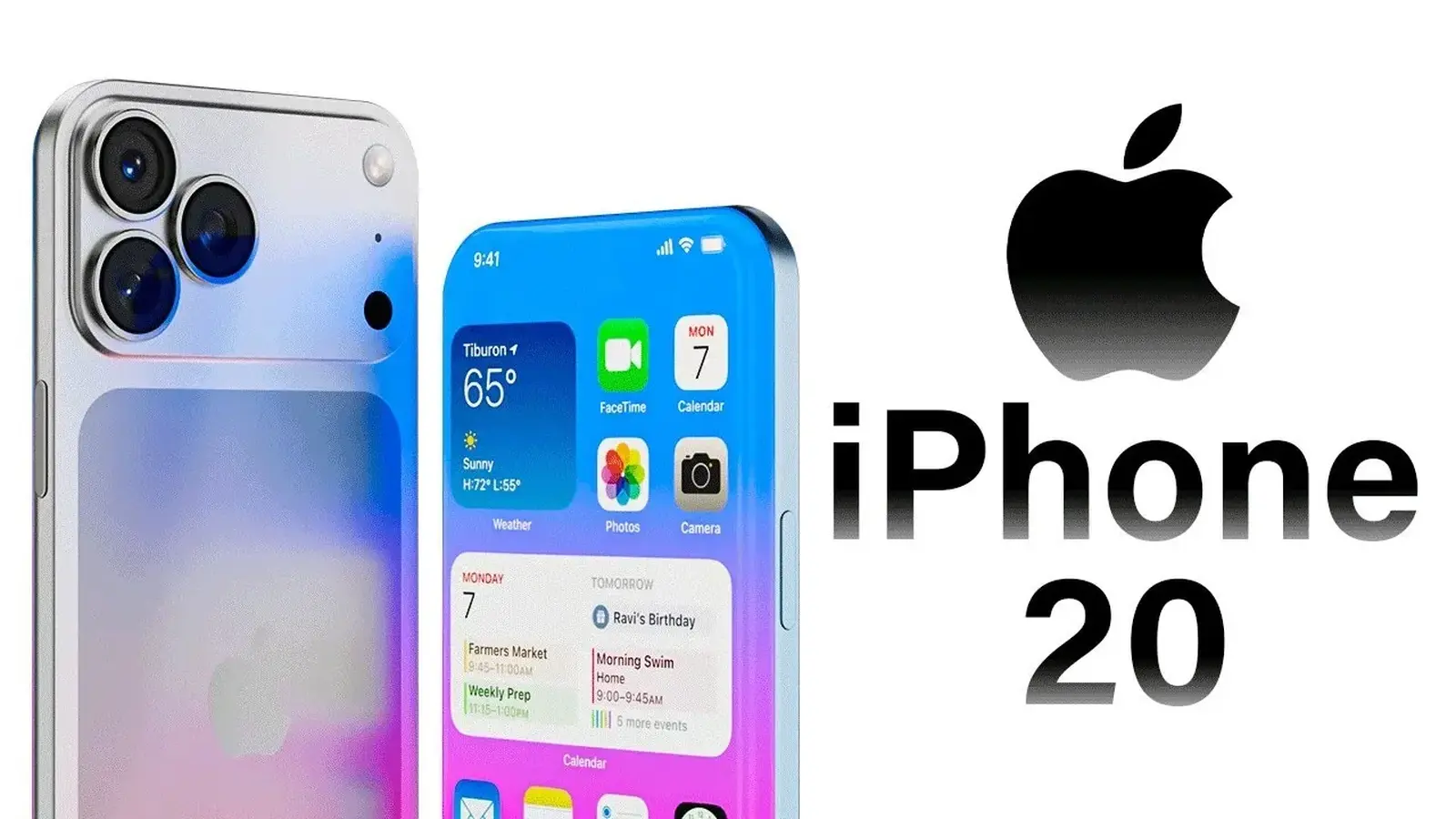
Apple’s iPhone 20 is shaping up to be more than a milestone name — it could reshape how smartphones look and how displays are made. Reports now suggest a fully bezel-less screen with a four-sided bending design, and suppliers are already moving money and machinery to meet the challenge.
All-screen ambition: What Apple might unveil in 2027
Industry sources point to a third-quarter 2027 launch for Apple’s 20th-anniversary phone. According to market researchers, Apple may skip the “iPhone 19” name and tag this milestone handset as the iPhone 20. The headline feature? A truly all-screen front with no visible cutouts — not just slim bezels, but every corner of the display curved inward for a seamless edge-to-edge effect.
How the four-sided bending display works — and why it’s tricky
Unlike current curved panels, this four-sided approach requires the OLED panel circuitry to flex into the bezel area. That sounds simple, but the engineering is complex: the Thin-Film Encapsulation (TFE) that protects the OLED from moisture would need to be significantly thinner, and Apple would have to hide the front camera and TrueDepth sensor under the display.
- Thinner TFE for moisture protection without compromising durability.
- Bending the panel circuit into each corner — manufacturing must handle tighter tolerances and new substrates.
- Under-display camera and Face ID hardware (TrueDepth) must work reliably through active pixels.

Suppliers race to adapt — LG’s potential $300M bet
Reports suggest LG Display is preparing a major investment — roughly 400 billion won (about $300 million) — to retool its factories for this design. That could mean building multiple dedicated production lines; some sources estimate as many as ten lines for Apple alone. The equipment and process changes aren’t incremental: they require rethinking panel bending, encapsulation steps, and quality-control systems.
Where Samsung fits in and what under-display Face ID means
Samsung has long been Apple’s primary OLED partner and is focused on foldable panels for devices like the rumored iPhone Fold. If Apple pushes a wholesale move to fully under-display components and four-sided bends, Samsung will likely need significant investment too. Meanwhile, Apple is reportedly testing under-display Face ID on prototypes in the iPhone 18 family and the iPhone Fold — a step that could precede a fully bezel-less iPhone with hidden cameras and sensors.
Timeline and the big questions
If Apple is targeting Q3 2027, the next year and a half will be crucial. Suppliers must prove that under-display cameras and Face ID work reliably at scale, and factories will need to clear long validation cycles before mass production. So the real question: will Apple unveil a flawless all-screen iPhone 20, or will incremental steps — like a punch-hole camera or partial under-display sensors — arrive first?
Either way, the push for a four-sided bending design is already reshaping supplier roadmaps and could change smartphone displays for years to come.






Leave a Comment
Comments
No comments yet. Be the first.