
3 Minutes
Qualcomm quietly expanded its mid-range lineup with two new mobile chips: the Snapdragon 6s 4G Gen 2, tailored for 4G devices, and the Snapdragon 4 Gen 4, which brings 5G to the entry-level tier. Both focus on efficient performance, improved cameras and faster storage — but they target different connectivity needs.
Where performance and efficiency meet
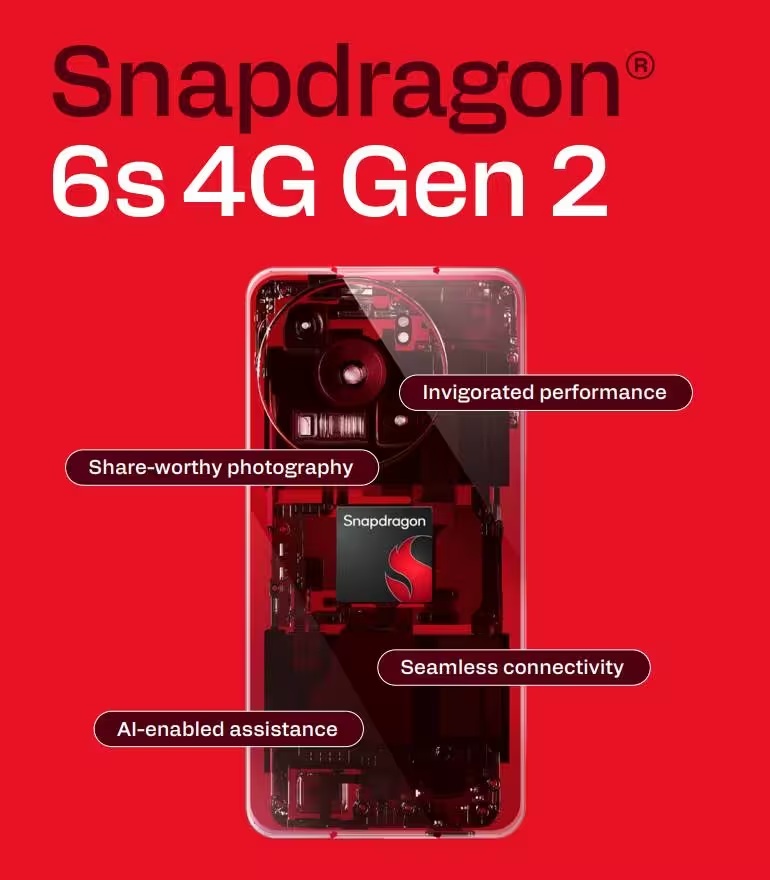
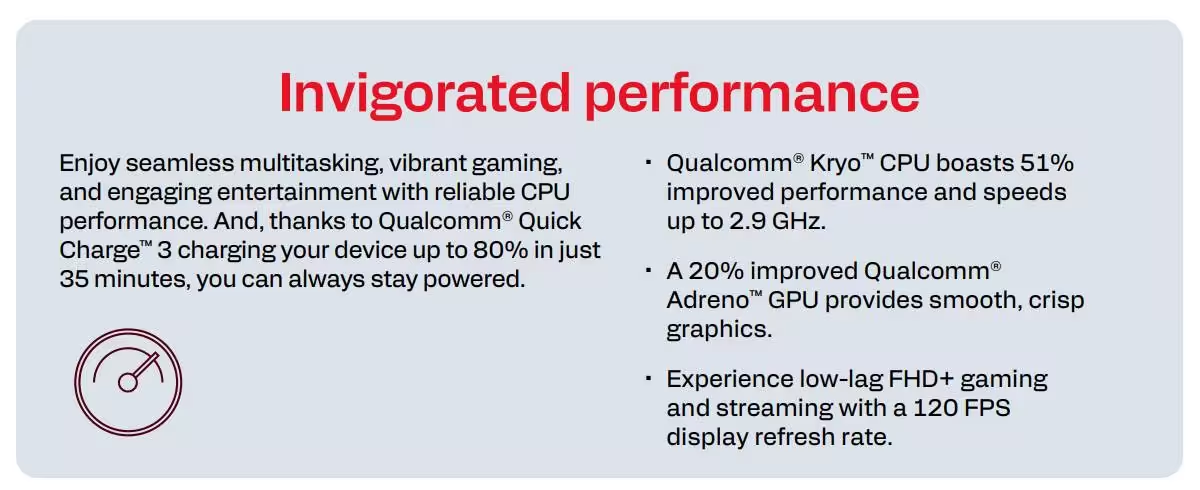
The Snapdragon 6s 4G Gen 2 is built on a 6nm process and packs a Kryo CPU that reaches up to 2.9GHz — Qualcomm claims up to a 51% CPU speed increase over the first-gen variant. Its unnamed Adreno GPU is around 20% faster and supports 1080p+ screens at up to 120Hz. Memory and storage are modest but practical: up to 8GB LPDDR4X (2,133MHz) and UFS 2.2.
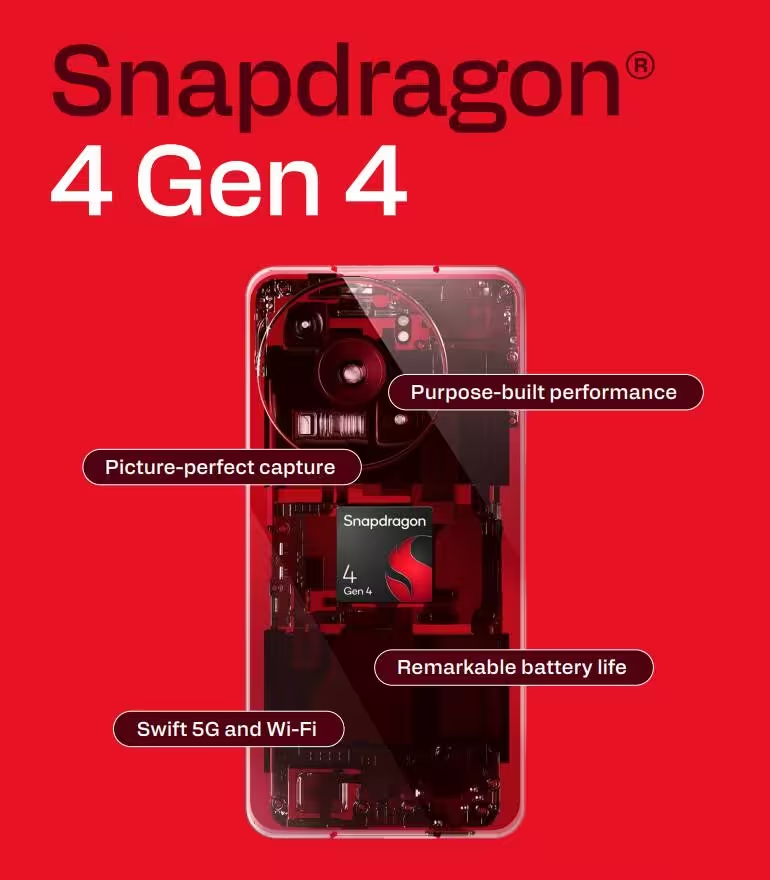
On the other hand, the Snapdragon 4 Gen 4 steps up manufacturing to a 4nm node and targets the growing budget 5G segment. It sports a 2+6 CPU configuration (two high cores up to 2.3GHz, six efficiency cores up to 2.0GHz) and an Adreno-class GPU that also supports 1080p+ at 120Hz. This chip adds support for LPDDR5 (3,200MHz) and UFS 3.1 (2-lane), improving multitasking and app load times.
 |  |
Connectivity: 4G stays relevant, but 5G arrives for budget phones
As the name implies, the 6s 4G Gen 2 includes a 4G LTE modem capped at about 390Mbps down and 150Mbps up. Wireless local connectivity is Wi‑Fi 5 (dual-band, 802.11ac) and Bluetooth 5.2 with aptX Adaptive. Positioning features are comprehensive, with dual‑band GPS plus GLONASS, Galileo, BeiDou, QZSS and NavIC, along with Qualcomm’s sensor-assisted positioning for better in-car and pedestrian accuracy.
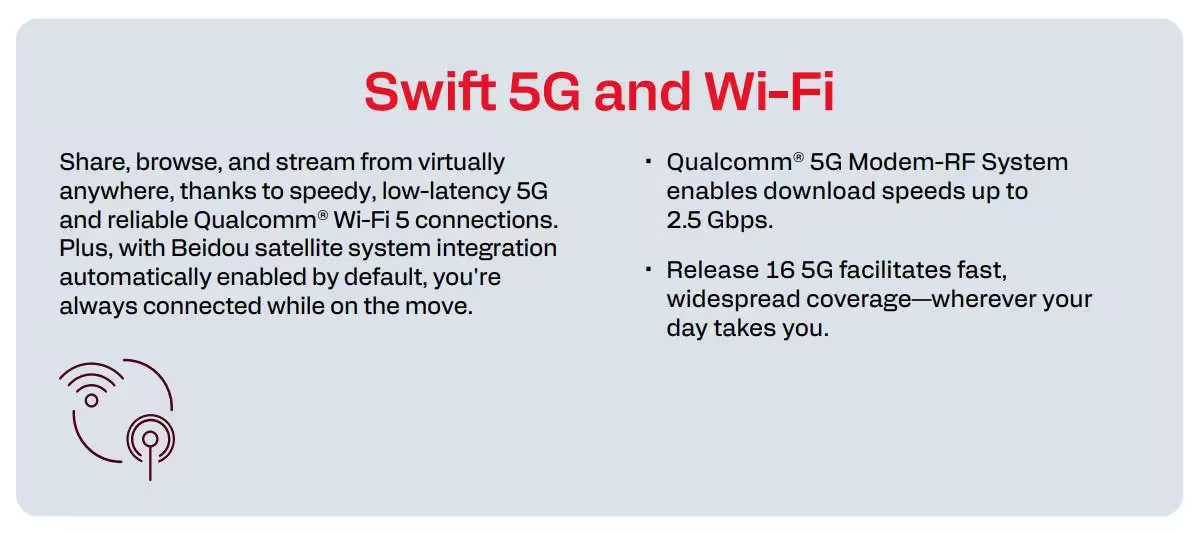
The Snapdragon 4 Gen 4 brings 5G to the segment through a Rel.16 sub-6GHz modem supporting both SA and NSA modes, with peak downlink speeds up to 2.5Gbps and uplink to 900Mbps. Local connectivity remains Wi‑Fi 5 and Bluetooth 5.1 with aptX. In short: if 5G is a priority, the 4 Gen 4 is the obvious choice.
Camera and multimedia trade-offs
Both chips support high-resolution sensors up to 108MP, but their ISP setups differ. The 6s 4G Gen 2 features a 12-bit triple ISP capable of handling three cameras simultaneously (13+13+5MP) or two 16MP modules with zero shutter lag. The Snapdragon 4 Gen 4 uses a dual ISP and can handle dual 16+16MP setups with zero shutter lag. Video capture on both is limited to 1080p at 60fps, and neither SoC currently supports AV1 decoding.
- Snapdragon 6s 4G Gen 2: 6nm, Kryo up to 2.9GHz, Adreno ~20% faster, USB 3.1, Quick Charge 3 (80% in ~35 minutes).
- Snapdragon 4 Gen 4: 4nm, 2.3GHz + 2.0GHz cores, LPDDR5/UFS 3.1 support, USB 3.2 Gen 1, Quick Charge 4+ (50% in ~15 minutes).
What this means for buyers and phone makers
Qualcomm’s new chips sharpen the options for manufacturers building affordable phones. The 6s 4G Gen 2 is aimed at markets or users where 4G networks remain the norm — delivering noticeable speed boosts and better camera handling without driving up costs. The Snapdragon 4 Gen 4, by contrast, lets makers ship more affordable 5G devices with faster RAM and storage options.
Neither chip promises flagship-class imaging or heavy-duty video capture, but they strike a practical balance: improved snappiness, decent camera capabilities and modern charging tech for budget and mid-range devices. Expect the first phones powered by these SoCs to appear next year.






Leave a Comment
Comments
No comments yet. Be the first.