

3 Minutes
Xiaomi is ramping up its research and development push, committing bigger budgets and bigger teams as it chases leadership in AI, chips, and smart-device integration. The move signals a shift from fast-follow mobile maker to an engineering-first company focused on deep technology.
Bigger bets, bigger budgets: the numbers that matter
At the 2025 Human Car Home Ecosystem Partner Conference on December 17, Xiaomi Group President Lu Weibing revealed an ambitious R&D plan: 200 billion yuan (about $28.4 billion) over the next five years. That puts annual investment on a sharp upward arc—Xiaomi expects to spend 32–33 billion yuan (~$4.5–4.7 billion) this year and about 40 billion yuan (~$5.7 billion) in 2026.
To put that in context: Xiaomi invested roughly 105 billion yuan (~$14.9 billion) from 2021 to 2025. The new commitment essentially doubles the company's R&D outlay for the coming half-decade.
Quick snapshot
- Five-year R&D pledge: 200 billion yuan (~$28.4B)
- R&D 2025 forecast: 32–33 billion yuan (~$4.5–4.7B)
- R&D 2026 target: ~40 billion yuan (~$5.7B)
- R&D headcount: 24,871 employees (as of Q3)
From MiMo to Xring: what Xiaomi is building
Money is already producing tangible results. Xiaomi unveiled MiMo, an in-house foundation model tailored for efficient on-device and edge inference across phones, smart home gear, and vehicles. It’s designed to be lightweight compared with massive cloud models, but optimized for real-world performance—fast, power-efficient, and practical.
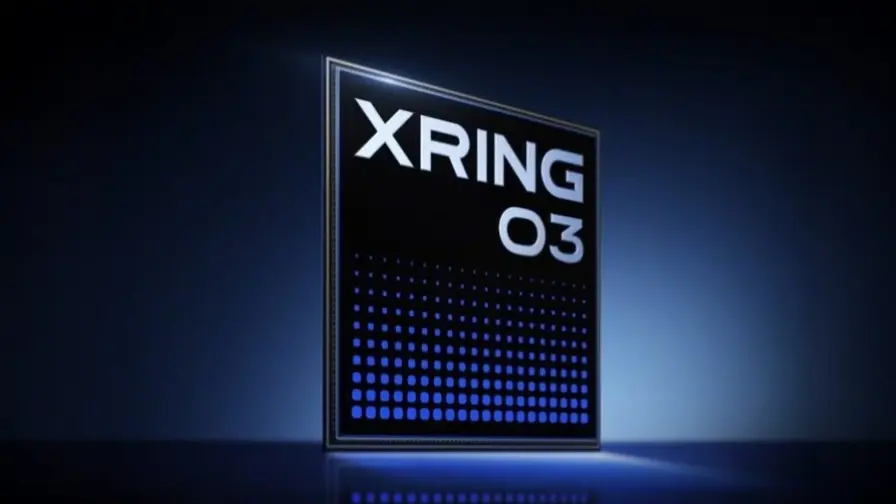
On the silicon front, Xiaomi has poured over 13.5 billion yuan (~$1.9 billion) into its Xring chip project. The Xring team now counts more than 2,500 engineers and is preparing to scale mass production of the next-generation Xring O2 chip. However, due to U.S. restrictions on advanced chipmaking tools, Xiaomi says the chip will remain on a 3nm process node rather than moving to 2nm.
Why this matters for users
These investments aren’t just corporate headlines. Expect improvements in imaging, charging speed, on-device AI assistants, and tighter integration across Xiaomi’s Human Car Home ecosystem. Think smarter phones that use less cloud compute, faster-charging batteries, and a more seamless handoff between your car, home devices, and handset.
People power: a growing R&D workforce
Xiaomi’s R&D ranks have swelled—the company reported a new record of 24,871 R&D employees in its Q3 financials. The expanding talent pool is a clear signal: Xiaomi wants to own capabilities from algorithms to chips, rather than rely on external partners for core technologies.
As Xiaomi doubles down on long-term engineering, the industry will be watching whether these bets translate into sustained product differentiation—and whether regulatory and supply-chain constraints reshape the timeline. For now, the message is clear: Xiaomi is moving from volume-driven smartphone maker to an R&D-first technology company.


.webp "Redmi 17C 5G: 6.9-inch Screen and 6,000mAh Power Lands")
Leave a Comment
Comments
No comments yet. Be the first.