

3 Minutes
McLaren YF-22: a digital concept that looks (and sounds) like a jet
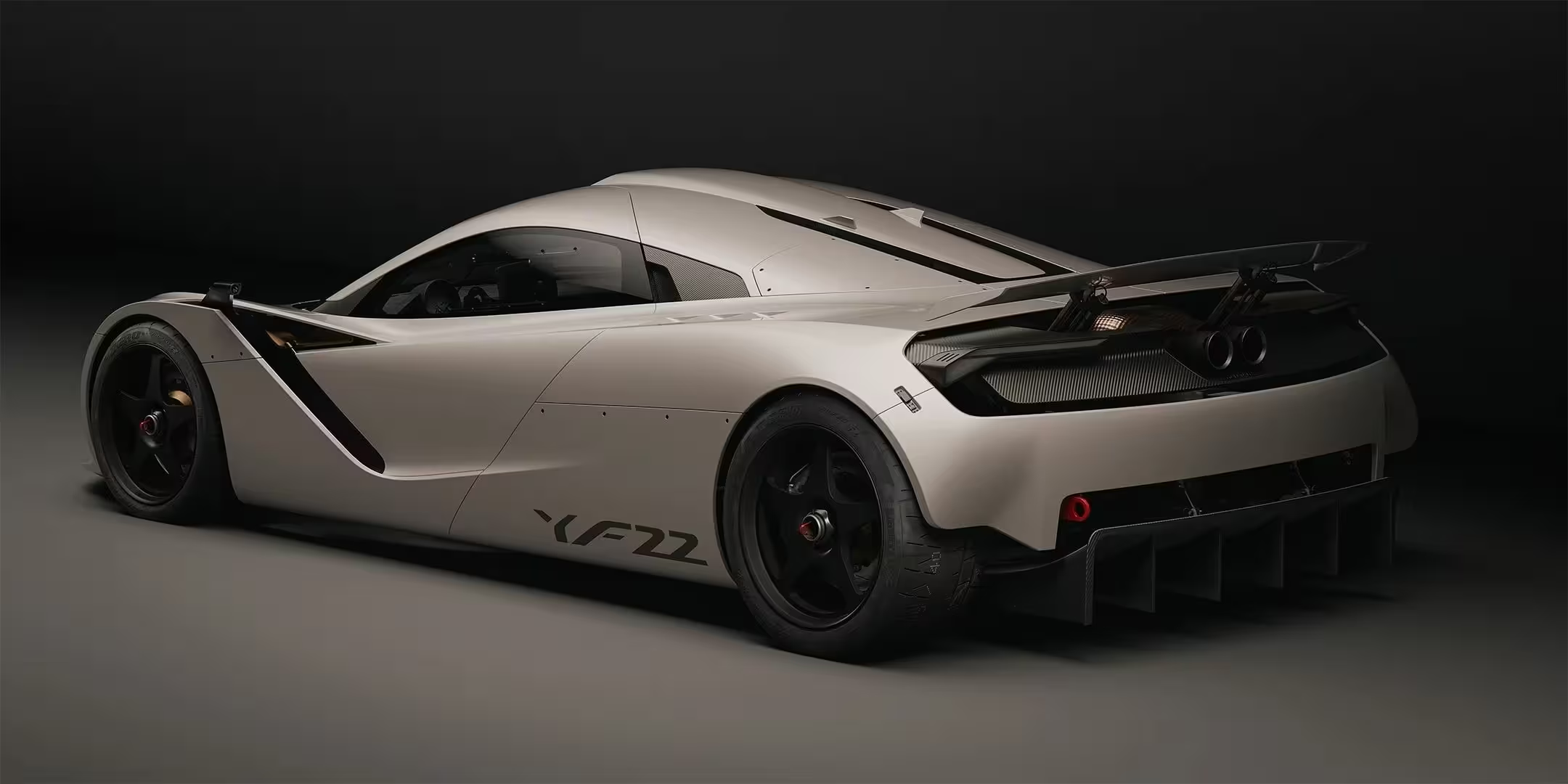
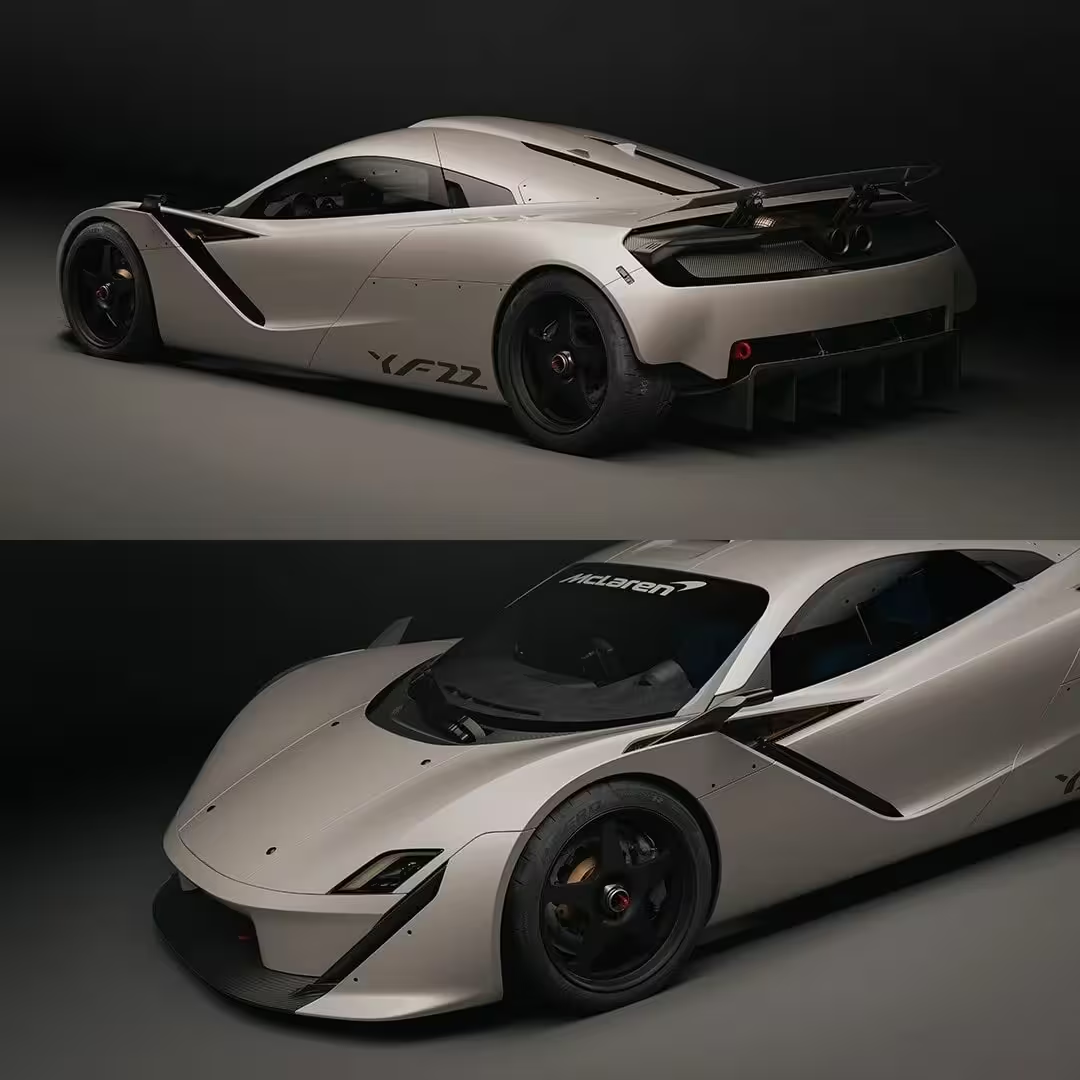
McLaren is everywhere these days — on the racetrack, in Hollywood, and in the rumor columns — and now the brand has inspired a striking digital study that looks straight out of a stealth hangar. The McLaren YF-22 is a CGI concept by Porsche Alias modeler Lukas Wenzhofer (instagram: 'lukasw_design') that imagines a next-generation Super Series McLaren with fighter-jet proportions and a pared-back, purposeful attitude.

Not an official car, but a clear design statement
This isn't a factory tease from Woking. It's an unofficial, creative exercise: Wenzhofer's ambition was to take McLaren's current design language — which he admits is hard to top — and reinterpret it through the minimal, geometric cues of the iconic McLaren F1 and the brand's logo. The result is a concept that looks brutal and functional rather than plush, a car that favors a 'tool' aesthetic over glossy, tinted carbon and superfluous cladding.
"Most supercars have gotten too plush these days," the designer said. "I like a more honest and brutal 'tool' aesthetic — no glossy tinted carbon, useless cladding or any other nonsense, please." That philosophy explains why the YF-22 seems to wear its engineering on the outside and why its shape evokes the Lockheed–Boeing–General Dynamics YF-22 prototype — the ancestor of the F-22 Raptor.
Where the YF-22 sits in the McLaren story
This CGI concept arrives at an interesting moment for McLaren. The company is preparing the W1 hypercar for production and reportedly exploring models with more than two seats — including rumors of a super-SUV to take the fight to Bentley Bentayga, Lamborghini Urus, Rolls-Royce Cullinan, Ferrari Purosangue, and Aston Martin DBX. Some reports suggest such a model could borrow the W1's powertrain, detuned to match lower categories — specifically to compete with the 789-hp Lamborghini Urus SE plug-in hybrid rather than other hypercars.
McLaren also remains strongly linked to Formula 1, working alongside Mercedes in a partnership that keeps the marque high-profile in performance engineering. Despite the wider industry shift, McLaren appears unwilling to commit to an EV-only future — a stance that colors how fans imagine its next-generation models.

Design highlights & imagined features
- Jet-inspired silhouette with sharp, geometric surfaces
- Minimalist McLaren cues derived from the F1 and brand logo
- Raw, 'tool-like' exterior treatment instead of lavish upholstery
- Placement suggested for a next-gen Super Series model; not an SUV but conceptually linked to McLaren's expansion
Quote: 'The current design language of McLaren is so beautiful that it's almost impossible to improve. So why not try something new?'
Performance and market positioning (hypothetical)
Wenzhofer's YF-22 isn't accompanied by specs, but the broader conversation around McLaren suggests that any multi-seat or more practical model would likely use a high-performance hybrid powertrain. If the rumored super-SUV borrows a detuned W1 setup, outputs could be aimed at the high 600s to around 789 hp to square off against the Lamborghini Urus SE PHEV — though such numbers remain speculative.
Final take
The McLaren YF-22 is an exercise in what-if: a bold, jet-like reinterpretation of McLaren DNA from a talented CGI artist. It reminds us that design can be both homage and provocation — a digital provocation that asks whether future McLarens should be more honest, raw, and performance-focused. Yay or nay? The internet will decide, but the concept certainly sparks conversation about McLaren's next moves in both design and market expansion.









Leave a Comment
Comments
No comments yet. Be the first.